

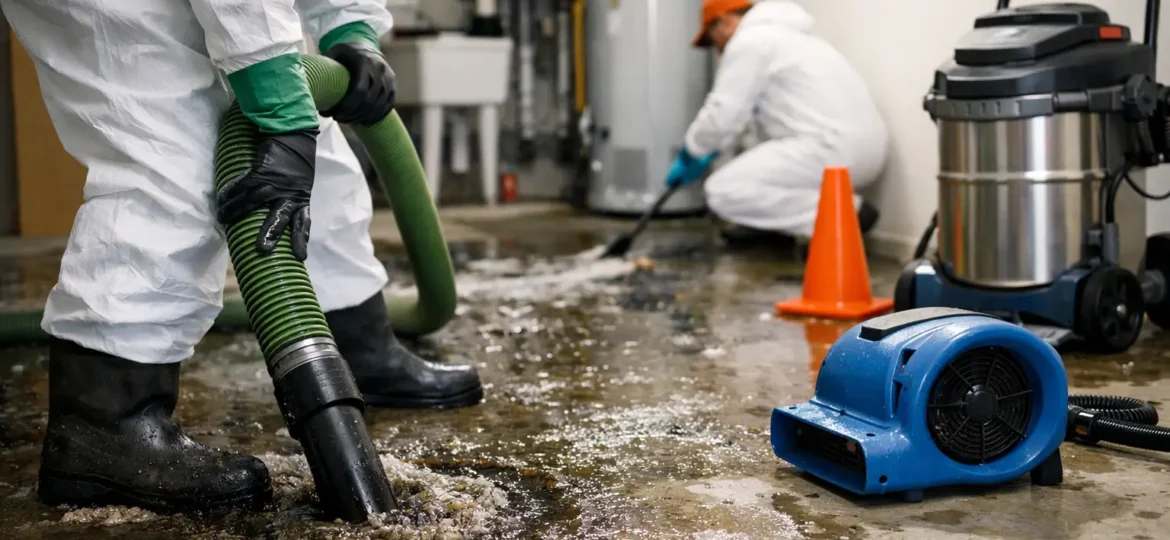
A septic backup does not wait for a convenient time. One flush can turn into sewage rising in a shower, a toilet overflowing, or wastewater spreading across a finished floor. This septic backup cleanup example shows what a proper response looks like, why simply mopping is not enough, and when the real fix requires more than pumping the tank.
Picture a Chattanooga-area homeowner who notices gurgling from the downstairs bathroom on a Saturday morning. A few minutes later, wastewater comes up through the shower drain and begins pooling along the bathroom floor. The homeowner has an older septic system, several guests staying over, and a load of laundry running. That combination matters because the system is receiving more water at the exact time it is struggling to move wastewater out.
The right response starts with stopping the flow, protecting people, and finding the cause. Cleanup comes after control – not before.
The first hour of a septic backup cleanup example
The homeowner should stop using all water immediately. That means no flushing, showering, dishwashing, laundry, or running faucets. Continued water use can push more sewage into the home and turn a contained bathroom problem into a larger cleanup and restoration job.
Children and pets need to stay out of the affected area. Raw sewage can carry bacteria, viruses, and other contaminants. Open windows if it can be done safely, but do not run fans that could spread contamination beyond the affected room. If sewage has reached electrical outlets, appliances, or a breaker panel, stay clear and call a qualified professional.
In this example, the homeowner calls for emergency septic service instead of trying to snake the shower drain or pour chemicals down it. That is the right call. Drain cleaner will not fix a full septic tank, a failed pump, a blocked sewer line, or a saturated drain field. It can also create a hazardous work area for the technician who has to diagnose the problem later.
A septic crew arrives, asks where the backup appeared, checks whether all fixtures are affected, and locates the septic tank. Backups from only one sink may point to a localized branch drain problem. Wastewater coming up through the lowest drain in the house, especially after flushing or doing laundry, is a stronger sign of a main line or septic system issue.
Finding the cause before cleanup begins
In this case, the tank is overdue for pumping and the outlet side of the system is not moving wastewater properly. The tank is pumped to relieve pressure and allow inspection. But pumping alone is not treated as the finished repair.
That distinction saves customers from repeat backups. A septic tank that fills too quickly may have an outlet baffle problem, a clogged effluent filter, a damaged line, a pump failure, or a drain field that is no longer accepting water. If the system backs up again shortly after pumping, the cause was never fully addressed.
The technician checks the tank components and evaluates the line leaving the house. Depending on the property, this may include running a camera through the sewer line, checking a grinder pump or sewage ejector pump, inspecting distribution components, or looking for signs of drain field failure. Standing water, sewage odor outdoors, soft ground near the field, and unusually green strips of grass can all be useful clues.
For this homeowner, the immediate blockage is cleared and the tank is pumped. Inspection also reveals a clogged effluent filter and a damaged outlet baffle. Those problems are corrected before the system is put back into normal use. The homeowner gets flat-rate, upfront pricing for the emergency work and the recommended repair, rather than a vague promise that the issue is probably fixed.
Removing sewage safely from the home
Once the source is controlled, the cleanup crew can address the bathroom. Cleanup is not just about making the floor look clean. Any material contacted by sewage must be evaluated based on whether it can be cleaned and disinfected or needs to be removed.
Hard, nonporous surfaces such as tile, sealed concrete, metal, and some plastic surfaces can often be cleaned, disinfected, and dried thoroughly. The crew removes visible waste, cleans the affected surfaces with the appropriate products, disinfects them, and allows sufficient contact time before rinsing or drying as needed. Baseboards, wall edges, vanity kick plates, and the underside of fixtures deserve attention because sewage can travel farther than it first appears.
Porous materials are different. Carpet, padding, insulation, unsealed wood, cardboard, paper goods, and many upholstered items may need to be discarded if they have been contacted by raw sewage. Drywall that wicked wastewater upward may also need to be cut out above the affected area. Keeping contaminated materials to save a few dollars can create odor, mold, and sanitation problems later.
In this septic backup cleanup example, the bathroom has tile flooring, but the adjacent hallway carpet edge is wet. The affected carpet and padding are removed, and the subfloor underneath is cleaned, disinfected, and dried. A moisture check helps confirm that water has not remained under trim or inside the wall cavity.
This is where shortcuts cause trouble. Bleach alone is not a complete sewage cleanup plan, especially when soil and organic material are still present. Cleaning must happen before disinfection. The area must also dry fully. A floor can look fine by the end of the day while hidden moisture remains around baseboards or under flooring.
What homeowners can do while waiting
If the affected area is small and it is safe to approach, homeowners can keep people out, stop water use, move dry belongings away from the area, and document damage with photos for insurance purposes. Wear proper protective gear if handling anything contaminated.
Do not use a household shop vacuum on sewage. Do not mix cleaning products. Do not wash sewage-soaked towels in the family washing machine. And do not assume the backup is resolved just because the water level drops. A backed-up line can drain slowly and still fail again with the next flush.
Repairing the septic system so the backup stays gone
The cleanest bathroom in the world is not much comfort if the septic system backs up again on Monday. After emergency cleanup, the next question is what the system needs to operate reliably.
Sometimes the answer is routine maintenance. A tank that is simply overdue for pumping may return to normal after pumping and inspection. Other times, there is a repair behind the backup. A broken baffle can allow solids to move where they do not belong. A clogged filter can restrict flow. A crushed or root-filled sewer line may require repair. A failing drain field may need more extensive evaluation and repair.
Water use also matters. The homeowner in this example is advised to spread laundry loads across the week, repair a running toilet, and avoid sending grease, wipes, feminine products, paper towels, and harsh chemicals into the system. Those habits do not replace a needed repair, but they can reduce unnecessary strain on a properly working system.
Commercial properties have their own risks. A restaurant may overload its system with grease or high-volume water use. A rental property may have tenants who do not know where the tank is or what should not be flushed. For property owners, a scheduled septic inspection and pumping plan is usually cheaper than an emergency sewage cleanup, lost business time, or a damaged unit.
When to call for emergency septic help
Call for help right away when sewage is coming through drains, toilets will not flush and water rises elsewhere, drains are gurgling throughout the building, or wastewater is pooling near the septic tank or drain field. These are not problems to watch for a few days.
Chatta-Rooter Plumbing handles the hard part: emergency pumping, septic diagnosis, repair work, drain and sewer service, and sewage cleanup when a backup has already made it inside. For homeowners in Hamilton County and nearby areas, the goal is straightforward – stop the overflow, identify the real failure, clean up safely, and get the system working the way it should.
If you have had even one sewage backup, treat it as a warning. Shut off water use, keep people out of the affected area, and get the system checked before the next flush turns a small problem into a major cleanup.