

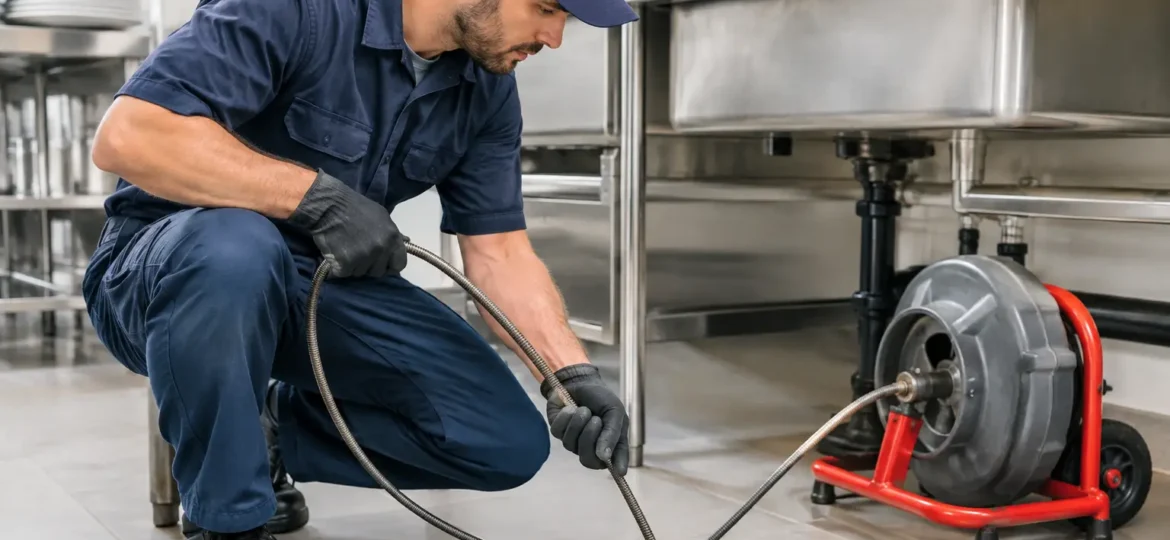
A backed-up floor drain can shut down a kitchen, restroom, shop, or rental property faster than most owners expect. This guide to commercial drain maintenance gives facility managers and business owners a practical way to prevent expensive interruptions before wastewater ends up where it does not belong.
Commercial drain problems rarely start as emergencies. They start with slow sinks, lingering odors, gurgling fixtures, standing water near a floor drain, or employees mentioning that a toilet has been acting up. Ignore those warning signs long enough, and a simple cleaning job can turn into a messy sewer backup, health concern, or lost business day.
Why commercial drains need a real maintenance plan
A commercial plumbing system takes more abuse than a typical home system. Restaurants deal with grease and food waste. Offices have busy restrooms. Retail buildings may have public bathrooms, mop sinks, and old sewer lines serving multiple tenants. Warehouses and industrial spaces can collect sediment, debris, and wash-down waste in floor drains.
The right maintenance schedule depends on what your building does, how many people use it, the age of the plumbing, and whether the property connects to a sewer or septic system. A small professional office may need a basic annual inspection. A busy restaurant or multi-tenant building may need drain service every few months.
The goal is not to clean drains on a calendar just for the sake of it. The goal is to catch buildup, damaged piping, grease problems, and sewer-line trouble before they disrupt operations.
Know which drains create the biggest risk
Not every drain needs the same attention. Start by identifying the drains that receive the most volume or the roughest waste.
Kitchen drains are usually the first concern in food service. Grease, soap, starches, coffee grounds, food scraps, and detergent residue can coat the inside of pipes. Hot water may move grease farther down the line, but it does not make grease disappear. Once it cools, it hardens and catches more debris.
Restroom drains face a different problem. Excess paper products, wipes, hygiene items, and heavy use can clog toilets and branch lines. A toilet that frequently needs plunging is not normal maintenance. It may point to a partial blockage farther down the line.
Floor drains deserve close attention because they are often forgotten until water starts pooling. These drains protect basements, mechanical rooms, kitchens, garages, utility areas, and commercial restrooms. Dirt, mop water, trash, grease, and sediment can build up in the trap or line. A dry floor drain trap can also allow sewer gas odors into the building.
Outdoor area drains, catch basins, and storm drains need their own plan. Leaves, gravel, mulch, and trash can block them quickly during heavy rain. This is especially relevant around loading areas, parking lots, and buildings with sloped exterior surfaces.
Set a schedule your building can actually follow
A maintenance plan only works when someone owns it. Assign a manager, maintenance lead, or property representative to keep a simple log of drain issues, cleanings, inspections, and service calls. That record helps spot repeat problems and gives a plumber useful history when a repair is needed.
For many commercial properties, staff should perform a quick visual check each week. Look for slow drainage, water around floor drains, foul odors, leaking cleanouts, and fixtures that gurgle when another fixture is used. Those symptoms often mean the line is restricted, not fully clear.
Monthly attention should focus on cleaning drain covers, removing visible debris, and checking that floor drain traps hold water. Pouring water into rarely used floor drains helps maintain the trap seal and reduce sewer gas odors. Do not pour harsh chemical cleaners into drains as routine maintenance. They can damage older piping, create dangerous fumes, and often fail to remove the real blockage.
Professional service should be scheduled based on your operation. A high-volume commercial kitchen may need frequent grease interceptor service and drain cleaning. Office buildings, churches, retail spaces, and small rental properties may need annual line inspections and cleaning, with additional service when warning signs appear.
Keep grease, wipes, and debris out of the system
The cheapest drain repair is the one you never need. Most avoidable commercial clogs come down to what enters the plumbing in the first place.
Train employees on what belongs in a drain and what does not. Kitchen staff should scrape plates into trash bins before washing. Grease should be collected and disposed of properly, not washed down with hot water or detergent. Restroom signs may feel basic, but they help reduce wipes, paper towels, and hygiene products being flushed.
For properties with grease interceptors, cleaning the kitchen line without maintaining the interceptor is only half the job. Grease traps and interceptors need routine pumping and inspection based on local requirements and actual usage. If grease escapes into the downstream piping, it can create blockages well beyond the kitchen.
Use sink strainers where they make sense, especially in food prep and mop sink areas. Empty them into the trash before they become overloaded. Small habits like these keep solids from settling in pipe bends and building larger blockages.
Do not treat recurring clogs like normal wear
A drain that clogs once after an unusual event may only need cleaning. A drain that repeatedly backs up is telling you something more serious.
The cause could be grease buildup, roots entering an outside sewer line, a broken or separated pipe, a low spot holding waste, scale buildup in old cast iron, or a problem with the main line. In a septic-served commercial property, recurring backups can also point to a full tank, a failed pump, a blocked effluent line, or drain field trouble.
This is where a camera inspection earns its keep. A sewer camera lets a qualified technician see the inside of the line instead of guessing. It can locate the blockage, identify pipe damage, and show whether cleaning is likely to solve the problem or whether repair is the smarter long-term move.
Hydro jetting can be a strong option for grease, sludge, scale, and heavy buildup. It uses high-pressure water to clean the pipe walls more thoroughly than a basic cable machine in many situations. But it is not the right first answer for every line. Older, damaged, or fragile piping should be inspected first so the cleaning method matches the condition of the system.
Watch for signs that need fast service
Drain issues can move from inconvenient to urgent quickly. Call for professional help when multiple fixtures back up at the same time, sewage appears from a floor drain, toilets gurgle when sinks run, or wastewater is coming up in a lower-level restroom.
Other warning signs include a strong sewer odor that does not go away, water pooling near exterior cleanouts, repeated clogs in the same location, or a sudden change in how quickly fixtures drain. Do not keep using the affected fixtures while waiting for help. Adding more water to a blocked main line can make the backup worse.
For businesses with septic systems, alarms, wet ground near the tank or drain field, slow drainage throughout the building, and sewage odors outdoors all deserve immediate attention. Septic trouble does not fix itself, and waiting can damage the property or create an environmental issue.
Build a relationship before the emergency
When a main line backs up during business hours, you do not want to start searching for help while employees are trying to contain wastewater. Keep the contact information for an experienced commercial plumbing and septic company where your manager can access it after hours.
A local team that understands Chattanooga-area plumbing, septic systems, sewer lines, and commercial drainage can provide a clearer recommendation when trouble hits. Chatta-Rooter Plumbing handles difficult drain, sewer, and septic problems with upfront pricing and 24/7 response when the situation cannot wait.
The best maintenance plan is simple: keep the wrong material out of the drain, inspect the system before it fails, and act on small warning signs while they are still small. That approach protects your building, your employees, and the customers counting on your doors to stay open.