

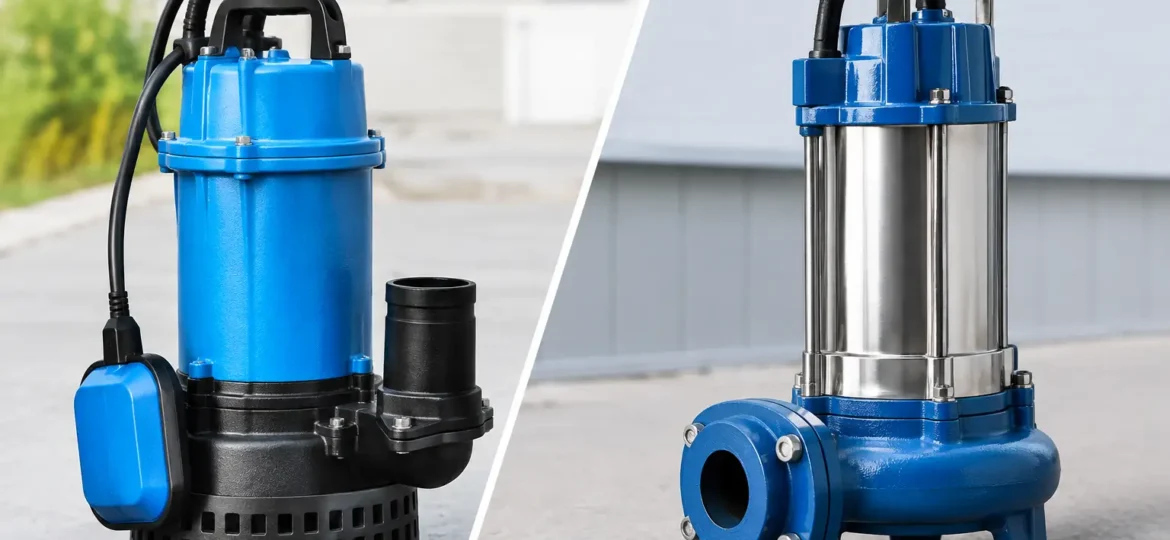
A sewage backup is not the time to guess which pump sits in your basin. The grinder versus ejector question comes down to one practical issue: what has to move through the pipe, and how far it has to travel before it reaches the sewer or septic system. Both pumps handle wastewater. They are not interchangeable.
Choosing the wrong pump can leave a basement bathroom unusable, overload a pressure sewer line, or create repeat service calls that cost more than getting the setup right the first time. Here is what homeowners, landlords, and commercial property owners need to know.
Grinder Versus Ejector: The Main Difference
A sewage ejector pump moves wastewater and normal toilet waste from a lower-level fixture up to a higher drain line. It is commonly installed in a sealed basin under a basement bathroom, laundry room, or utility area. The pump turns on when the basin fills, lifts the waste to the main sewer line, and shuts off after the level drops.
A grinder pump does that work differently. Before pumping, it uses cutting blades to break toilet waste and other solids into a slurry. That slurry can then move through a smaller-diameter pressure pipe, often for a longer distance or against more resistance than a standard ejector pump can handle.
In plain terms, an ejector pump lifts ordinary sewage. A grinder pump grinds and pressurizes sewage so it can travel where gravity drainage is not possible.
The right choice depends on the plumbing design, the discharge pipe size, the distance to the connection point, and whether your property is on a municipal pressure sewer system or a septic system. A pump should be selected for the job, not simply replaced with whatever model is available that day.
When a Sewage Ejector Pump Is the Right Fit
An ejector pump is often the better choice for a home with a basement bathroom below the level of the main sewer line. The bathroom drains into a basin, and the pump lifts that wastewater into a larger drain pipe where it can continue by gravity.
These systems are common because they are straightforward, effective, and generally less complicated than grinder systems. An ejector pump can handle normal human waste and toilet paper when it is sized correctly and installed with the proper venting, check valve, and discharge piping.
It is a good fit when the discharge line is large enough, the lift is reasonable, and the wastewater has a clear path into a gravity sewer or septic line. Many residential basement additions fall into this category.
That said, an ejector pump is not a garbage disposal. Wipes, feminine products, paper towels, dental floss, grease, and other debris can clog the pump or jam the float. Even products labeled flushable can cause trouble once they collect in a basin or pipe.
Typical ejector pump applications
A sewage ejector pump is commonly used for a basement toilet, shower, sink, laundry drain, or bar sink. It may also serve an accessory dwelling space where the fixtures sit below the elevation of the building’s main drain.
The pump needs enough horsepower and head capacity to lift wastewater to the discharge connection. “Head” is the total resistance the pump works against, including vertical lift, horizontal run, fittings, and pipe friction. A pump that seems powerful enough on paper may still struggle if the run is long or restrictive.
When You Need a Grinder Pump
A grinder pump is built for tougher pumping conditions. Its cutting mechanism breaks solids down before wastewater enters the discharge line. This makes it useful where a property relies on a narrow pressure line, where the wastewater must travel a significant distance, or where the route includes a steep uphill climb.
Some neighborhoods and commercial sites are connected to a low-pressure sewer system. Instead of relying on a large gravity sewer pipe at the property, the home or building pumps wastewater into a pressurized main. In that setup, a grinder pump may be required by the utility or system design.
Grinder pumps are also used where terrain makes conventional gravity drainage impractical. Chattanooga-area properties can vary widely in elevation and layout. A building that sits below the available sewer connection may need a grinder pump to move wastewater uphill reliably.
Because grinder pumps have more moving parts and perform more demanding work, they often cost more to install and repair than standard ejector pumps. They also need to be matched carefully to the system. Installing an ejector pump where a grinder pump is required can cause backups, blocked lines, and premature pump failure.
What grinder pumps should never receive
The blades in a grinder pump are tough, but they are not indestructible. Avoid flushing wipes, rags, diapers, paper towels, cat litter, cooking grease, cotton swabs, dental floss, and hygiene products. These materials can wrap around components, jam the cutting assembly, or create a blockage farther down the pressure line.
For commercial properties, employee and customer habits matter even more. A single restroom sign reminding users to flush only toilet paper can prevent an expensive after-hours call.
Pipe Size and Distance Matter More Than Most People Think
One of the biggest differences in the grinder versus ejector decision is the discharge piping. A sewage ejector pump typically uses a larger discharge pipe because it moves solids without grinding them into a fine slurry. A grinder pump can push waste through a smaller pressure line because solids have been macerated first.
That does not mean smaller pipe is automatically better. The pipe, fittings, pump capacity, check valve, basin, and electrical controls must work together. Improper pipe sizing can make a pump run too long, short-cycle, overheat, or fail to clear the basin.
Distance matters too. A short lift from a basement bathroom to a nearby main line may be ideal for an ejector pump. A long uphill run to a force main or distant connection may call for a grinder pump. This is why a technician should inspect the actual site before recommending replacement equipment.
Do Not Confuse a Sewage Pump With a Sump Pump
A sump pump handles groundwater. A sewage ejector or grinder pump handles wastewater from toilets, sinks, showers, and drains. They may both sit in pits, but they perform completely different jobs.
A sump pump should never be used to pump sewage. It is not designed for solids, toilet waste, or the conditions inside a sewage basin. Likewise, a sewage pump should not be used as a substitute for a properly designed sump system.
If you have a flooded basement and a sewage backup at the same time, treat it as a serious sanitation issue. Keep people and pets away from contaminated water, avoid using affected fixtures, and call for professional help right away.
Signs Your Pump Needs Service or Replacement
Most pump failures give warning signs before a complete backup happens. If you catch the problem early, repair may be possible. If the pump is ignored, wastewater can come up through the lowest drain in the building.
Watch for these warning signs:
- The pump runs constantly, cycles on and off too often, or makes loud grinding noises.
- Toilets, showers, or sinks in the lower level drain slowly or back up.
- You smell sewage near the pump basin or notice moisture around the lid.
- The alarm sounds, the circuit breaker trips, or the pump fails to turn on.
- The system works only after you reset it, tap the lid, or wait for the water level to drop.
The problem may be a failed float switch, worn motor, blocked impeller, jammed grinder assembly, bad check valve, damaged discharge line, or electrical issue. A professional diagnosis matters because replacing a pump without finding the actual cause can lead to the same failure again.
Repair or Replace? It Depends on the Failure
A float switch, check valve, control issue, or minor blockage can often be repaired. But if a pump is old, repeatedly tripping, leaking, losing performance, or suffering motor damage, replacement may be the more reliable choice.
For grinder pumps, repair decisions also depend on the condition of the cutting components and the pressure line. For ejector pumps, the basin size, discharge configuration, and fixture load should be checked before installing a new unit.
Chatta-Rooter Plumbing provides pump diagnosis, repair, and replacement for homes and commercial properties across the Chattanooga area. You will get a clear explanation of what failed, what it takes to fix it, and upfront pricing before work begins.
What to Do When a Sewage Pump Stops Working
If the pump alarm is sounding or sewage is rising in the basin, stop using water in the affected area. Do not flush toilets, run showers, use the washing machine, or send more water into the system. If the pump is on a dedicated breaker and it has tripped, one reset may be reasonable, but do not keep resetting it. Repeated trips can point to a jammed pump or electrical fault.
Do not open a sewage basin unless you are trained and equipped for the work. These basins can contain harmful gases and contaminated wastewater. A licensed plumbing professional can safely inspect the pump, controls, basin, and discharge line.
The best pump is the one matched to your property’s actual drainage conditions. Whether your system needs an ejector pump for a basement bathroom or a grinder pump for a pressure sewer line, getting the diagnosis right protects your building from the kind of backup nobody wants to clean up.