

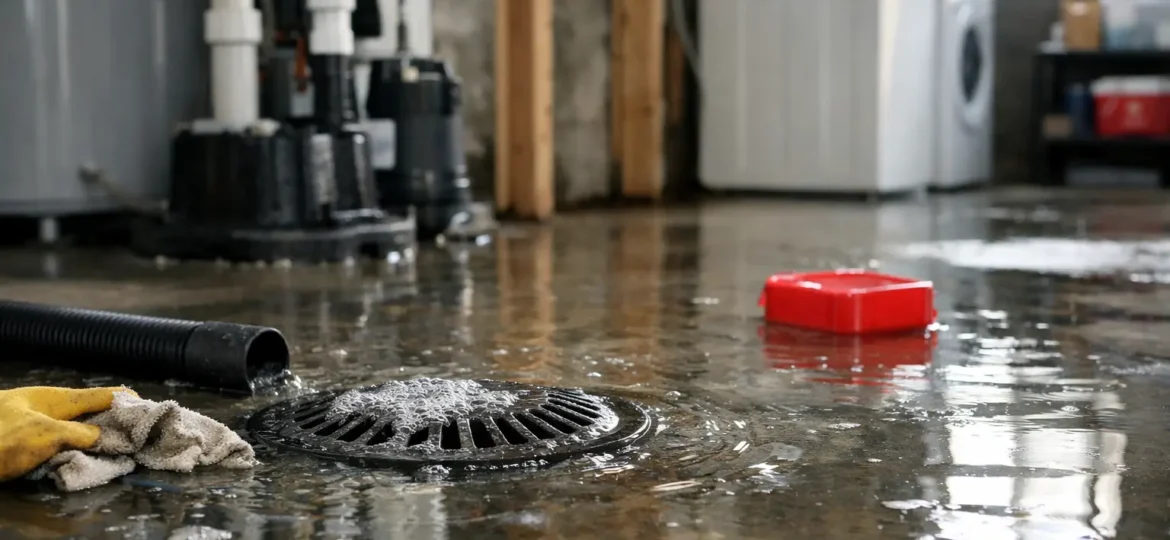
If water is coming up through a basement drain, you do not have time for guesswork. Basement drain backup causes can range from a simple branch-line clog to a failing sewer main, overloaded septic system, or broken pump. The faster you know what is behind it, the better your chances of avoiding sewage cleanup, floor damage, and a much bigger repair bill.
Why basement drain backups happen
A basement drain sits at the low point of the plumbing system. When wastewater cannot move out the way it should, that low point often becomes the first place where the problem shows up. Sometimes the backup is just a local blockage near the drain. Other times it is pressure building in the main line, a system outside the house, or groundwater where it does not belong.
That is why two basement backups can look similar but have very different fixes. A drain snake might solve one. The next one might need a sewer camera inspection, hydro jetting, septic pumping, or pump replacement.
The most common basement drain backup causes
1. A clog in the main sewer line
This is one of the biggest basement drain backup causes, especially if more than one fixture is acting up. If you flush a toilet upstairs and water rises in the basement drain, or if running the washing machine causes a backup, the main line is high on the suspect list.
Main line clogs happen when grease, wipes, paper buildup, sludge, or heavy debris restrict the pipe. In older homes, years of buildup can narrow the line enough that one heavy use cycle pushes wastewater back toward the basement.
The warning signs are usually slow drains all over the house, gurgling toilets, and backups that get worse when a lot of water is used at once. This is not a wait-and-see problem. Once the main line starts backing up, it usually keeps happening until the blockage is cleared.
2. Tree roots in the sewer pipe
Roots are a common cause of repeat drain backups, especially in older neighborhoods with mature trees. Tiny root hairs can enter through joints, cracks, or worn sections of underground pipe. Once inside, they keep growing and catch waste flowing through the line.
At first, the symptoms may seem minor. The basement drain might back up only during heavy use. Over time, roots can create a serious blockage or even break the pipe apart.
This is one reason repeat backups matter. If a basement drain was snaked before and the problem came back, roots may be the real issue. A camera inspection usually tells the story fast.
3. A blocked basement floor drain itself
Not every backup points to the whole sewer system. Sometimes the floor drain is simply clogged with dirt, lint, pet hair, mop residue, or debris washed across the floor over time.
This is more likely if the backup is limited to one drain and other fixtures in the building seem normal. A local clog can still create standing water and foul smells, but the fix is usually more direct than a main sewer issue.
The catch is that it can be hard to tell the difference without testing and inspection. What looks like a floor drain clog can actually be wastewater backing up from farther down the line.
4. Heavy rain and overloaded municipal sewer systems
During major storms, some homes experience basement drain backups because the public sewer system is overwhelmed. When the system cannot carry storm-related volume fast enough, wastewater can push backward into lower drains.
This tends to happen in areas with older infrastructure or properties connected to systems that take on more water during wet weather. If the problem only shows up during or right after hard rain, weather-related sewer overload is worth considering.
It is also a case where timing matters. If your basement drain backup hits every storm, that pattern helps narrow the cause. You may need a backwater valve, sump system evaluation, or drainage improvements depending on how the property is set up.
5. Septic tank or drain field problems
For homes on septic, some basement drain backup causes start in the tank or drain field, not the indoor plumbing. If the septic tank is overdue for pumping, solids can build up and restrict flow. If the drain field is saturated or failing, wastewater has nowhere to go.
When that happens, the lowest drains in the house may show the problem first. Basement floor drains, lower-level showers, and toilets can all back up. Outside, you may notice wet ground, strong odors, or unusually lush grass near the drain field.
This is where homeowners can lose time by assuming it is just a clogged pipe. If the septic system is full or failing, clearing an indoor line will not solve the actual problem.
6. Failed sump pump or sewage ejector pump
People often confuse these two systems, but both can be tied to basement water trouble. A sump pump handles groundwater around the foundation. A sewage ejector pump moves wastewater from basement fixtures up to the main sewer line when gravity alone will not do it.
If a sump pump fails, the basement may flood with groundwater, especially during storms. If a sewage ejector pump fails, sinks, toilets, or showers in the basement can back up because wastewater is no longer being pushed out properly.
The details matter here. Clear water on the floor points in one direction. Dirty water or sewage points in another. If your basement has a bathroom, laundry setup, or any plumbing below the main sewer line, pump failure should be on the list right away.
7. Collapsed, cracked, or offset sewer pipe
Some backups are caused by the pipe itself failing underground. Pipes can crack from age, shift with soil movement, corrode, or collapse under load. In some cases, one section of pipe settles and creates an offset joint that catches waste and paper.
This type of damage can act like a clog at first, then become a structural failure. If backups are frequent, severe, or tied to sinking yard areas, bad odors outside, or unexplained wet spots, the line may be damaged rather than simply blocked.
Temporary clearing may restore flow for a while, but it will not fix a broken pipe. That is why recurring basement backups should never be treated as normal.
8. Grease, wipes, and other flushable-in-name-only materials
A lot of line blockages come from what gets put down drains and toilets. Grease cools and hardens in the pipe. So-called flushable wipes do not break down like toilet paper. Paper towels, hygiene products, and heavy food waste can all build into a blockage over time.
This cause is common in both homes and commercial buildings. In rentals, multi-unit properties, and businesses, it can be even harder to control because many people use the same system.
The problem is not always immediate. Pipes collect debris little by little until one day the basement drain becomes the place where the system gives up.
How to tell if it is serious
A basement drain backup is serious the moment sewage is involved, but a few signs tell you the problem likely goes beyond a minor clog. If multiple fixtures are slow, if the backup happens when you use water elsewhere in the building, if foul odors are strong, or if the problem keeps returning, you are probably dealing with a larger system issue.
For septic properties, backups paired with soggy ground or tank service that is overdue raise the stakes. For city sewer properties, backups after heavy rain or repeated clogs in an older line point toward a bigger diagnosis.
The safest move is to stop using water until the cause is identified. Continuing to flush toilets, run laundry, or drain tubs can turn a small backup into a full sewage spill.
What the fix usually depends on
The right repair depends on where the restriction or failure is happening. A local floor drain clog may need cleaning. A main sewer blockage may need cabling or hydro jetting. Root intrusion or a broken line may require camera inspection and repair. Septic issues may call for pumping, drain field diagnosis, or system repair. Pump failures need testing and replacement if the unit is not doing its job.
That is why honest diagnosis matters more than quick guesses. The real goal is not just getting the water down for today. It is making sure it does not come right back next week.
If your basement drain is backing up in Chattanooga or the surrounding area, this is the kind of job Chatta-Rooter Plumbing handles every day – sewer problems, septic trouble, drain cleaning, pump issues, and the dirty work that has to be solved fast.
What you can do right now
If the drain is actively backing up, stop running water in the house or building. Keep people and pets out of the area, especially if there is sewage present. Do not assume chemicals will fix it. In many cases they do nothing for the real blockage and can make the line harder and more dangerous to work on later.
Take note of what was running when the backup started. Was it the washer, a shower, multiple toilets, or heavy rain outside? That detail can help narrow the cause quickly once the system is inspected.
A basement drain backup is one of those problems that punishes delay. The good news is that the cause is usually traceable, and once you know what is really happening, the next step gets a lot clearer.