

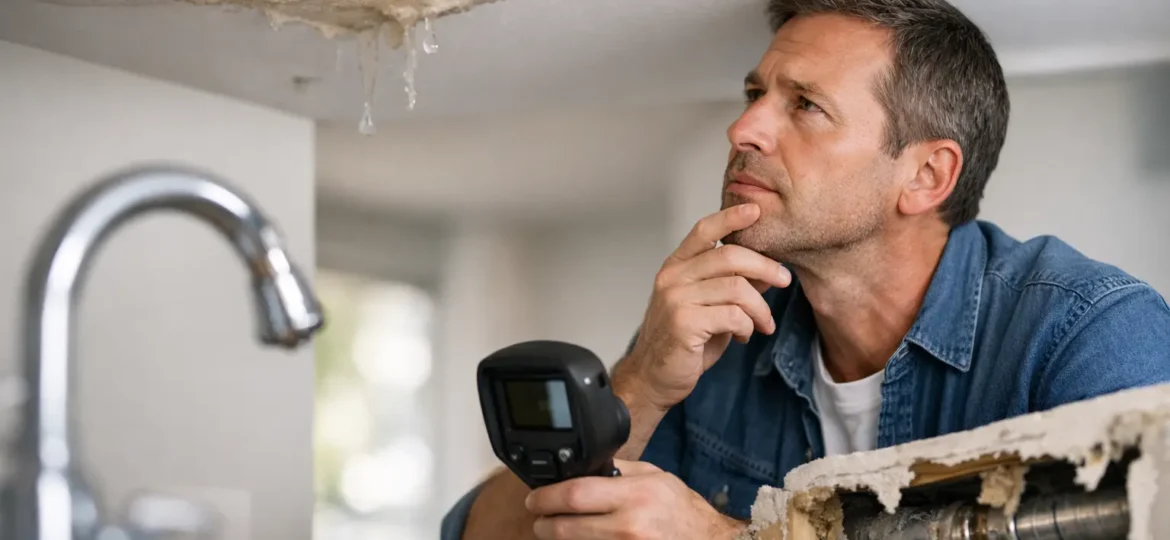
That jump in your water bill usually shows up before the stain on the ceiling does. If you want to know how to spot hidden leaks, start by paying attention to the small changes most people brush off – a musty smell, paint that starts bubbling, a floor that feels a little warmer, softer, or warped for no clear reason.
Hidden leaks are expensive because they stay quiet. A supply line can drip behind a wall for weeks. A drain line can seep under a floor and slowly rot subflooring, framing, and drywall. In some homes, the first real clue is mold. In others, it is a septic or sewer-related issue that gets worse because extra water is moving where it should not.
How to spot hidden leaks inside your home
Most hidden leaks leave a trail. The trick is knowing what kind of trail to look for.
Start with walls and ceilings. Yellow or brown stains are obvious signs, but fresh leaks do not always show up that way. Sometimes the paint looks blistered, the drywall tape starts separating, or a ceiling develops a slight sag. If a room smells damp even when everything looks dry, do not ignore it. Water trapped behind drywall often announces itself with odor before visible damage shows.
Floors tell their own story. Hardwood may cup or buckle. Laminate can swell at the seams. Tile may feel loose if the subfloor beneath it has been wet for a while. In bathrooms, kitchens, laundry rooms, and basements, soft spots underfoot usually mean moisture has been there longer than you think.
Listen, too. If you hear water running when no fixture is on, that is a red flag. Toilets are common culprits, but leaks can also happen behind showers, under tubs, or in lines feeding sinks, ice makers, and water heaters. A faint hiss in the wall is not normal.
Another clue is repeated mildew in the same place. If you clean it and it comes back fast, especially on a baseboard or lower wall, there is a good chance moisture is feeding it from behind the surface.
Check the water meter before you tear into anything
One of the simplest ways to confirm a hidden leak is with your water meter. Turn off every faucet, appliance, and fixture that uses water. Do not run the dishwasher. Do not flush toilets. Do not let the ice maker cycle.
Then check the meter and write down the reading. Wait 30 minutes to an hour without using any water and check it again. If the number changed, water is moving somewhere in the system.
This test will not tell you exactly where the leak is, but it tells you whether you are chasing a real plumbing problem or something else, like old staining from a past issue. If the meter keeps moving, you have an active leak and it is time to narrow it down quickly.
Rooms where hidden leaks happen most often
Bathrooms are leak magnets because they pack a lot of plumbing into a small space. Shower pans, tub drains, supply lines, toilet seals, and shutoff valves all fail in different ways. A toilet can leak at the base and damage flooring without leaving a major puddle. A shower can leak behind tile and soak framing for months.
Kitchens are close behind. Sink drains loosen, garbage disposal connections drip, dishwasher lines crack, and refrigerator water lines split. Because cabinets hide a lot of this damage, homeowners often do not see the problem until the cabinet floor swells or starts smelling bad.
Laundry rooms are another hotspot. Washing machine hoses can leak slowly at the connection or fail outright. Drain standpipes can back up. If the floor around the washer stays damp or the wall behind it shows staining, do not wait.
Water heaters also deserve a close look. Some leaks are obvious around the base, but others come from valves, fittings, or the pan drain. A slow leak there can travel farther than you expect, especially in garages, utility closets, and finished basements.
Hidden leaks outside the house
Not every leak is indoors. Water lines in the yard can leak underground for a long time before anyone notices. If one area of the lawn is greener, softer, or constantly wet, that is a strong sign. Puddles that form with no rain are another.
You may also notice a drop in water pressure inside the home. That does not always mean a buried line leak, but it can. If low pressure shows up along with a high bill or a spinning meter, it is worth checking.
Outdoor leaks matter for another reason. Water around the foundation can create bigger problems than a wasted utility bill. It can affect crawl spaces, basements, slabs, and in some cases septic performance if the ground is staying oversaturated.
How to spot hidden leaks around drains and sewer lines
Supply leaks get more attention because they raise the water bill, but drain and sewer leaks can do just as much damage. They are different because you may not see a meter change. Instead, the warning signs are smell, recurring backups, slow drains in multiple fixtures, or wet ground near the sewer path.
If a drain line is leaking under a home, you may notice sewage odor in the crawl space or inside the house. Floors can sag. In commercial buildings, bad smells that linger even after cleaning often point to a drainage issue rather than a surface-level mess.
With sewer lines, it depends on where the break is and how bad it is. A cracked line may leak wastewater into the soil and also let roots grow in. That can cause intermittent clogs, gurgling toilets, and slow drainage that seems to come and go. Those are not problems to keep guessing at. They need real diagnosis.
Tools that help, and when they only go so far
A flashlight and your own senses can get you surprisingly far. So can a basic moisture meter if you know how to use one. Thermal imaging can sometimes help identify temperature differences behind walls or under floors, especially with active water lines.
But tools have limits. A stain does not always mark the exact source. Water travels. A leak from one bathroom can show up in the room next to it or on the ceiling below. Moisture meters can confirm damp materials, but they do not tell you why they are wet. Thermal cameras are useful, but not every hidden leak shows a clean picture.
That is where experience matters. A trained plumber knows how water behaves in real structures, how to isolate fixtures, and how to tell the difference between a plumbing leak, condensation issue, roof problem, or groundwater intrusion.
When a hidden leak is an emergency
Some leaks can wait a day for scheduled service. Some cannot.
If water is actively soaking drywall, pooling on floors, dripping near electrical fixtures, or leaking from a water heater, shut the water off and treat it as urgent. The same goes for sewage smells, wastewater backing up, or leaks tied to your main line. The damage gets more expensive by the hour, not the week.
If you are on a slab, hidden leaks deserve extra attention. Slab leaks can wash out soil, damage flooring, and create major repair costs before the source is visible. Warm spots on the floor, unexplained moisture, and a meter that keeps moving are common clues.
What to do next if you think you found one
Start by shutting off the local valve if the leak is isolated to a sink, toilet, or appliance. If you cannot tell where it is coming from, shut off the main water supply. Move rugs, boxes, or stored items away from the wet area and take photos of the damage for your records.
Do not assume drying the surface fixes the problem. If the leak is behind the wall, under the floor, or in the line itself, the water will keep coming back. Temporary cleanup is not the same as repair.
This is especially true with septic, sewer, and drain issues. If the warning signs point to wastewater or a buried line problem, that is not a DIY call. It needs proper inspection and repair, not guesswork.
For homeowners and property managers in the Chattanooga area, this is the kind of problem Chatta-Rooter Plumbing handles every day – finding the source fast, explaining what is actually wrong, and fixing it without wasting your time.
The best way to limit damage is simple: trust what your house is telling you. A smell, a stain, a warped floor, a spinning meter – none of that happens for no reason. Catch it early, and you have a repair. Wait too long, and you have a rebuild.