

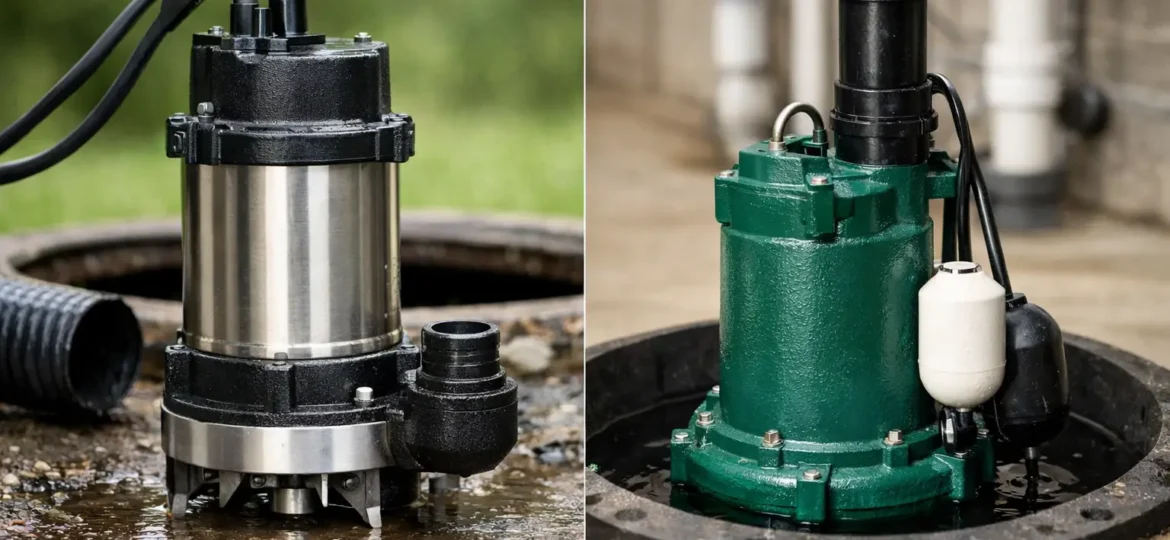
A basement bathroom that keeps backing up, a new home on a slope, a commercial restroom below the main sewer line – these are the moments when grinder pump versus sewage ejector stops being a technical question and starts costing real money. The two pumps do similar work in the sense that both move wastewater, but they are not interchangeable. Choosing the wrong one can mean clogs, repeat service calls, early pump failure, and a mess nobody wants to deal with.
If you are a homeowner, landlord, or property manager, the short answer is this: a sewage ejector pump moves solids and wastewater up to the main sewer line, while a grinder pump cuts waste into a slurry before pumping it under pressure through smaller pipe. That difference matters a lot when it comes to pipe size, distance, elevation, and the kind of system your property actually has.
Grinder pump versus sewage ejector: the core difference
A sewage ejector pump is built to lift raw sewage from a lower level to a higher drain or sewer connection. Think basement bathrooms, laundry rooms, or any fixture installed below the elevation of the main sewer line. The pump sits in a basin, collects wastewater, and when the level rises, it turns on and pushes the waste out through a discharge line.
A grinder pump also handles sewage, but it does more than move it. It grinds solid waste into a fine slurry before pumping it out at higher pressure. That makes it a better fit when the waste has to travel a long distance, move uphill for a significant run, or pass through smaller diameter piping.
In plain English, a sewage ejector is usually the right tool for lifting waste a short distance. A grinder pump is for tougher conditions where the waste needs extra help getting where it needs to go.
Where a sewage ejector pump makes sense
For many homes, a sewage ejector pump is the practical choice. If you have a basement bathroom or a fixture group below grade and the discharge run is fairly short, an ejector pump usually does the job well. It is designed to pass solids without grinding them, using a wider discharge pipe and a simpler pumping setup.
That simplicity is part of the appeal. In the right application, a sewage ejector pump can be a reliable, cost-effective solution. Installation is often more straightforward than a grinder pump system, and repairs can be less expensive depending on the unit and site conditions.
This does not mean it is a cheap shortcut. It still has to be properly sized, correctly vented, and matched to the actual head pressure and volume of wastewater the system will handle. A basement half-bath in a single-family home is one thing. A busy commercial space with repeated use is another.
Common sewage ejector applications
Most ejector pumps are used when plumbing fixtures sit below the main gravity sewer. That includes basement bathrooms, utility sinks, washing machines, and sometimes lower-level apartment or tenant spaces. In these cases, the system is not trying to push waste across a long property or through a pressurized sewer main. It is mostly solving an elevation problem.
If that sounds like your setup, a sewage ejector may be all you need.
When a grinder pump is the better call
A grinder pump is built for harder jobs. If your property sits lower than the municipal sewer, if the wastewater has to travel a long way, or if the discharge piping is smaller and under pressure, a grinder pump is often the right answer.
This is common in certain residential developments, uphill sewer connections, and some commercial properties. It can also come into play where site layout makes standard gravity drainage impractical. Instead of relying on larger pipe and a simpler lift, the grinder pump reduces solids and forces them through the line more aggressively.
That extra capability comes with more complexity. Grinder pumps typically cost more than sewage ejector pumps, and when they fail, the repair can be more involved. They also need to be treated with respect. Flush the wrong items, and you can jam the cutting mechanism or burn the pump up.
Grinder pumps are not garbage disposals
This is where a lot of problems start. People hear the word grinder and assume the pump can handle anything. It cannot. Wipes, hygiene products, paper towels, grease, stringy materials, and other so-called flushable items are some of the fastest ways to create a blockage or mechanical failure.
A grinder pump is tough, but it is not built for abuse. The same basic rule applies to both systems: if it should not go down the drain, do not send it to the pump.
Pipe size, pressure, and distance matter more than most people think
This is where the choice really gets technical. A sewage ejector pump usually discharges through a larger pipe, commonly 2 inches, because it passes solids without grinding them first. It is typically designed for shorter runs and moderate lift.
A grinder pump can often use smaller piping because the solids have been reduced. It is also better suited for longer discharge lines and higher pressure conditions. That does not automatically make it better. It makes it better for certain layouts.
A lot of bad recommendations happen when someone looks only at the fixture count and ignores the actual site conditions. The pump has to be matched to total dynamic head, pipe run, vertical lift, basin design, and how often the system will cycle. If those numbers are off, the pump may run too long, short cycle, overheat, or fail early.
Cost: cheaper up front is not always cheaper later
If you are comparing grinder pump versus sewage ejector based on price alone, a sewage ejector pump often wins the upfront battle. The equipment cost is typically lower, and installation may be simpler in the right setup.
But upfront cost is only one part of the story. If an ejector pump gets installed where a grinder pump should have been used, you can end up paying for repeated clogs, poor performance, and premature replacement. On the other hand, installing a grinder pump where an ejector would have worked fine may mean spending more than necessary.
The real goal is not buying the most powerful pump. It is buying the correct one.
Maintenance and failure signs
Neither system should be ignored until sewage shows up on the floor. Pumps usually give warning signs before complete failure. You may hear the unit running longer than normal, notice bad odors near the basin, see slow drainage at lower-level fixtures, or hear alarms if the system has a control panel.
With grinder pumps, hard starts, loud grinding noises, or frequent resets can point to trouble. With sewage ejector pumps, repeated backups or a pump that hums without clearing the basin often means the system needs immediate service.
If a property has a pump and no one knows its age, size, or service history, that is already a problem. A quick inspection can tell you a lot before it becomes an emergency.
Which one should you choose?
For a typical basement bathroom with a short lift to the main sewer, a sewage ejector pump is often the right fit. For properties that need to move wastewater farther, through smaller pressure lines, or up significant elevation, a grinder pump usually makes more sense.
There are gray areas. Some homes have unusual site layouts. Some commercial buildings produce heavier usage than a residential-style pump should handle. Some septic and sewer setups create conditions where basin size, pump horsepower, and control configuration matter just as much as the pump type.
That is why real diagnosis beats guessing. A pump is not just a box you swap out. It is part of a working wastewater system, and every part of that system has to match.
In Chattanooga and surrounding areas, Chatta-Rooter Plumbing sees this firsthand on septic jobs, sewer repairs, basement pump issues, and emergency backups. The right answer is not always the more expensive one, but it is always the one that fits the property.
If you are trying to decide between the two, start with how far the waste has to travel, how high it has to go, what size pipe the system uses, and how much use the system gets every day. That will tell you more than the label on the pump ever will.
When wastewater has nowhere to go, the problem gets urgent fast. Getting the right pump on the front end is one of the best ways to keep a bad day from getting worse.