

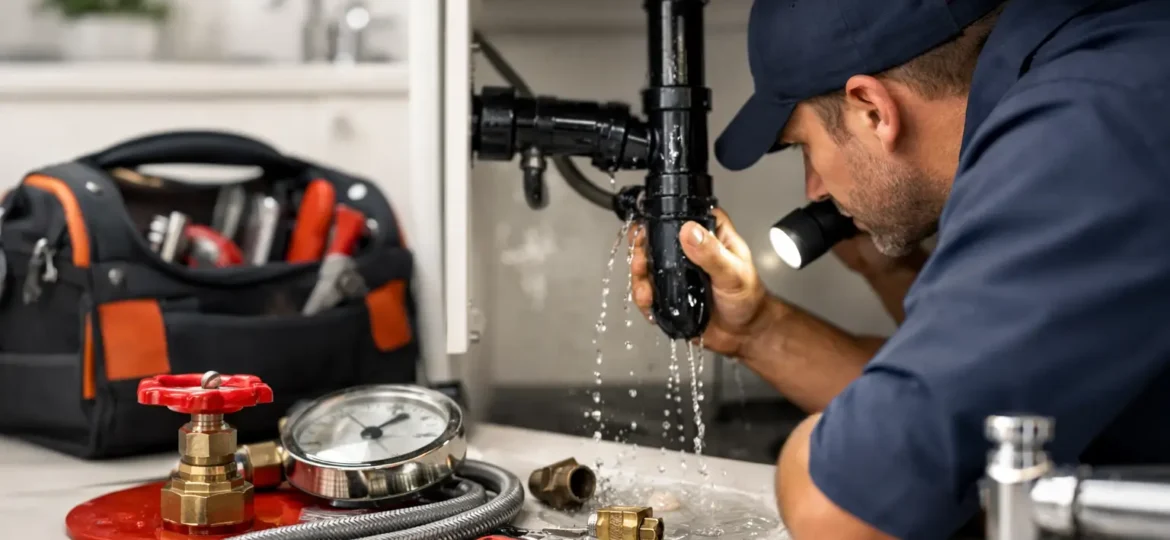
A burst pipe at 11 p.m. does not care what your budget looks like. When water is spreading across the floor, a toilet is backing up, or a sump pump quits during a storm, you need answers fast. This emergency plumber cost guide breaks down what you are actually paying for, why after-hours service costs more, and how to tell the difference between a fair charge and a bad surprise.
What an emergency plumber cost guide should really explain
Most people look up pricing because they want one number. That is understandable, but emergency plumbing does not work like buying a part off a shelf. The real cost depends on how urgent the problem is, what failed, how hard it is to reach, whether cleanup is involved, and whether the plumber can solve it in one visit.
A good emergency plumber cost guide should not pretend every call is the same. A simple drain blockage is different from a sewage backup. A leaking shutoff valve is different from a collapsed sewer line. The difference in price comes down to labor, materials, equipment, timing, and risk.
Why emergency plumbing costs more after hours
When you call for emergency service at night, on a weekend, or during a holiday, you are paying for immediate response. That higher rate covers dispatching a technician outside normal business hours, carrying stocked trucks, diagnosing under pressure, and handling problems that can get expensive fast if they are ignored.
There is also a big difference between inconvenience and property damage. If a pipe is actively leaking into walls or a sewer line is backing into a building, waiting until Monday can turn a repair bill into a restoration bill. In that case, paying more for emergency service may save money overall.
That said, not every plumbing problem is a true emergency. A dripping faucet can usually wait. A single slow drain might wait too, unless it is the only working drain in a business or the issue is getting worse by the hour.
Typical emergency plumber costs
Pricing varies by market and by job, but most emergency calls fall into a few common charge categories. First is the service or dispatch fee. For emergency work, that can range from about $100 to $300 depending on time of day, distance, and company policy. Some companies apply that amount toward the repair. Others charge it separately.
Then comes labor. Emergency labor is often billed at a higher hourly rate than standard daytime work, or it may be included in a flat-rate price. A straightforward emergency repair might land in the $150 to $500 range if the fix is quick and materials are minimal. More involved problems can move into the $500 to $1,500 range or higher.
Large repairs cost more because they require more than a wrench and a replacement part. If the job needs excavation, camera inspection, hydro jetting, pump replacement, or sewer line repair, the bill rises fast. Emergency septic and wastewater problems can also cost more because of access issues, safety concerns, contamination, and cleanup.
Common emergency plumbing repairs and what affects the price
A burst or frozen pipe often costs several hundred dollars at minimum, and more if drywall, insulation, or flooring has to be opened to reach the break. If the damaged section is easy to access, the repair is usually cheaper. If the line is behind finished walls or under a slab, the cost goes up.
An overflowing toilet may be a basic clog, or it may point to a bigger main line issue. If the toilet itself is the only fixture affected, the repair may stay on the lower end. If multiple drains are backing up, expect a deeper diagnosis and a higher bill.
Main sewer line clogs are one of the most common reasons people call after hours. Snaking a line may solve it, but not always. Grease buildup, roots, broken pipe, or a belly in the line can turn a simple stoppage into a camera inspection and repair job.
Water heater emergencies also vary. If a unit is leaking from a valve or connection, a repair may be possible. If the tank itself is leaking, replacement is usually the real answer. That means parts, labor, hauling away the old unit, and in some cases code upgrades.
Sump pump and sewage ejector pump failures can get serious fast, especially during heavy rain or when a basement is at risk. Replacing a failed pump is one price. Replacing a pump after flooding, cleaning contaminated water, or fixing electrical issues is another.
Flat-rate pricing vs hourly pricing
Many customers prefer flat-rate emergency pricing because it gives them a clear number before work starts. That can be a good setup if the company has properly diagnosed the issue and explained the scope. You know the price, the repair gets approved, and there is less guesswork.
Hourly pricing can work too, but it carries more uncertainty. If the problem is harder to access than expected, or if the diagnosis changes once the plumber opens things up, your total can rise. Neither model is automatically better. What matters is whether the company explains what is included, what could change, and what you are authorizing.
For tough jobs, especially wastewater and septic emergencies, upfront pricing matters because those repairs can branch quickly. A trustworthy contractor should tell you whether the quoted amount covers diagnosis only, temporary stabilization, or full repair.
What makes one emergency estimate higher than another
A low number is not always a bargain. One estimate may only cover a temporary fix, while another includes the actual repair, replacement parts, testing, and cleanup. That is why comparing totals without comparing scope can mislead you.
Equipment also changes price. A truck stocked for real emergency work costs more to operate than a basic service van. Camera inspections, hydro jetting machines, pumping equipment, and specialized tools all add capability, but they also affect what a company charges.
Experience matters too. A seasoned technician may cost more, but they are often faster and more accurate. That can mean fewer return visits, less damage, and a repair that actually holds.
How to avoid overpaying during a plumbing emergency
The best move is to slow down just enough to ask the right questions. Ask whether there is a dispatch fee, whether the repair is flat-rate or hourly, what the price includes, and whether there are extra charges for after-hours work. Ask what happens if the technician finds a bigger issue once the job starts.
If you are dealing with active water flow or sewage, stop the immediate damage first if you can do it safely. Shut off the main water. Keep people away from contaminated areas. Turn off power near standing water if it is safe to do so. The less damage happening while you wait, the less money you may spend later.
It also helps to describe the problem clearly. Tell the plumber what fixture is affected, whether other drains are backing up, when the issue started, and whether there is visible leakage, standing water, or sewage. Better information can lead to faster diagnosis and a more accurate quote.
When the cheapest option becomes the most expensive
Emergency plumbing is one of those areas where cutting corners can backfire hard. A quick patch on a pressurized line may hold for a few hours and fail again. Clearing a drain without checking why it clogged can leave the real problem untouched. Replacing one part in a failing pump system may not solve the system issue.
This is especially true with sewer and septic problems. Wastewater issues are messy, time-sensitive, and often tied to larger system failures. If the company does not have the tools or experience to diagnose the full problem, you can end up paying twice – once for the temporary attempt and again for the real repair.
That is why many property owners look for a contractor who can handle both plumbing and wastewater work under pressure. If the issue turns out to be deeper than a basic clog, you want someone who can keep moving instead of handing you off to the next company.
Emergency plumber cost guide for homeowners and businesses
Homeowners usually focus on immediate damage, but business owners have another layer to consider – downtime. A backed-up restroom, broken water heater, or main line blockage can disrupt customers, employees, tenants, or operations. In a commercial setting, the true cost is not just the repair. It is lost use of the property.
That is why fast response and clear pricing matter so much. An emergency plumber cost guide is useful, but the real value comes from getting a technician who can diagnose the issue quickly, explain the fix in plain English, and give you a fair number before the work starts.
In the Chattanooga area, that matters even more during heavy rain, cold snaps, and busy weekends when plumbing and septic systems tend to fail at the worst time.
If you are facing an emergency, focus on speed, honesty, and proven experience – not just the lowest number on the phone. The right repair should stop the damage, solve the actual problem, and let you get back to normal without wondering when it will fail again.