

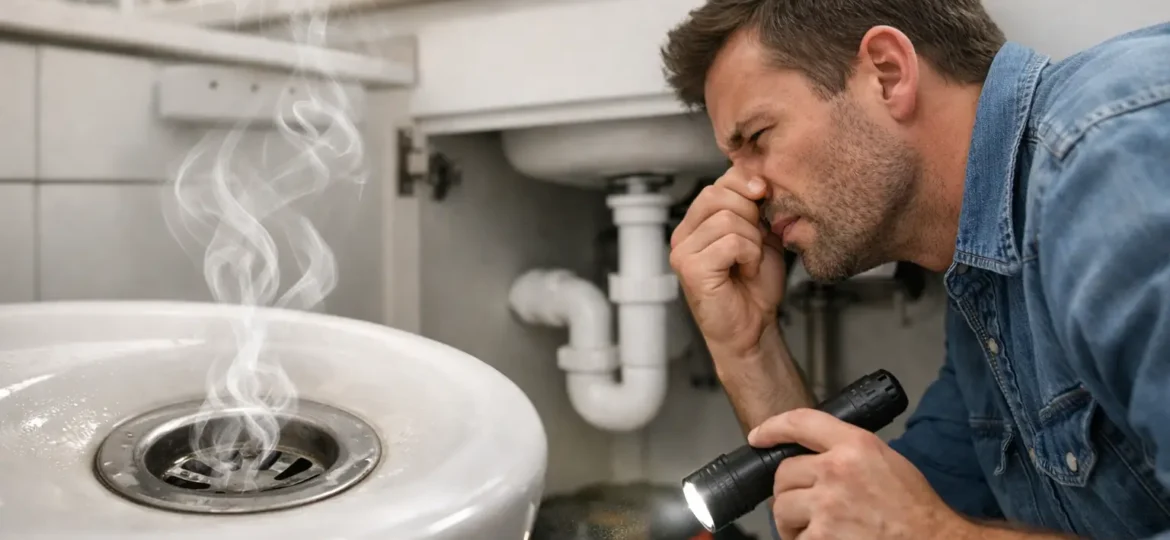
That sewer smell usually hits at the worst time – when guests are coming over, when you open the utility room door, or when the bathroom has been sitting closed all day. If you are trying to figure out how to fix sewer odors, the good news is that the smell often points to a specific problem. The bad news is that some of those problems are simple, and some mean you need a plumber or septic pro sooner rather than later.
A sewer odor inside the house is never something to ignore. At best, it is a dry drain trap or a bad wax ring under a toilet. At worst, it can mean a blocked vent, a cracked sewer line, a failing septic system, or sewage gases escaping where they should not. The key is to narrow down where the smell is strongest and when it shows up.
How to fix sewer odors starts with the source
The smell itself does not tell you everything. Location matters. A strong odor near one sink is a different problem than a smell coming from multiple drains, the basement, or outside around the yard.
Start by asking a few simple questions. Does the smell come from one fixture or several? Is it worse after running water, after rain, or when the HVAC kicks on? Do you notice slow drains, gurgling toilets, bubbling water, or soggy ground outside? Those details help separate a quick fix from a real sewer or septic issue.
If the odor is only in one bathroom or one floor drain, the problem is often local. If the whole building smells like sewer gas, you may be dealing with a venting issue, a drain system problem, or a sewer line defect.
Check for dry P-traps first
This is the easiest fix and one of the most common. Every sink, floor drain, tub, and shower should have a trap that holds water. That water creates a seal that blocks sewer gas from coming back into the room. If a drain has not been used in a while, the water can evaporate and let odor through.
Pour water into the drain and see if the smell improves over the next several hours. In a floor drain or guest bathroom that sits unused, this may be all it takes. If you want the trap to hold longer, a small amount of mineral oil on top of the water can slow evaporation.
If the smell comes back quickly, the trap may be leaking, siphoning out because of a vent issue, or never installed correctly in the first place.
Clean buildup from sink and shower drains
Sometimes the smell is not raw sewer gas. It is rotting buildup stuck inside the drain. Hair, soap scum, grease, toothpaste, and organic sludge can create a nasty odor that smells close to sewer gas, especially in bathroom sinks and showers.
Remove the stopper if you can and clean out visible buildup. Flush the drain with hot water. If the smell is strongest right at the opening and the drain still works fine, this kind of cleaning may solve it.
What you do not want to do is keep dumping harsh chemical cleaners into the drain. They can damage piping over time, create fumes of their own, and often do not fix the real cause.
Toilets are a common reason sewer smells show up
A toilet can smell like sewer for a few different reasons, and not all of them are obvious.
If the toilet rocks when you sit on it or the smell is strongest around the base, the wax ring may have failed. That seal keeps wastewater and sewer gas from escaping where the toilet meets the drain. Once it breaks down, odor can leak out even before you see water on the floor.
A toilet can also let odor escape if there is a crack in the bowl, a loose connection, or a venting problem causing poor drainage and gurgling. If flushing one fixture makes another bubble or burp, that is a red flag that the system is not venting properly.
Resetting a toilet with a new seal is manageable for some homeowners, but if the flange is damaged or the floor is soft, the repair gets more involved fast.
Don’t overlook plumbing vents
Your plumbing system needs air to move wastewater correctly. That is what the vent stack does. It lets sewer gas travel safely out through the roof and helps keep trap seals in place. If that vent gets blocked by leaves, debris, or even a bird nest, the system can start acting strange.
Signs of a blocked vent include slow drains, gurgling sounds, toilet bubbling, and odors that come and go. In some cases, you will notice the smell most after flushing or draining a tub.
This is one of those it-depends situations. If you have a single-story home and can safely inspect an obvious blockage from the roof, that may be straightforward. But climbing roofs and working around vent stacks is not worth a fall. If the vent issue is deeper in the line, it usually takes professional drain equipment to clear it safely.
How to fix sewer odors when the problem is bigger than one drain
If several fixtures smell bad, or the smell is strongest in the basement, crawl space, or outside, think beyond the fixture itself. Sewer gases may be escaping from a damaged drain line, a main sewer issue, or a septic problem.
A cracked sewer pipe can leak gas into walls, under floors, or beneath the home before wastewater backup becomes obvious. In older homes, this is not rare. Cast iron lines can corrode. Plastic connections can shift. Tree roots can put pressure on underground lines. You may not see sewage, but you may smell it.
With septic systems, sewer odor can point to a full tank, drain field trouble, a damaged lid or riser, or trouble with pumps and alarms. If the smell is outside near the tank area, around standing water, or near a drain field, that is not a wait-and-see problem. A septic system under stress can turn into a backup quickly.
For homeowners and property managers, this is where experience matters. A sewer smell tied to the main line or septic system needs real diagnosis, not guessing.
Warning signs you should not ignore
A sewer odor gets more urgent when it comes with other symptoms. If you have repeated clogs, sewage backing up into tubs or floor drains, wet spots in the yard, unusually green grass over one area, or a sump, ejector, or grinder pump that is acting up, the smell is part of a larger failure.
Commercial properties have even less room for delay. A restroom odor in a restaurant, office, rental, or retail building can mean a hidden sanitary issue that affects tenants, staff, and customers fast.
When DIY works and when it doesn’t
Some sewer odor problems are fair game for a homeowner. Adding water to a dry trap, cleaning a dirty drain, or checking whether a toilet is loose are simple first steps.
But if the smell keeps coming back, spreads to more rooms, or shows up with drainage issues, DIY can waste time. The risk is not just the smell. Sewer gas can contain harmful components, and the source may be a leak, backup, or failing system that gets more expensive the longer it sits.
Professional inspection usually makes sense when you cannot clearly identify one fixture as the source, when the odor is strongest outside near sewer or septic components, or when there is any sign of backup, pump failure, or drain field trouble.
A proper diagnosis may include drain cleaning, smoke testing, a sewer camera inspection, vent evaluation, or septic system assessment. That is how you stop treating the smell and start fixing the cause.
Preventing sewer odors after the repair
Once the smell is gone, a little maintenance goes a long way. Run water regularly in rarely used drains. Keep hair, grease, wipes, and food waste out of the system. Have sewer lines cleaned when slow drainage starts becoming a pattern, not after a backup. If you have a septic system, stay on a pumping schedule based on the tank size, household use, and system condition.
Pump systems need attention too. Grinder pumps, sewage ejector pumps, and sump systems can all contribute to odor issues when they are not working right or when lids and seals are compromised.
For homes and buildings in the Chattanooga area, older plumbing, heavy rain, clay soil movement, and aging septic systems can all make odor issues more common than people expect. That does not mean every smell is an emergency. It does mean you should take it seriously the first time.
If you are dealing with a sewer smell, trust what your nose is telling you. Sewer odors do not fix themselves, and they usually get easier to solve before they turn into a backup, yard mess, or major repair bill. A fast check now can save you a whole lot of trouble later.