

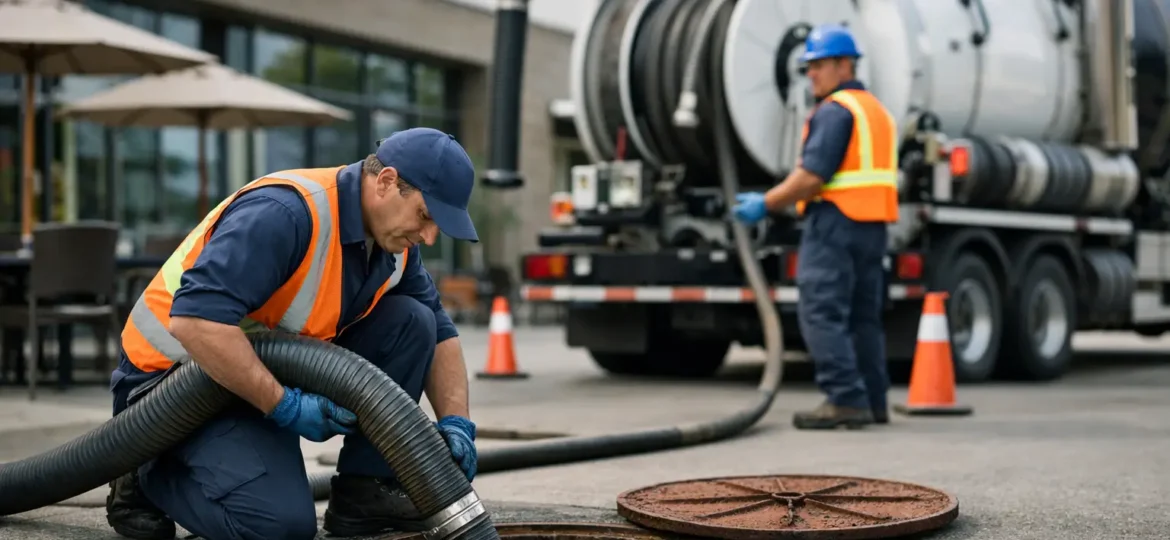
A sewer problem can shut a business down faster than most owners expect. One backup in a restroom, kitchen, floor drain, or main line can turn into lost revenue, upset customers, health concerns, and a mess nobody wants to deal with. That is why commercial sewer services are not just another maintenance item. They are part of keeping your building open, safe, and functional.
For commercial properties, sewer trouble rarely stays small for long. A slow drain in a restaurant kitchen can become a full backup during a lunch rush. A clogged main line in an apartment building can affect multiple units at once. A damaged sewer line at a retail center can create odors, standing water, and serious disruption. When that happens, you need a crew that can find the problem fast, explain it clearly, and fix it without wasting your time.
What commercial sewer services actually cover
A lot of people hear the phrase and think it only means clearing a clogged sewer line. In reality, commercial sewer services usually cover a much wider range of work. That can include sewer line inspections, drain and main line cleaning, hydro jetting, root removal, sewer line repairs, pump troubleshooting, grease-related blockage removal, and cleanup after a backup.
Commercial systems also tend to be more complicated than residential ones. The pipe runs are often longer. Usage is heavier. The risk of abuse is higher because more people are using the system every day. In some buildings, you are also dealing with grease traps, grinder pumps, sewage ejector pumps, floor drains, or older underground lines that have seen decades of wear.
That is why the right service approach matters. You do not want a company guessing at the issue or throwing a quick fix at a deeper problem. You want diagnosis first, then the right repair or cleaning method for that specific building.
Why commercial sewer problems hit harder than residential ones
When a home has a sewer issue, the damage is personal and stressful. When a business has a sewer issue, the damage is operational and financial too. Employees may have to leave. Tenants may complain. Customers may walk out. Health code issues can enter the picture quickly, especially in restaurants, medical spaces, or facilities with public restrooms.
There is also a timing issue. Commercial sewer lines often fail under peak use. That means the problem shows up when the building is busiest, not when it is convenient. If your line is already partially blocked, one heavy-use period can push it over the edge.
Older commercial buildings have another challenge. Many have aging cast iron, clay, or Orangeburg lines, and those materials do not improve with time. Corrosion, offsets, root intrusion, and collapses become more likely as the years pass. Newer buildings can have issues too, especially if grease, wipes, food waste, paper products, or foreign objects are getting into the line.
Signs you need commercial sewer services before it becomes an emergency
Most sewer failures give off warning signs before the full backup happens. The trouble is that busy property managers and owners often put those signs on the back burner because the building is still operating.
If multiple drains are running slow, that usually points to a larger line issue instead of one isolated clog. If toilets are gurgling, floor drains smell bad, or wastewater shows up in a lower drain when another fixture is used, that is a red flag. Recurring clogs are another one. If the same line keeps needing attention, the problem probably is not solved.
Water backing up around floor drains, unusual wet spots outside, foul sewer odors near the building, and frequent pump alarms can all point to a deeper issue. None of those symptoms should be ignored. The longer the wait, the more likely you end up dealing with downtime, property damage, and a more expensive repair.
The difference between cleaning a line and fixing the cause
This is where many commercial property owners get burned. A line gets snaked, the water starts moving again, and everybody assumes the problem is handled. Sometimes that is enough. Sometimes it is not even close.
A cable machine can break through a blockage and restore temporary flow. But if the line has grease buildup on the pipe walls, heavy scale, root intrusion, or a broken section, the clog may come right back. That is why camera inspection and proper line evaluation matter so much in commercial sewer work.
Hydro jetting is often the better option when buildup is the real problem. It uses high-pressure water to clean the inside of the pipe more thoroughly than a basic cable pass. For restaurants, multi-tenant buildings, and facilities with recurring sludge or grease issues, that can make a major difference. Still, hydro jetting is not right for every pipe. If a line is badly damaged or unstable, blasting it with pressure may not be the best first move. That is where experience counts.
Commercial sewer services for different types of properties
Not every commercial building uses its sewer system the same way, so the problem patterns are different too.
Restaurants often deal with grease, food solids, and heavy sink use. Retail spaces may have fewer fixtures but still run into main line issues, especially in older shopping centers. Apartment complexes and multi-family properties have higher daily volume and more chances for wipes, hygiene products, and tenant misuse to end up in the system. Offices may seem lower risk, but one blocked main can still affect every restroom in the building.
Industrial and light commercial properties can bring another layer of complexity. Floor drains, wash-down areas, solids handling, and specialized wastewater equipment may all play a role. In those settings, the right repair is not just about getting water to move. It is about protecting operations and avoiding repeat shutdowns.
What a good commercial sewer service call should look like
Good commercial sewer services should feel organized, not chaotic. The contractor should ask the right questions, isolate the affected areas, and determine whether the issue is in a branch line, a main line, a pump system, or the building sewer leaving the property.
From there, the next step should be clear. If the line needs cleaning, you should know what method is being used and why. If inspection is needed, you should understand what they are looking for. If repair is recommended, the explanation should be straight and practical, without vague language or pressure tactics.
That matters even more during an emergency. When sewage is backing up, nobody has patience for guesswork or sales talk. You want somebody who shows up ready, works safely, and gives you an honest answer about the fastest path back to normal.
Preventive commercial sewer services save money, but only if they fit the building
Preventive maintenance makes sense for many commercial properties, but there is no one-size-fits-all schedule. A busy restaurant may need routine drain and sewer cleaning much more often than a small office. A property with older lines and a history of roots may need camera inspections before peak problem seasons. A multi-unit building with recurring misuse may need a different plan altogether.
The point is not to pay for service you do not need. The point is to stay ahead of expensive failures. The right maintenance plan is based on actual usage, past trouble, line condition, and the cost of downtime if something goes wrong.
For many businesses, prevention is easier to budget than an after-hours emergency cleanup and repair. That is especially true when the sewer issue also affects customers, tenants, or health compliance.
Choosing the right company for commercial sewer services
Commercial sewer work is not the place to shop by the cheapest number alone. Fast service matters. Clear pricing matters. Real diagnostic ability matters even more.
You want a company that understands both plumbing systems and wastewater systems, because commercial properties often involve more than a simple drain clog. You also want a team that can handle difficult jobs, from hydro jetting and inspections to pump issues and sewer line repair, without bouncing you from one subcontractor to another.
If you manage property in or around Chattanooga, this is where a local company with real field experience has an edge. Chatta-Rooter Plumbing handles tough sewer and septic jobs with the kind of direct, no-nonsense approach commercial customers usually prefer. When a building has a backup or a line problem, speed helps, but experience is what keeps the repair from turning into a repeat call.
The best contractor is not the one who throws around the most jargon. It is the one who tells you what is wrong, what it will take to fix it, and what can be done to keep it from happening again.
A commercial sewer system does not need much attention when it is working right, which is exactly why problems catch people off guard. If your drains are slowing down, your restrooms are acting up, or your building has a history of sewer trouble, handling it now is a lot cheaper than explaining to customers why the doors are closed.