

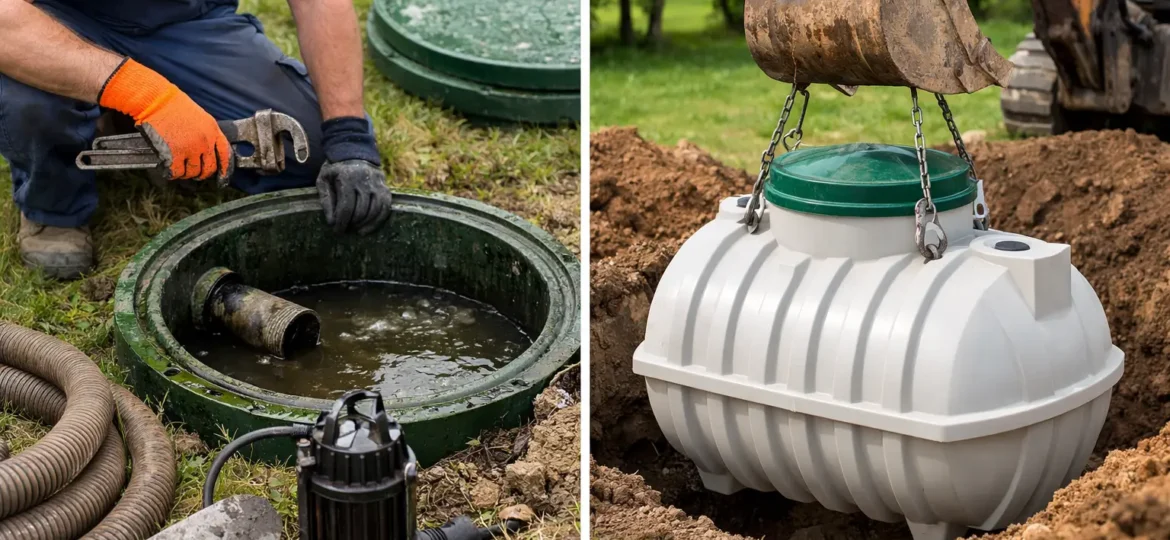
A septic problem usually starts small, then turns into a mess at the worst possible time. Maybe the yard stays soggy for days. Maybe the toilets start gurgling. Maybe sewage backs up into the house and now you need answers fast. When that happens, the big question is usually the same: do you need septic tank repair or replacement?
The honest answer is that it depends on what failed, how old the system is, and whether a repair actually buys you real time or just delays a larger bill. Some problems are fixable without replacing the tank. Others mean the tank, the lines, or the drain field are already too far gone. Knowing the difference can save you money, stress, and repeat service calls.
When septic tank repair makes sense
Repair is often the right move when the problem is isolated and the rest of the system is still in decent shape. A cracked lid, damaged baffle, failed filter, broken pipe, or faulty pump can create serious symptoms without meaning the entire tank has to come out.
That matters because many septic issues are not tank failures at all. A full tank may simply need pumping. A backup could come from a clogged line. Slow drains might point to a problem between the house and the tank, not the tank itself. If the tank structure is sound and the drain field is still accepting water properly, repair is usually the more practical and affordable option.
Age also matters, but it should not be the only factor. An older concrete tank is not automatically a lost cause. If the walls are holding, the inlet and outlet are intact, and there is no major collapse, targeted repair can still make good financial sense. On the other hand, a newer system that was installed poorly or neglected can fail early.
Signs you may be heading toward septic tank replacement
Replacement becomes more likely when the tank itself is deteriorating, the damage is widespread, or the system keeps failing even after service. If the tank has severe structural cracks, collapsed sections, major corrosion, or a failed bottom, repair may be throwing money at a system that is already on borrowed time.
Recurring backups are another red flag. If you have pumped the tank, cleared lines, repaired components, and the same problems keep coming back, there is usually a deeper issue. The drain field may be saturated or failing. The tank may be undersized for the property. There may be years of buildup, root intrusion, or groundwater infiltration that have pushed the whole system past the point of patchwork fixes.
Property changes can also force the decision. If the home has added bedrooms, expanded occupancy, or shifted use over time, the original septic setup may no longer match the demand. In that case, replacing part or all of the system may be the only way to get reliable performance.
What a professional looks at before recommending repair or replacement
A good septic contractor should not guess. They should inspect the tank, the lines, and the surrounding system before telling you which way to go. That means checking the tank level, looking for signs of structural damage, inspecting inlet and outlet components, and evaluating how the drain field is performing.
If the tank is accessible, the inspection may reveal obvious failures fast. Broken baffles, heavy solids, damaged lids, and leaking seams are often visible once the tank is opened. Other issues take more work to confirm. A wet yard over the drain field, sewage odors outside, or standing wastewater may point to a field problem rather than a tank problem.
This is where homeowners can lose money if the diagnosis is rushed. Replacing a tank will not fix a failed drain field. Pumping a tank will not solve a collapsed line. A proper evaluation matters because the cheapest fix upfront is not always the least expensive fix in the end.
The cost question: repair now or replace once?
Most people want a straight answer on price, and that is fair. In general, repair costs less upfront than replacement. But the real question is value, not just cost.
If a repair solves the issue and gives you years of reliable service, it is money well spent. If that same repair only covers up a system that is already failing, you may end up paying for multiple service calls, emergency pumping, yard damage, and then replacement anyway.
Replacement costs more because it is a larger job. There may be excavation, permitting, tank removal, new tank installation, line work, soil evaluation, and possible drain field work. But if the current system is at the end of its life, replacing it can stop the cycle of breakdowns and protect the property from sewage damage.
This is one of those cases where honest advice matters. A dependable contractor should be able to explain whether a repair is a real fix, a temporary fix, or a waste of your money.
Septic tank repair or replacement by symptom
Certain symptoms tend to point one way or the other, although there is still some overlap. A broken lid or damaged riser usually leans toward repair. A missing or deteriorated baffle often does too, especially if caught early. A clogged line between the house and tank is commonly repairable.
A tank that has shifted badly, caved in, or developed major cracks is a different story. So is a system with chronic sewage surfacing in the yard after pumping and service. If wastewater has nowhere to go because the field is failing, replacing the tank alone may not be enough. In some cases the decision is not repair versus replacement of the tank. It is whether part of the system or the entire system needs to be rebuilt.
That is why symptoms should start the conversation, not end it.
How system age changes the decision
Most septic systems do not fail on the same schedule. Material, usage, maintenance, soil conditions, and installation quality all matter. Still, age gives useful context.
If a tank is relatively new and has one clear defect, repair is often the smart call. If the system is decades old and showing multiple points of failure, replacement starts making more sense. At a certain point, you are not fixing one part. You are trying to stretch the life of a system that has already delivered most of what it had to give.
That said, do not let anyone sell you a replacement based on age alone. A well-maintained septic system can outlast expectations. What matters is current condition, not just the year it went in.
What homeowners should do before the problem gets worse
If you are seeing slow drains, sewage smells, wet spots over the tank or field, or backups in the lowest drains of the building, do not wait. Septic issues rarely improve on their own. The longer wastewater sits where it should not, the more damage it can do to flooring, drywall, landscaping, and the system itself.
It also helps to avoid making the problem worse while you wait for service. Cut back on water use. Do not keep flushing in hopes that things clear up. Do not drive heavy equipment over the tank or drain field. And if sewage has backed up indoors, treat it like the health hazard it is.
For property owners in the Chattanooga area, this is where local experience counts. Soil conditions, property layout, and county requirements can all affect what repair or replacement looks like in the real world. Chatta-Rooter Plumbing handles these jobs with the kind of practical approach people actually need – clear diagnosis, upfront pricing, and work that is built to hold up.
The best decision is the one that lasts
Septic work is not the place for guesswork or wishful thinking. If the problem is isolated and the system is solid, repair may be the right move. If the tank or field is failing across the board, replacement may save you from bigger headaches and bigger bills later.
The right call is not always the cheaper one today. It is the one that gets your property back to normal and keeps it there. When the signs are there, act early and get the system looked at before a manageable problem turns into a full-blown emergency.