

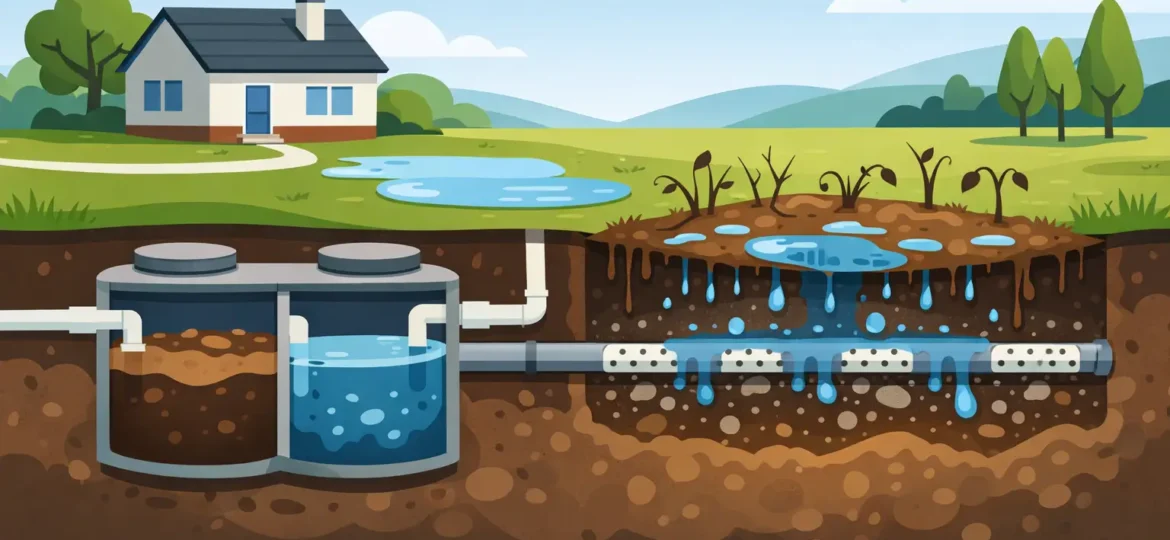
A yard that stays soggy for no reason, toilets that start gurgling, and drains that suddenly move slow – that is usually when homeowners start asking what causes drain field failure. By the time those signs show up, the problem has often been building for months or even years. A drain field does not usually quit overnight. It gets overloaded, compacted, clogged, damaged, or neglected until it can no longer handle wastewater the way it should.
If your septic system is struggling, the drain field is one of the first places to look. This part of the system is designed to take wastewater from the septic tank and let it filter safely through the soil. When that process breaks down, sewage has nowhere to go. That is when you get backups, odors, wet spots, and repair bills that can climb fast.
What causes drain field failure most often?
In the field, the most common causes are hydraulic overload, lack of septic tank pumping, soil compaction, root intrusion, and poor installation. Sometimes only one issue is to blame. More often, it is a combination of problems that stack up over time.
A drain field depends on balance. The tank has to separate solids properly. The laterals have to distribute wastewater evenly. The soil has to absorb and treat that water at the right pace. If any part of that chain gets disrupted, the system starts failing from the ground up.
Too much water going into the system
One of the fastest ways to wear out a drain field is sending more water into it than it was built to handle. That can happen in a busy household with high daily water use, but it also happens because of plumbing leaks, running toilets, dripping fixtures, and bad habits like doing load after load of laundry in one day.
A drain field needs time between wastewater doses. If it stays constantly saturated, the soil cannot treat effluent properly. Once the area stays too wet for too long, oxygen levels drop and the biomat at the trench bottom can thicken to the point that water stops moving through as it should.
This is why even a structurally sound drain field can start acting failed when usage spikes. A house with extra occupants, a short-term rental, or a commercial property with changing demand can overwhelm a system that used to seem fine.
When overload looks like a bigger problem
Hydraulic overload can mimic total failure. You may see standing water, smell sewage, or get backups in the home. In some cases, reducing water use and fixing the source of excess flow helps the field recover. In other cases, long-term saturation has already damaged the soil treatment area and repairs are needed.
Skipping septic tank pumping
A neglected septic tank is one of the biggest reasons drain fields fail early. The tank is supposed to separate solids from wastewater before that liquid reaches the field. If the tank is too full of sludge and scum, solids can carry over into the drain lines and trenches.
Once solids reach the drain field, they do real damage. They clog pipes, block soil pores, and shorten the life of the entire system. A drain field is not built to store or process raw solids. It is built to disperse liquid effluent.
This is why regular pumping matters. It is not just tank maintenance. It is drain field protection. Homeowners sometimes put off pumping because everything seems to be working, but that is exactly how expensive failures sneak up.
Soil compaction over the drain field
Your drain field is not a place for heavy traffic. Parking vehicles, driving equipment, storing materials, or even repeated traffic from mowers and utility work can compact the soil above and around the lines.
Compacted soil loses the open space needed for water movement and oxygen exchange. That makes it harder for effluent to percolate and for natural treatment to happen. In some cases, the pipes themselves can crack or shift under pressure.
This kind of damage is common after landscaping projects, home additions, and driveway expansions. A lot of property owners do not realize where the field is, so they treat that area like any other part of the yard until the septic system starts backing up.
Tree roots and plant intrusion
Roots go where moisture is, and a drain field gives them plenty to chase. Trees, shrubs, and aggressive plants can send roots into septic lines, distribution boxes, and trench areas. Once inside, they trap solids, block flow, and break components apart over time.
Not every plant near a drain field is a problem, but large trees planted too close are asking for trouble. Removing root intrusion is sometimes possible, but the damage left behind can still require repair. If roots have crushed pipe or disrupted distribution, the field may not recover without more extensive work.
Bad installation or poor system design
Some drain fields fail because they were never set up right in the first place. If the soil was unsuitable, the trenches were too shallow or too deep, the distribution was uneven, or the field was undersized for the property, the system may struggle from day one.
Poor grading can also send surface water into the field. That adds unnecessary moisture and reduces the soil’s ability to accept septic effluent. A drain field has to be matched to the site conditions, the home or building use, and local code requirements. Cutting corners during installation rarely stays hidden for long.
Why older systems are more vulnerable
Older septic systems often have smaller tanks, aging materials, and layouts that do not match current water use. A home may have added bedrooms or changed occupancy over the years, but the septic system stayed the same. That mismatch can push an aging drain field beyond its limit.
Grease, wipes, and the wrong things going down the drain
What goes into your plumbing eventually affects your septic system. Grease, food waste, paper towels, wipes labeled flushable, hygiene products, chemicals, and other non-biodegradable items do not belong in a septic tank.
Some materials float, some sink, and some pass through in ways they should not. Over time, they interfere with tank separation and increase the chance that solids move out to the field. Harsh chemicals can also upset the bacterial action the tank relies on, which makes the whole system less effective.
Drain field failure is often blamed on the yard, the weather, or old age when the real problem started inside the house.
Excess rain and drainage issues
Weather can absolutely play a role, especially in areas with heavy rain, poor grading, or seasonal groundwater problems. When the soil around a drain field is already saturated from rainwater, it cannot absorb septic effluent efficiently.
That does not always mean the drain field itself is defective. Sometimes the system is functional, but site drainage problems are working against it. Downspouts, sump discharges, and runoff directed toward the field can make a workable septic system perform like a failing one.
Still, weather is usually a stress multiplier, not the root cause. If a field fails every time it rains, there is often an underlying design, maintenance, or saturation problem that needs to be addressed.
Signs your drain field may be failing
Most septic systems give warning signs before a complete breakdown. Slow drains throughout the building, gurgling sounds, sewage odors outside, standing water over the field, unusually green grass in one section of the yard, and backups into tubs or toilets are all red flags.
One warning sign by itself does not always confirm drain field failure. A clogged main line, a full tank, or a damaged sewer line can look similar. That is why proper diagnosis matters. Guessing wrong wastes time and money.
Can a failed drain field be fixed?
It depends on why it failed and how far the damage has gone. If the issue is a full septic tank, root blockage, distribution problem, or water overload, targeted repairs may solve it. If the soil is badly clogged with solids or the field is structurally compromised, replacement may be the more practical option.
This is where experience matters. A good septic contractor should not jump straight to the biggest repair without figuring out the real cause first. At Chatta-Rooter Plumbing, that practical approach matters because homeowners do not need guesswork. They need an honest answer and a fix that makes sense for the property.
How to lower your risk of drain field failure
The best prevention is simple and consistent. Pump the septic tank on schedule. Fix leaks fast. Spread out laundry loads. Keep heavy vehicles off the field. Do not plant large trees nearby. Watch what goes down the drain. Make sure surface water drains away from the septic area instead of into it.
None of that is complicated, but it does require attention. Septic systems are out of sight, so people tend to forget about them until sewage shows up where it should not. By then, the cheap fix may already be off the table.
If you are seeing signs of trouble, the smart move is to deal with it early. A drain field problem rarely gets better on its own, and waiting usually turns a manageable repair into a much bigger job. Catch it early, get it diagnosed correctly, and give the system the best chance to keep working for years.