

A septic backup usually starts with something small. One “flushable” wipe. A little grease down the sink. Too much bleach. Then a few weeks later, the toilets are slow, the yard smells off, and now you are dealing with a real mess. If you have ever wondered what can go into septic system plumbing without causing trouble, the short answer is this: a lot less than most people think.
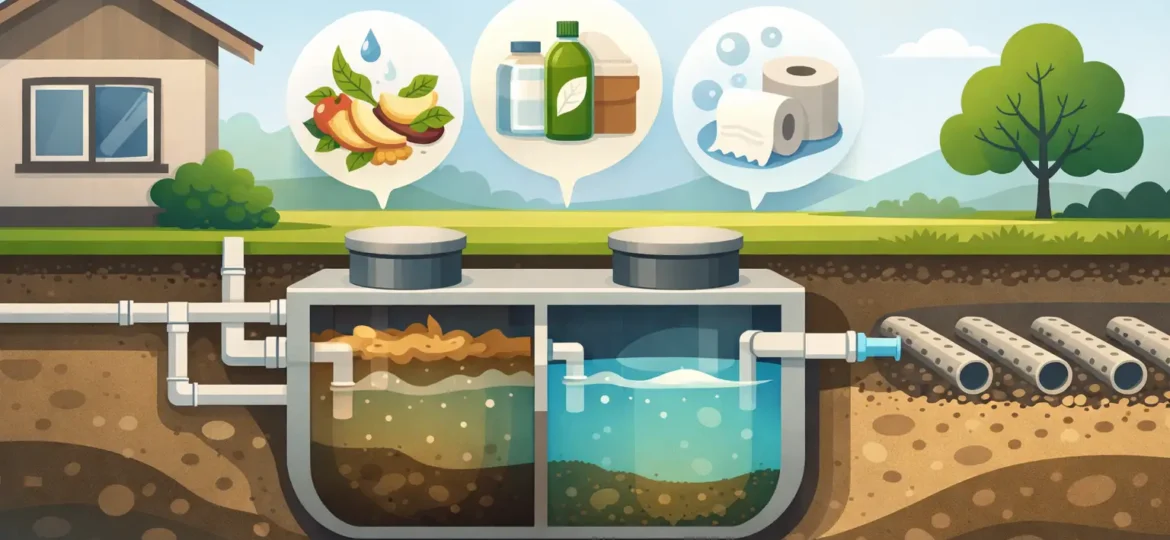
Septic systems are built to handle wastewater, not garbage. They work by separating solids from liquids and letting helpful bacteria break down waste inside the tank. When the wrong materials go in, that balance gets thrown off. Solids build up faster, clogs form in the line, and the drain field can start failing. That is when a simple habit turns into a pumping call, a repair, or in the worst case, a replacement.
What can go into septic system drains?
For most homes and small businesses, the safe answer is straightforward. Human waste and toilet paper are what the toilet is for. Sinks, tubs, and showers can handle normal wastewater from bathing, handwashing, and routine cleaning. That is the basic design of a septic system.
Where people get into trouble is assuming that if something disappears down a drain, it must be fine. It is not. A septic tank does not work like a city sewer system, and it definitely does not work like a trash can. What leaves your house still has to be processed on your property.
If you want to protect the tank, baffles, lines, and drain field, think in simple terms. Water and biodegradable human waste are expected. Heavy solids, synthetic materials, grease, harsh chemicals, and anything that does not break down quickly are not.
What is usually safe to flush or drain?
Human waste is safe. Standard septic-safe toilet paper is safe in normal amounts. Water from showers, bathroom sinks, and laundry is generally fine too, as long as you are not overloading the system with excessive water use or harsh products.
In the kitchen, ordinary dishwashing water is expected, but food scraps should be kept to a minimum. Even if you have a garbage disposal, that does not mean your septic tank wants what is going down there. Food solids add to sludge and can make pumping necessary sooner.
Small amounts of typical household soap are usually not a problem. The key is moderation. Septic systems can handle normal day-to-day use. They struggle when people treat every drain like a place to dump leftovers, cleaners, or convenience products.
What should never go into a septic system?
This is where expensive problems start. Wipes are one of the biggest offenders, including ones labeled flushable. They do not break down like toilet paper and can catch in pipes, tangle with other debris, and create blockages fast.
Grease, oil, and fat should also stay out. Once they cool, they thicken and stick to the inside of pipes. In a septic tank, they float as scum and interfere with normal separation. In severe cases, they contribute to drain field failure because solids and grease move where they should not.
Feminine hygiene products, paper towels, cotton balls, cotton swabs, dental floss, diapers, condoms, and cat litter have no place in a septic system. Neither do cigarette butts, coffee grounds, eggshells, or produce peels. Some of these items do not break down at all. Others break down so slowly that they still create buildup and service issues.
Chemicals are another major problem. Paint, solvents, pesticides, antifreeze, motor oil, and large amounts of bleach or drain cleaner can kill the bacteria your tank depends on. Those bacteria are not optional. They are part of how the system works.
The products people think are safe, but are not
A lot of septic trouble comes from products marketed for convenience. “Flushable” wipes are the best example, but they are not the only one. Disposable cleaning pads, mop sheets, paper towels marketed as extra soft, and thick personal care wipes all create the same kind of trouble. They may get past the toilet trap, but that does not make them septic safe.
Garbage disposals are another gray area. Can a septic system technically handle some food waste? Yes, sometimes. Should you rely on it? No. The more solids you send into the tank, the harder your system has to work and the more often it needs pumping. If you are trying to get the longest life out of your septic system, scrape food into the trash instead.
Additives also get overpromised. Some septic treatments are sold as miracle fixes, but they are not a replacement for pumping, inspections, or proper use. If a tank is overloaded or a line is blocked, a bottle is not going to solve it.
What can go into septic system cleaning routines?
You do not have to stop cleaning your house because you have a septic tank. You just need to be smart about what you use and how much. Moderate amounts of everyday household cleaners are usually fine. The problem is overuse.
If you pour large quantities of bleach, disinfectant, antibacterial cleaners, or strong drain chemicals into the system, you can disrupt the bacterial action in the tank. That means waste does not break down the way it should. One normal load of laundry with detergent is not usually an issue. Repeated heavy chemical use all week can be.
If you are dealing with a clogged drain, be careful with off-the-shelf drain openers. Many are harsh enough to damage pipes and upset septic function. If a drain keeps backing up, that is often a sign you need an actual inspection, not stronger chemicals.
Water matters as much as waste
A septic system can fail from too much water even if nothing “wrong” is flushed. That catches a lot of property owners off guard. Long showers, leaking toilets, overloaded laundry days, and heavy water use all at once can flood the tank and push solids where they do not belong.
That is especially important for larger households, rental properties, and commercial spaces. A septic system has a capacity. If daily use is constantly above what the system was designed to handle, even proper waste can become a problem.
Spacing out laundry loads, fixing leaks fast, and paying attention to slow drains can go a long way. Septic maintenance is not just about what goes down. It is also about how much and how often.
Signs the wrong things are going into your septic system
Sometimes the warning signs are obvious. Toilets flush slowly. Drains gurgle. Sewage odors show up inside or outside. The grass over the drain field suddenly looks greener and wetter than the surrounding yard.
Other times, the issue builds quietly. The tank fills faster than expected. You need pumping more often. One bathroom starts having trouble before the others. Those early signs matter because catching a problem early is a lot cheaper than waiting for sewage to back up into the house.
If you own rental property or manage a commercial building, this matters even more. Tenants, guests, and employees may not know what should stay out of the drains. A simple posted reminder in restrooms can save a major service call.
The real rule: when in doubt, keep it out
If you are unsure whether something belongs in your septic system, do not flush it and do not wash it down the drain. That rule will protect you from most avoidable septic problems.
A healthy septic system is not complicated, but it is not forgiving either. It needs the right kind of waste, the right amount of water, and routine maintenance. Ignore any one of those, and trouble builds up fast.
For homeowners and business owners around Chattanooga, we see the same pattern all the time. The system usually gives warning signs before it fails, but people wait because they hope it will clear up on its own. Sometimes it does not. Sometimes it turns into an emergency pumping or repair call at the worst possible time.
The safest habit is simple: flush human waste and toilet paper, keep grease and trash out of the drains, go easy on chemicals, and have the system checked before a small issue becomes a big one. That is how you keep your septic system working like it should and avoid paying for problems that never had to happen.