

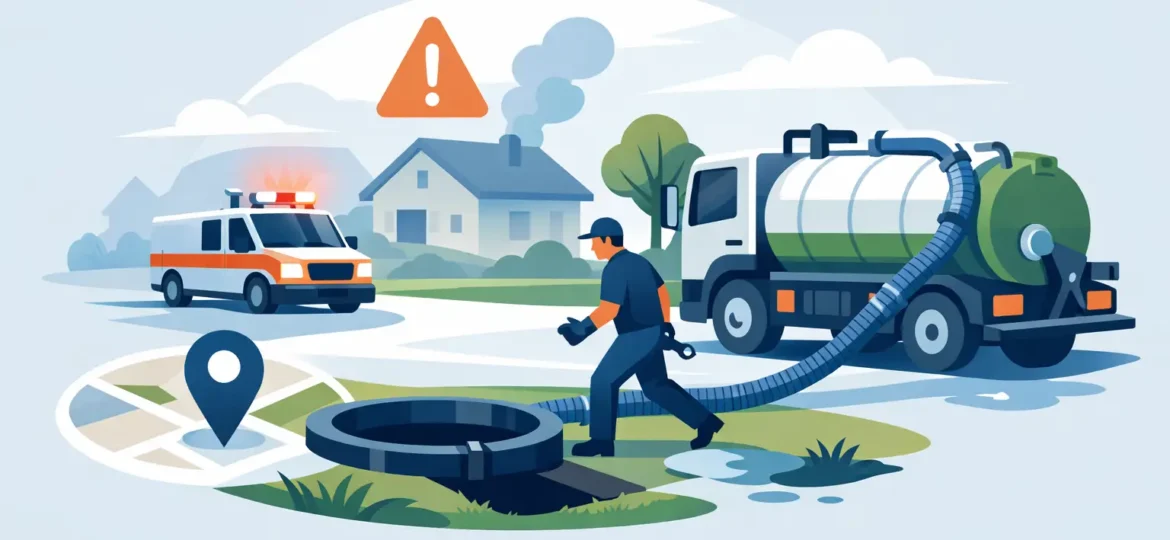
A septic emergency usually starts fast and gets worse faster. One toilet backs up. A floor drain starts gurgling. Then the smell hits, the yard turns soggy, or wastewater starts coming back where it should never be. If you’re searching for emergency septic service near me, you probably do not need a long lecture. You need to know what is happening, what to do right now, and when to call a crew that can get there fast.
The hard truth is that septic problems rarely fix themselves. Waiting a few hours can mean a manageable service call turns into sewage cleanup, property damage, or a bigger repair bill. That is why emergency septic service matters. It is not just about pumping a tank. It is about protecting your home, your business, and everyone using the property.
When to call emergency septic service near me
Some septic issues can wait for a scheduled appointment. Others cannot. If sewage is backing up into tubs, showers, toilets, or floor drains, that is an emergency. If you notice standing wastewater near the tank or drain field, that is also urgent. The same goes for strong sewer odors inside the building, a commercial restroom that is out of service, or a grinder pump alarm going off.
One clogged toilet by itself is not always a septic emergency. A clogged toilet plus slow drains across the building is a different story. The more fixtures involved, the more likely the problem is in the main line, septic tank, pump system, or drain field.
For homeowners, the biggest red flags are repeated backups, wet spots in the yard, and sewage smells that do not go away. For landlords and commercial property owners, the urgency is even higher because one septic failure can affect multiple tenants, customers, or employees at once.
What causes septic emergencies
Most emergency calls come down to a handful of real-world problems. A septic tank may be overdue for pumping and no longer has room to separate solids from wastewater. A main line can become blocked with grease, wipes, roots, or heavy buildup. A baffle can fail. A drain field can become saturated after heavy rain or years of strain. Pumps can also fail, especially in systems with grinder pumps, sewage ejector pumps, or lift stations.
Sometimes the issue is simple to identify but urgent to solve. Sometimes it takes a full inspection to pinpoint the failure. That is why guessing can cost you time and money. A tank that needs pumping looks different from a broken sewer line, and both can look similar at first when all you see is a backup in the bathroom.
Age matters too. Older septic systems tend to have more wear, more buildup, and more hidden damage. But newer systems are not immune. Flushing wipes, grease, paper towels, hygiene products, or anything labeled flushable can create major problems in a hurry.
What to do before the septic crew arrives
The first move is simple. Stop using water. Do not run the dishwasher. Do not start a load of laundry. Do not keep flushing to see if it clears. Every gallon you add can push more wastewater back into the building or overload an already stressed system.
If sewage is coming into the home or business, keep people and pets away from the affected area. Wastewater carries bacteria and should be treated as a health hazard. If possible, turn off power in the immediate area only if it can be done safely and without stepping into standing water.
Then call a local septic company that handles emergency work, not just routine pumping. That distinction matters. A true emergency septic crew should be able to pump tanks, diagnose line issues, inspect pumps, identify drain field trouble, and explain the next step clearly. Fast response helps, but experience matters just as much.
What a real emergency septic service should include
When you call for emergency service, you should expect more than a vague arrival window and a guess. A dependable crew should ask the right questions up front. Are all drains affected or just one? Is there standing sewage? Has the tank been pumped recently? Is there an alarm on the pump system? Has there been heavy rain? Those details help narrow the problem before the truck even pulls in.
Once on site, the job usually starts with diagnosis. That may include checking the tank level, inspecting the inlet and outlet, evaluating pumps and alarms, and looking at the main sewer line or drain field conditions. If the tank is full, pumping may be the first step. If the issue is a clog or broken line, the repair path will be different.
This is where honest pricing and straight answers matter. Not every emergency means a full system replacement. But not every emergency can be solved with a quick pump-out either. Good service means telling you which problem you have, what it takes to fix it, and what can wait versus what cannot.
Why local response time matters
When people search emergency septic service near me, they are not just looking for any company with a truck. They are looking for someone close enough to respond before the problem spreads. That is especially important in Chattanooga and surrounding areas, where a mix of older homes, rural properties, commercial sites, and varying soil conditions can make septic problems move in different ways.
A local company usually understands more than the address. They know the common system layouts in the area, the impact of recent weather, and the kind of failures that show up in older neighborhoods, rental properties, restaurants, and outlying properties with private septic systems. That local experience can save time during diagnosis and help avoid unnecessary work.
Emergency septic service for homes and businesses
Residential and commercial septic emergencies share the same basic issue – wastewater has nowhere to go. But the stakes can look very different.
At a home, the concern is health, property damage, and getting bathrooms and drains back in service quickly. At a business, the emergency can shut down operations, create sanitation problems, and put customers or staff at risk. Restaurants, offices, retail locations, and multi-unit properties often need a faster and more coordinated response because downtime costs money.
That is why commercial operators should not wait for a full failure before calling. Slow drains, repeated backups, bad odors, and pump alarms are all signs that the system needs attention now, not next week.
How to avoid another emergency
Not every septic emergency is preventable, but plenty of them are. Regular septic tank pumping is one of the biggest ways to avoid surprise backups. The right schedule depends on tank size, household size, water use, and whether the property has garbage disposal use or heavy traffic. A rental property or busy commercial site may need service more often than an average single-family home.
It also helps to watch what goes down the drain. Grease, wipes, hygiene products, paper towels, and harsh non-approved items create avoidable trouble. Excess water use can also strain the system. Spreading out laundry loads, fixing leaks, and keeping surface water away from the drain field can make a real difference.
If your property has a grinder pump, sewage ejector pump, or alarmed system, do not ignore warning signals. A pump alarm is not background noise. It is an early warning that gives you a chance to act before sewage ends up where it should not.
Choosing the right company when it is urgent
In an emergency, people often call the first name they find. That is understandable. Still, a few things are worth checking fast. Make sure the company actually handles septic emergencies, not just general plumbing. Ask whether they provide upfront pricing, whether they can diagnose the issue on site, and whether they service both pumping and repairs.
This is where a company like Chatta-Rooter Plumbing stands apart. When a septic system backs up, you need more than a basic pump truck. You need a crew that can handle pumping, repairs, sewer issues, pumps, and cleanup-related problems without bouncing you between multiple contractors.
The best emergency service is direct. They answer the phone. They show up. They explain the problem in plain English. Then they get to work.
If you are dealing with sewage smells, standing wastewater, gurgling drains, or a full backup, trust what you are seeing. Septic problems do not reward patience. The sooner you shut off water use and get a qualified local crew involved, the better your chances of keeping the job smaller, cleaner, and less expensive. When the system is failing, quick action is not overreacting. It is the smart move.