

Sticker shock usually hits at the same point – right after a failed inspection, a soggy yard, or a contractor says the old system is done. If you are trying to figure out new septic system cost, the short answer is this: it varies a lot, and for good reason. A basic installation on an easy site costs far less than a system going into rocky ground, a tight lot, or property with drainage issues.
That is why the real question is not just, “What does a septic system cost?” It is, “What kind of property are we dealing with, what system will the health department approve, and what problems need to be solved before the install even starts?” Once you understand those pieces, the price starts to make more sense.
What affects new septic system cost?
The biggest driver is the type of system your property can support. A conventional gravity-fed septic system is usually the most affordable option because it relies on natural slope and simpler components. If your lot has the right soil, enough usable space, and good drainage, that is the setup most owners hope for.
But plenty of properties do not qualify for a basic conventional system. If the soil does not percolate well, the lot is small, groundwater is high, or the site has slope and access issues, the design may need to change. That can mean a pump system, an engineered drain field, a chamber system, or another specialty setup. Every step up in complexity adds labor, materials, and inspection requirements.
Tank size matters too, but not always in the way people expect. A larger tank does raise material cost, but it is often not the biggest line item. Excavation, site prep, and drain field construction usually have a bigger impact on the final bill than the tank alone.
Permits and local regulations also shape the cost. In many cases, a septic install starts with soil testing, design work, and approval from the local authority. If revisions are required, or the site needs an engineered solution, those soft costs can add up before the first piece of equipment even arrives.
Typical price range for a new septic system
For many homeowners, new septic system cost falls somewhere in the broad range of roughly $6,000 to $20,000 or more. A straightforward conventional system on an accessible lot may land toward the lower end. A more advanced system with pumps, engineered components, difficult excavation, or site restrictions can climb well beyond that.
That range is broad because septic work is site-specific. Two homes with the same square footage can have very different installation costs if one sits on clean, workable soil and the other sits on clay or rock. One property may need very little grading. Another may require tree removal, long pipe runs, imported fill, or heavy equipment just to reach the install area.
If a contractor gives you a “one-size-fits-all” number over the phone without seeing the property, be careful. Septic pricing that is too quick and too clean often turns into change orders later.
Why the drain field changes everything
When people think about septic systems, they usually picture the tank. In reality, the drain field is often where the job gets expensive.
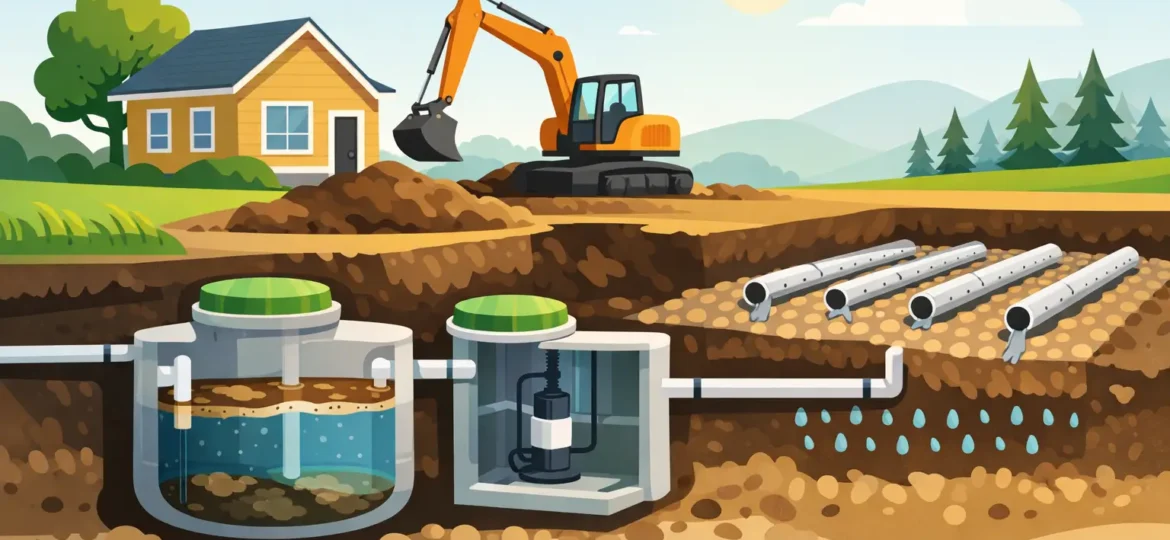
The tank holds and separates wastewater. The drain field handles the final treatment and dispersal into the soil. If the soil is good and the layout is simple, the drain field can be fairly straightforward. If the soil is poor or the approved area is limited, the field may need a more complex design, more trenching, more stone, more pipe, or a larger footprint.
This is one reason replacement costs can be higher than expected even on a property that already has septic service. Just because a tank existed there before does not mean the old layout meets current code or that the drain field area is still usable. Failed soil, saturated ground, root intrusion, and years of wear can all force a redesign.
Site conditions that raise the price
A clean, open yard is easier and cheaper to work in than a steep, wooded, rocky, or fenced-in lot. That sounds obvious, but it matters a lot in septic work.
If equipment access is tight, labor goes up. If excavation hits rock, the pace slows down and machine time increases. If groundwater is high or the yard holds water, the design may need to change. If utilities, patios, driveways, or structures are in the way, the install becomes more complicated.
Even hauling dirt in or out can affect cost. Some jobs produce usable spoil that can stay on site. Others require material to be removed or fresh fill to be brought in. Those logistics do not sound exciting, but they absolutely show up on the final invoice.
Repair or replace?
Not every bad septic system needs full replacement. Sometimes the issue is a broken line, a failed baffle, a crushed pipe, a bad pump, or a drain field problem that can be isolated and repaired. Other times, the tank is structurally sound but one part of the system has failed.
That is why a proper diagnosis matters. A full replacement is a major investment. If the real problem is more limited, you want to know that before signing up for the biggest job possible.
On the other hand, patching an aging system over and over can become more expensive than replacing it. If the tank is deteriorating, the field is failing, and the layout no longer meets current requirements, repairs may only buy time. In that situation, replacement often makes more financial sense long term.
Hidden costs owners forget to ask about
A septic estimate can look reasonable until the extras start showing up. That is why it helps to ask what is included before the work begins.
Clearing trees or brush, restoring the yard, replacing disturbed concrete or gravel, electrical work for pumps, and permit fees may or may not be included in the initial number. Soil testing and engineering may be separate as well. If the site needs special equipment or multiple inspections, those details should be addressed up front.
It is also smart to ask about future maintenance. Some systems are cheaper to install but more expensive to maintain because they depend on pumps, alarms, filters, or advanced treatment components. Lower upfront cost does not always mean lower ownership cost.
How to get a more accurate septic estimate
The best estimates come from actual site evaluation, not guesswork. A contractor needs to see the property, understand the soil conditions, review layout options, and know what the local authority will approve.
When you talk with a septic contractor, ask direct questions. What type of system is being proposed? Why that design? What site issues could change the cost? What is included in the price, and what is not? Is there a chance the approved layout will require pumps or engineered components?
A good contractor should be able to explain the job in plain English. You do not need a sales pitch. You need a clear scope, honest pricing, and realistic expectations about what can happen once the ground is opened up.
That direct approach matters in Chattanooga and surrounding areas, where soil conditions and lot layouts can vary a lot from one property to the next. A local company with real septic installation experience is more likely to spot problems early and price the work correctly. That is one reason property owners call Chatta-Rooter Plumbing when they want straight answers on septic repair and replacement.
Is a new septic system worth the cost?
If your property depends on septic, the answer is usually yes. A failing system is not just an inconvenience. It can damage the yard, create sewage backups, trigger health department issues, and hurt property value. For rental properties and commercial sites, it can also mean unhappy tenants, business interruption, and bigger liability.
A properly designed septic system gives you reliability. It protects the property, supports everyday use, and reduces the risk of emergency failures. The upfront cost is real, but so is the cost of waiting too long while a bad system gets worse.
The smart move is to get the site evaluated before the problem becomes urgent. When you know what the property can support, what the local requirements are, and what the full scope includes, the price becomes a lot less mysterious. And when septic work is done right the first time, you are not paying twice for the same ground.