

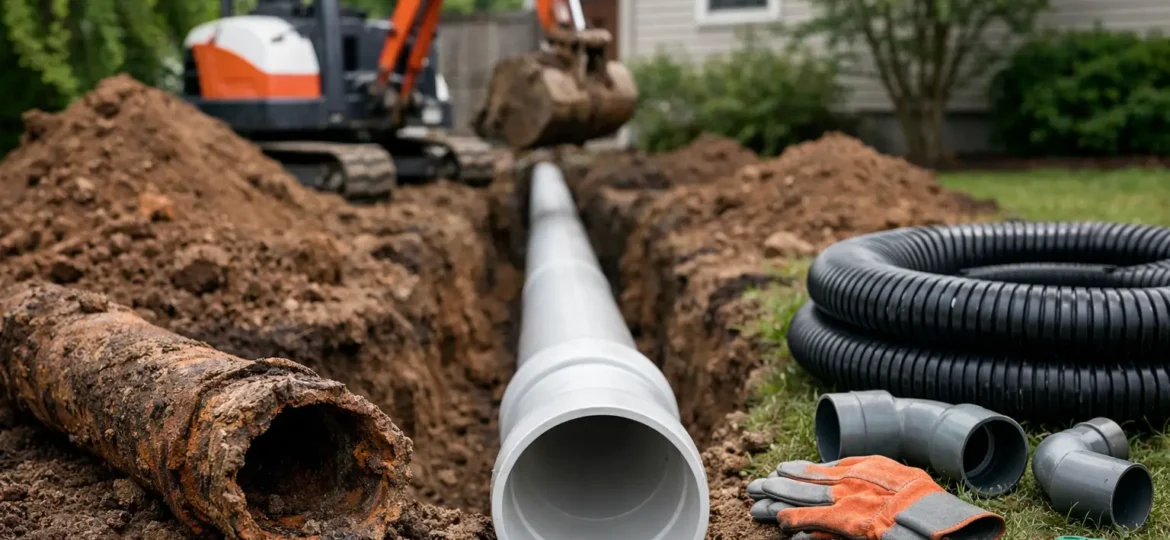
A sewer line problem rarely starts with a dramatic collapse. More often, it starts with a toilet that burps when the washer drains, a slow tub that keeps coming back after cleaning, or a wet, foul-smelling patch in the yard. This guide to replacing old sewer lines explains when replacement is the right call, what the work involves, and how to avoid paying for the wrong fix.
For homeowners, landlords, and commercial property owners, the goal is simple: find the actual cause, get a clear price, and make a repair that holds up. A recurring backup is not something to keep treating with drain cleaner and hope. When the main line is failing, the longer it is left alone, the more likely it is to create sewage damage, property disruption, and a larger bill.
When Old Sewer Lines Need More Than Cleaning
A clogged sewer line and a damaged sewer line can look similar at first. Both can cause slow drains, backups, and bad odors. The difference is whether the blockage can be removed and the pipe still works as intended.
Drain cleaning can be the right solution when grease, wipes, roots, or buildup are blocking an otherwise sound line. But cleaning will not fix a pipe that has collapsed, separated at the joints, bellied downward, or been crushed by shifting soil. If the same main-line problem returns every few months, the pipe needs a closer look.
Common signs that point toward a failing sewer lateral include:
- Multiple drains backing up at the same time, especially the lowest drains in the building
- Sewage or wastewater appearing near a floor drain, cleanout, or basement fixture
- Persistent sewer odors inside or outside the property
- Soft, unusually green, wet, or sunken spots in the yard above the sewer route
- Large tree roots repeatedly showing up during drain cleaning
- An older home with clay, cast-iron, Orangeburg, or poorly connected pipe
One slow sink does not automatically mean the sewer line is bad. A single fixture issue may be a local drain clog. The concern rises when toilets, tubs, showers, and sinks in different parts of the property all react at once.
Start With a Sewer Camera Inspection
The first major decision in a guide to replacing old sewer lines should never be “start digging.” It should be “verify the failure.” A professional sewer camera inspection lets the technician see inside the line, identify where the trouble is located, and determine whether repair or replacement makes financial sense.
The camera can reveal root intrusion, cracked pipe, offsets where pipe sections have moved apart, heavy scale inside old cast iron, standing water caused by a belly, or a complete collapse. A locator can then identify the line’s path and depth from above ground. That matters when the pipe runs under a driveway, patio, parking area, landscaping, or utility easement.
Ask for a clear explanation of the camera findings. A good diagnosis should answer three practical questions: What is wrong with the line? Where is the failure? Is a spot repair likely to last, or is the rest of the pipe nearing the end of its service life?
Know Whether You Have a Sewer Line or Septic Problem
Not every wastewater backup is a municipal sewer line issue. Many properties in the Chattanooga area use septic systems, and a full septic tank, blocked effluent line, failed drain field, or damaged pump can create symptoms that resemble a sewer backup.
The distinction matters because the repair approach is completely different. A septic tank may need pumping, inspection, or repair. A septic drain field may need evaluation. A property connected to public sewer may instead have a failed line running from the building to the city connection.
This is why a complete diagnosis matters before approving major work. Replacing a sewer line will not solve a septic tank problem, and pumping a septic tank will not repair a collapsed sewer lateral.
Repair or Replace: How to Make the Call
A spot repair makes sense when the damage is limited to one accessible section and the rest of the line is in good condition. For example, one broken joint damaged by roots may be repaired without replacing the full run.
Full replacement is often the smarter long-term move when the pipe is old and failing in several areas. This is common with deteriorated cast iron, brittle clay pipe, Orangeburg pipe that has softened or deformed, and lines with repeated root intrusion. Paying for multiple excavations and emergency cleanings can cost more over time than replacing the problem line once.
Age alone does not decide the job. Some older lines are still serviceable, while newer lines can fail because of poor installation, ground movement, or heavy roots. The camera condition, repair history, pipe material, and location of the damage should drive the decision.
The Main Options for Replacing a Sewer Line
There are two primary approaches: conventional excavation and trenchless replacement. Neither is automatically better. The right method depends on access, pipe condition, depth, local requirements, and what sits above the line.
Conventional Excavation
Excavation means opening the ground to access and replace the pipe directly. It is often the best option when the existing line has collapsed, has severe bellies, needs its slope corrected, or runs through a location where trenchless work is not practical.
The trade-off is disruption. Yard areas, landscaping, sidewalks, driveways, or parking surfaces may need to be opened and restored. Still, excavation gives the crew direct access to correct alignment, bedding, connections, and drainage issues. For badly damaged lines, that direct access can be the most dependable solution.
Trenchless Pipe Bursting or Lining
Trenchless methods can reduce digging in certain situations. Pipe bursting pulls a new pipe through the old path while breaking apart the existing pipe. Cured-in-place lining creates a new interior pipe within the old one.
These methods can be useful when preserving a driveway, mature landscaping, or finished surface is a priority. But they are not magic fixes. A line with major offsets, severe collapse, poor slope, or certain connection problems may not be a good candidate. Lining also reduces the inside diameter slightly, which should be considered on smaller or heavily used lines.
A contractor should explain why a trenchless option will work for your specific pipe, not simply present it as a premium upgrade.
What Drives the Cost of Sewer Line Replacement
No honest contractor should quote a full sewer replacement sight unseen. The cost depends on the line length, depth, soil conditions, pipe material, access, permits, restoration needs, and whether the work is a simple residential run or a larger commercial project.
A line in an open front yard is usually more straightforward than one under concrete, a retaining wall, or a busy parking lot. Deep pipes require more excavation and safety measures. Tree removal, utility conflicts, street connections, pump systems, and sewage cleanup can also affect the scope.
The best way to protect yourself is to get an in-person assessment and a written, flat-rate scope that states what is included. Clarify whether pricing covers camera inspection, excavation, new pipe, connections, permits when required, backfill, testing, and surface restoration. Cheap quotes often leave out the work that makes the final project complete.
What Happens During the Job
Once the repair plan is approved, the crew marks utilities, identifies the line route, and secures any necessary permits. Depending on the condition of the system, you may be asked to limit water use while the line is open. For an occupied home or business, the contractor should explain the expected downtime before work begins.
The damaged pipe is removed or rehabilitated, new pipe is installed with the correct slope, and connections are tested before the trench is closed. A final camera inspection may be used to confirm flow and pipe condition. The work area is then backfilled, with restoration handled according to the written scope.
For commercial properties, timing can matter as much as the repair itself. Restaurants, rental properties, offices, and facilities may need work scheduled around customers, tenants, or operating hours. Fast diagnosis and a clear plan reduce avoidable downtime.
How to Protect the New Line
A new sewer line is built to last, but it still needs sensible use. Keep grease, wipes, paper towels, feminine products, and hygiene products out of drains. “Flushable” wipes are a frequent cause of main-line clogs because they do not break down like toilet paper.
If large trees sit near the sewer route, discuss root risk before replacement. Modern pipe and properly sealed connections resist roots far better than old clay joints, but planning the route carefully can prevent future trouble. For older properties, a preventive camera inspection can also catch developing issues before sewage enters the home.
When sewer backups, recurring clogs, or a failing septic connection put your property at risk, do not guess at the cause. Chatta-Rooter Plumbing provides direct diagnosis, upfront pricing, and tough sewer and septic work for property owners who need the job handled right. The best next step is a professional inspection while the problem is still manageable, not after wastewater has already found its way indoors.