

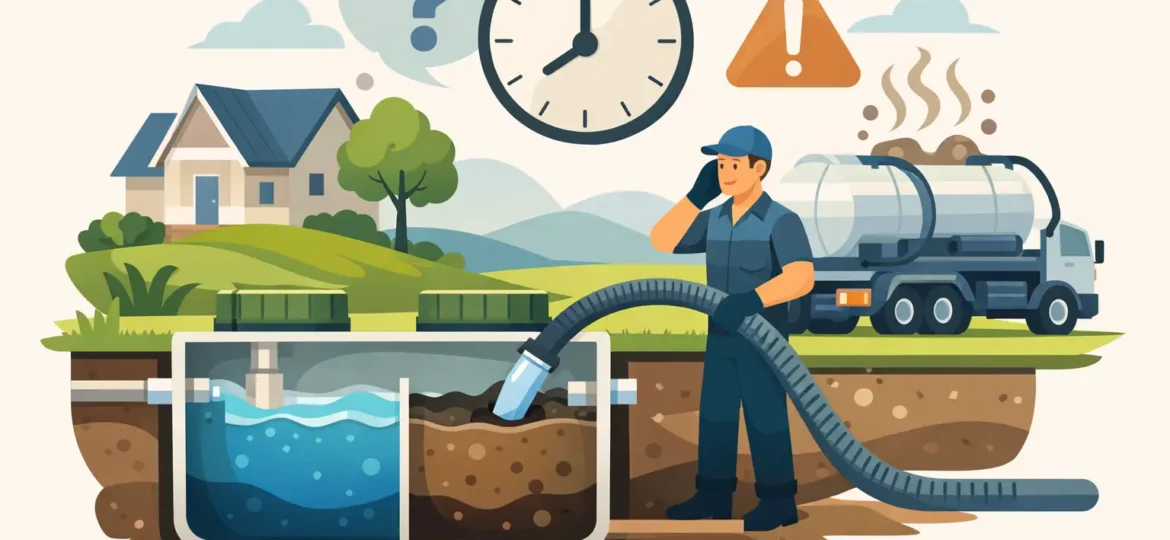
That slow drain in the hall bathroom might not be a simple clog. If more than one drain is acting up, the toilet gurgles after a shower, or there is a sewage smell outside, you may need a septic tank pumping service before a minor problem turns into a full backup. When a septic tank gets too full, wastewater has nowhere to go but back into the house or out into the yard.
For homeowners and property managers, timing matters. Pump too late and you risk a mess, property damage, and expensive repairs. Pump too often and you spend money you may not need to spend. The right move is knowing what your system is telling you and calling a company that can inspect the situation, pump the tank, and tell you if there is a bigger issue behind it.
What a septic tank pumping service actually does
A septic tank is built to separate waste into layers. Solids settle to the bottom as sludge, oils and grease float to the top as scum, and the liquid in the middle flows out to the drain field. Pumping removes the built-up solids and floating waste so the tank can keep doing its job.
A proper septic tank pumping service is not just showing up with a truck and emptying the tank as fast as possible. The tank should be opened safely, the contents should be removed thoroughly, and the condition of the tank should be checked while it is accessible. Baffles, filters, lids, and signs of structural damage all matter. If any of those parts are failing, pumping alone may not solve the problem for long.
That is where experience counts. A good technician can tell the difference between a tank that is simply overdue for pumping and a system that is dealing with drain field trouble, root intrusion, broken lines, or heavy water overload.
How often should a septic tank be pumped?
There is no one-size-fits-all answer, and anyone who gives one without asking questions is guessing. Most residential systems need pumping every 3 to 5 years, but that range can move up or down depending on household size, tank size, water use, and what goes down the drains.
A two-person household with a large tank may go longer than a family of five with frequent laundry, long showers, and a garbage disposal. Rental properties can also need more frequent service because usage patterns are harder to control. Commercial buildings are another category entirely. Restaurants, shops, offices, and facilities with restrooms for staff or customers can put very different loads on a septic system.
If you recently bought a property and do not know the service history, it is smart to have the system checked rather than waiting for warning signs. A septic problem rarely picks a convenient time.
Signs you need septic tank pumping service
Some symptoms are obvious. Others are easy to brush off until they get worse. The biggest red flag is when multiple fixtures start draining slowly at the same time. One slow sink may be a local clog. A slow sink, slow tub, and bubbling toilet together point to something bigger.
Watch for sewage odors inside or near the tank and drain field area. Pay attention to standing water or unusually green, soggy patches in the yard. Listen for gurgling sounds after flushing or running water. If wastewater backs up into a tub, shower, or floor drain, that is no longer a maintenance issue. That is an urgent service call.
There is one important trade-off to understand here. Pumping can fix a full tank, but it will not repair a failed drain field or crushed sewer line. If the tank is pumped and problems return fast, the issue may be elsewhere in the system. That is why inspection and honest diagnosis matter just as much as the pumping itself.
What happens if you wait too long?
Waiting usually costs more. When solids build up past the safe level, they can move into the drain field and start clogging the soil and lines. Once that happens, you may be looking at repairs far beyond a routine pump-out.
A neglected septic tank can also create health hazards. Raw sewage exposure is not just unpleasant. It is unsafe. For businesses and rental properties, it can shut down operations, create tenant complaints, and turn into a liability issue fast.
There is also the hidden cost of emergency timing. A planned service visit is almost always easier than a midnight backup before guests arrive, before a holiday weekend, or in the middle of business hours.
What affects the cost of septic pumping?
Homeowners usually want a straight answer on price, and that is fair. Cost depends on a few practical factors: tank size, accessibility, how full the tank is, and whether the crew finds other issues during service.
If the lid is buried deep, the tank is hard to reach, or the system has not been maintained in a long time, the job may take more labor. Emergency calls can also be different from scheduled maintenance because the crew may be dealing with an active backup, cleanup concerns, or after-hours dispatch.
The cheapest number is not always the best deal. If a company pumps the tank but skips inspection, rushes the work, or avoids telling you about a damaged baffle or filter problem, you may be paying again sooner than you should. Upfront flat-rate pricing and clear communication matter because nobody wants surprises after a dirty job.
How to prepare for a septic tank pumping appointment
If you know where the tank access is, clear the area before the truck arrives. Move vehicles, trailers, or anything blocking the path. If you do not know where the tank is located, let the company know ahead of time so they can plan for locating it.
It also helps to mention any symptoms you have noticed. Slow drains, odors, wet spots in the yard, recent backups, or alarms on a pump system all give the technician useful clues. The more complete the picture, the faster the diagnosis.
Keep kids and pets away from the work area. Septic service is not complicated for the homeowner, but it is heavy-duty work and should be handled carefully.
Septic tank pumping service is maintenance, not a cure-all
This is where a lot of property owners get tripped up. Pumping is necessary maintenance, but it does not fix every septic problem. If your drain field is saturated, your outlet line is broken, or your grinder pump has failed, pumping may buy a little time without solving the root issue.
That does not mean pumping is less important. It means the service should be part of a bigger approach to septic health. A solid contractor should tell you what is normal, what is worn out, and what can wait versus what needs attention now.
For example, if your tank is due for pumping but the rest of the system looks solid, that is good news. If the tank is full because of unusual water use from a leaking toilet or nonstop laundry loads, changing habits can help. If solids have already moved toward the drain field, then the conversation shifts from routine maintenance to protecting the system from further damage.
Choosing the right septic tank pumping service
When you hire a septic company, speed matters, but so does judgment. You want a crew that knows septic systems inside and out, shows up when they say they will, and gives you a direct answer about what is going on. That is especially true when you are dealing with an emergency and do not have time for guesswork.
Look for a company that handles both pumping and septic repair. That usually means they can spot problems others miss. It also means you are less likely to hear, after the fact, that you need a second contractor to figure out the real cause.
In the Chattanooga area, that local experience matters because soil conditions, property layouts, older systems, and heavy rain can all affect how a septic system behaves. A company like Chatta-Rooter Plumbing is built for that kind of work – fast response, honest pricing, and real septic experience, not just general plumbing with a pump truck.
If your system is showing warning signs, do not wait for sewage in the tub to tell you the tank is overdue. A timely service call can protect your home, your yard, and your wallet, and it gives you a clearer picture of what your septic system needs next.