

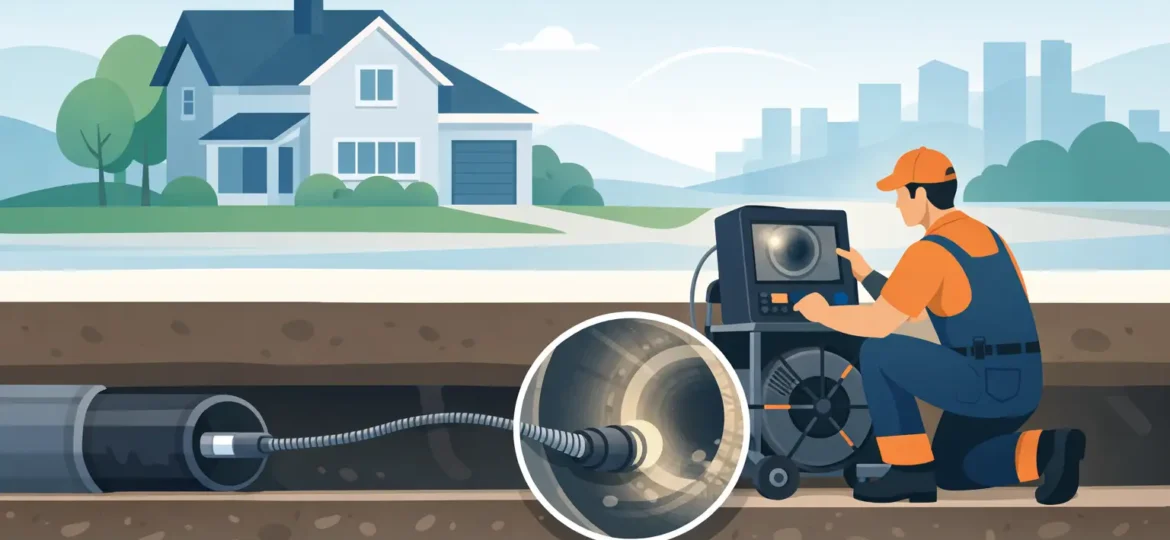
A sewer problem rarely starts with a dramatic backup. More often, it starts with a toilet that gurgles, a tub that drains slower than usual, or a smell outside that was not there last month. That is where a residential sewer camera inspection review matters. It gives homeowners a clear look at what is happening inside the line before they spend money on the wrong repair.
If you have ever paid for drain clearing only to have the problem come back, you already know the issue is not always the clog itself. Sometimes the real problem is roots, a belly in the line, cracked pipe, offset joints, grease buildup, or old cast iron scaling. A camera inspection does not guess. It shows the condition of the pipe in real time.
What a residential sewer camera inspection review should tell you
A good review of a sewer camera inspection is not just, “The line was checked.” It should explain what was found, where it was found, and what that means for your next step. If the line is clear, that is valuable. If there is damage, the review should separate minor wear from a repair that needs attention now.
For homeowners, the biggest benefit is simple – accuracy. Instead of tearing up a yard, replacing fixtures, or booking repeat drain cleaning without a plan, you get evidence. That matters even more if your house is older, if trees are near the sewer route, or if you have had recurring backups.
A proper inspection can identify root intrusion, pipe cracks, corrosion, low spots that hold waste and water, blockages from wipes or grease, and connection issues at joints. It can also help confirm whether the problem is isolated to one section or affecting the whole line. That difference can save a lot of money.
When a sewer camera inspection is worth it
Not every slow drain means you need a camera sent through the line. A simple local clog in a sink branch may be exactly that. But there are situations where a camera inspection stops wasted time and repeat service calls.
If more than one drain is backing up, if sewage is coming up at the lowest fixture, or if a main line clog keeps returning, a camera inspection is usually the smart move. The same goes for a home purchase, especially with an older property or one on a septic system with a long sewer run. You want to know what you are buying before the line fails on your watch.
It is also worth considering after major drain cleaning. Clearing a line is one thing. Understanding why it clogged is another. If roots got cut out or heavy sludge was removed, a camera can show whether the pipe is still serviceable or heading toward repair.
What the inspection process usually looks like
In most homes, the plumber accesses the line through a cleanout. If there is no accessible cleanout, another entry point may be used depending on the system layout. A flexible camera head is fed through the pipe while the technician watches the video feed and tracks the camera location.
This is not just about watching a screen. The value comes from the technician reading what the camera shows. Mud in the line may point to a break. Standing water may suggest a belly. Heavy roots at a joint usually mean the pipe has a weak spot that cleaning alone will not permanently solve.
In a solid residential sewer camera inspection review, the contractor should explain whether the issue is maintenance, repair, or replacement territory. Those are not the same thing. A little grease buildup may call for cleaning and better habits. A collapsed section is a repair issue. A badly deteriorated older line may justify replacement if patchwork fixes will keep failing.
What camera inspections do well – and where they have limits
A sewer camera is one of the best diagnostic tools in plumbing, but it is not magic. It gives a direct visual inside the line, which is a major advantage over blind snaking and guesswork. It can reduce unnecessary digging, help pinpoint the problem area, and support a fair repair recommendation.
Still, it has limits. If the line is fully blocked with heavy sewage, grease, or debris, the camera may not be able to pass until the blockage is cleared. In some cases, dirty water can hide damage. A camera also cannot physically test pipe strength. It can show corrosion or defects, but the full structural condition sometimes becomes clearer during repair.
That is why experience matters. The equipment is only part of the job. The person running it has to know how to interpret what they are seeing and explain it in plain terms. Homeowners do not need a lecture. They need a straight answer on what is wrong, how serious it is, and what fix makes sense.
Residential sewer camera inspection review: what to watch for
If you are comparing service providers, the quality of the inspection review matters as much as the inspection itself. A useful review should include clear findings, not vague language. You should know whether the line is open, whether damage exists, and whether the issue appears urgent.
It also helps if the contractor can identify the approximate depth and location of the trouble spot. That matters if a repair is needed under a driveway, near landscaping, or close to the foundation. Without location data, a camera video is less useful for planning.
Another thing to watch for is pressure selling. A camera inspection should support a diagnosis, not become a tool for scaring homeowners into a full replacement they may not need. Sometimes a line can be cleaned and monitored. Sometimes a spot repair is enough. Sometimes replacement really is the right call. The honest answer depends on the condition of the pipe, not a sales script.
Common problems found during inspections
Older Chattanooga-area homes can have a mix of sewer materials, and each type brings its own trouble. Clay lines often deal with root intrusion at joints. Cast iron can corrode and scale from the inside out. Orangeburg, if present, is known for deforming and failing with age. PVC is generally more durable, but poor installation or ground movement can still create offsets or bellies.
Tree roots are one of the most common findings in residential lines. They do not need a huge opening to get in. Once they find moisture, they grow and catch waste, paper, and grease until the line starts slowing down or backing up. Another common issue is a sagging section of pipe, often called a belly, where waste settles instead of moving freely. That can cause repeat clogs even after cleaning.
Grease and flushable wipes are also frequent offenders. Wipes are especially problematic because they do not break down the way many people think they do. They snag, collect debris, and build a blockage that keeps coming back.
Is a camera inspection worth the cost?
In many cases, yes – especially when compared to the cost of misdiagnosis. Paying for repeat snaking, yard excavation in the wrong place, or partial repairs that miss the root cause gets expensive fast. A camera inspection gives you a clearer path.
That said, it depends on the problem. If a single bathroom sink is slow and the issue is obviously local, a full sewer camera inspection may be unnecessary. But if the whole house is showing signs of a main line issue, the inspection often pays for itself by narrowing the fix.
For landlords and property owners, it can be even more valuable. It helps document line condition, supports repair decisions, and gives you something more solid than tenant complaints when recurring drain problems keep showing up.
Choosing a company for a sewer camera inspection
You want a company that does more than run the camera. You want one that can clean the line if needed, locate the problem accurately, and handle the repair if the inspection finds one. That saves time and prevents the handoff from one contractor to another.
Look for straightforward pricing, real field experience, and someone willing to explain the footage without dressing it up. A family-owned local company with deep sewer and septic experience usually understands the kinds of line issues common in this area. That matters when the diagnosis affects your yard, your home, and your budget.
At Chatta-Rooter Plumbing, that kind of practical diagnosis is the point. Homeowners do not call because they want a video. They call because they want the problem found and handled the right way.
A sewer line is one of those systems you do not think about until it starts causing trouble. When it does, a camera inspection gives you something better than a guess. It gives you a real look at the problem, so you can make the next decision with confidence instead of crossing your fingers.