

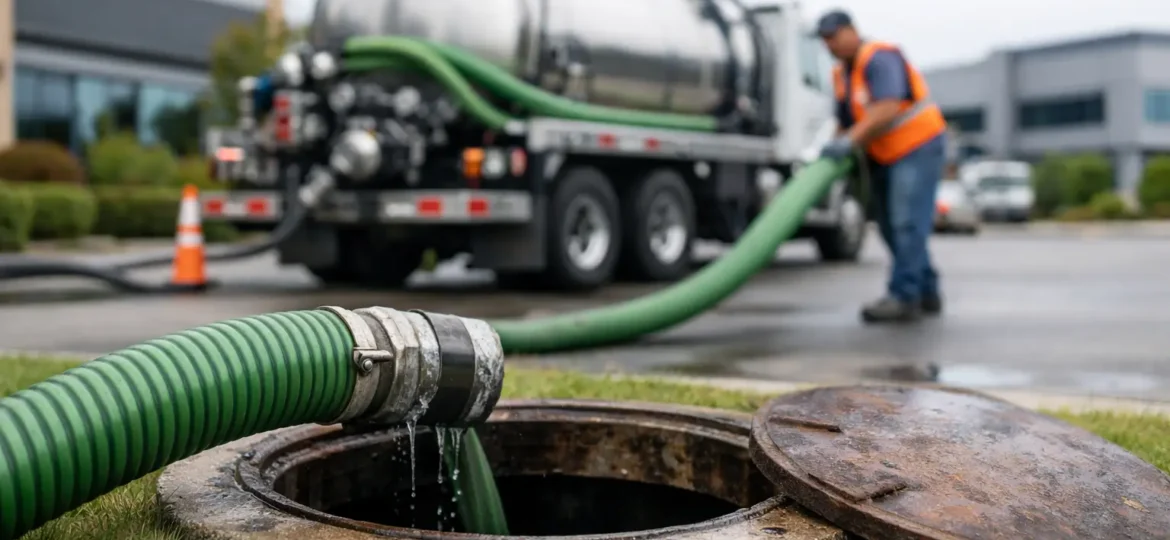
A septic backup can shut down a restroom, kitchen, rental property, or job site fast. It can also create cleanup costs, lost business, and an unhappy health inspector. A reliable commercial septic pumping schedule keeps that problem from becoming an emergency by removing accumulated solids before they block the system.
Commercial systems do not run on a one-size-fits-all timeline. A small office with a few employees has very different wastewater demands than a restaurant, church, campground, warehouse, or multi-tenant property. The right schedule is based on actual use, tank size, equipment, and the condition of the drain field – not a guess made after the first backup.
Why Commercial Septic Pumping Cannot Be an Afterthought
Every septic tank separates wastewater into layers. Solids settle to the bottom as sludge, while oils and floating waste rise to the top as scum. The liquid in the middle flows out to the drain field or other treatment component.
Pumping removes the sludge and scum. When those layers get too thick, solids can leave the tank and move toward the outlet baffle, effluent filter, pump chamber, or drain field. That is where a routine maintenance issue can turn into a costly repair.
For a commercial property, the risk is higher because daily use can change without warning. A new tenant moves in. A restaurant adds seating. A church hosts a large event. A construction crew starts using the facilities. The system may be handling far more water and waste than it did when the last pumping interval was set.
A good pumping plan protects more than the tank. It protects your drain field, keeps wastewater where it belongs, and helps you avoid disruptions during business hours.
What Sets a Commercial Septic Pumping Schedule
The first question is not, “How many years has it been?” The better question is, “How much is this system handling every day?” Several factors determine how often a commercial tank needs service.
Tank capacity and daily usage
A larger tank can hold more solids, but it is not automatically safe to wait longer. A 1,500-gallon tank serving a low-traffic office may have a manageable pumping interval. The same tank serving a busy restaurant or a property with several occupied suites may fill up much faster.
Restroom count, employee count, customer traffic, operating hours, and water use all matter. Facilities with showers, commercial kitchens, laundry equipment, or frequent cleaning cycles put additional demand on a septic system.
Type of business
Some properties create more challenging wastewater than others. Restaurants and food service businesses deal with grease, food particles, and high water use. A grease interceptor needs its own maintenance schedule and should not be treated as a replacement for septic tank pumping.
Day cares, churches, event venues, campgrounds, and rental properties can have sharp spikes in use. Manufacturing shops and industrial facilities may have wastewater concerns that require special handling. Never send chemicals, solvents, oils, paint, or other prohibited materials into a septic system just because the drain appears to be working.
The drain field and system components
A septic system is more than a tank. It may include an effluent filter, risers, pumps, alarms, distribution boxes, grinder pumps, or an advanced treatment unit. If the drain field is slow, saturated, damaged, or undersized for current use, the tank may need attention more often while the larger issue is diagnosed.
Pumping a tank can relieve an immediate problem, but it will not repair a failed drain field, broken line, bad pump, or clogged outlet. That is why each service visit should include a practical inspection of accessible components and a clear explanation of what the technician finds.
A Practical Starting Point for Pumping Intervals
Most commercial properties should begin with a professional evaluation rather than copying a neighbor’s schedule. As a general planning range, many light-use commercial systems are pumped every one to three years. Higher-use properties often need annual pumping, and some may need service every six months or on a tighter schedule.
A small professional office with limited staff may be able to operate safely on a longer interval if the tank is sized correctly and records show low sludge accumulation. A restaurant, busy church, event facility, or multi-unit rental property may need annual service because the volume and waste load are higher.
The right answer depends on what is inside the tank at the time of service. If pumping reveals that sludge and scum are still at safe levels, the interval may be adjusted. If the tank is heavily loaded well before the expected date, waiting another year is not a money-saving move. It is a gamble with your system.
Signs Your Schedule Is Too Far Apart
Do not wait for sewage on the ground to take action. A commercial septic system often gives warning signs before a full backup. Slow drains in multiple areas, toilets that gurgle, recurring clogs, sewage odors, wet spots near the drain field, and alarms on pump systems all deserve prompt attention.
One slow fixture may be a local drain blockage. Several slow fixtures at once can point to a main line or septic issue. If restrooms start backing up during heavy traffic periods but improve after hours, the system may be overloaded or the tank may be overdue for pumping.
Keep in mind that frequent pumping is not always the solution. If you are pumping several times a year because the system repeatedly backs up, something else may be wrong. A qualified septic contractor should inspect the outlet, filters, pumps, lines, and drain field instead of simply emptying the tank and sending you another bill.
Build the Schedule Around Records, Not Memory
Commercial property managers have enough to track. Septic maintenance should not live in somebody’s memory or on an old invoice buried in a filing cabinet. Keep a simple system record with the tank location, capacity, last pumping date, sludge level if measured, repairs performed, filter cleaning, alarm notes, and the next recommended service date.
This record becomes especially valuable when ownership changes, tenants change, or a backup happens after hours. It gives the service technician a starting point and helps prevent unnecessary guesswork.
Schedule service before your busiest season whenever possible. A campground may need attention before peak travel months. An event venue should not wait until the week of a major booking. A restaurant should plan maintenance around slower operating hours so the work does not disrupt customers or staff.
If the tank does not have accessible risers to ground level, consider installing them during the next service. Risers can make future pumping and inspections faster, cleaner, and less disruptive because the technician does not have to dig up the tank lid each visit.
Train Staff to Protect the System
A pumping schedule works best when daily habits support it. Your staff does not need to become septic experts, but they should know what does not belong in toilets, sinks, and floor drains.
Wipes, paper towels, feminine products, shop rags, grease, food waste, and heavy chemical cleaners can create expensive problems. “Flushable” wipes are a common troublemaker because they do not break down like toilet paper. In a commercial setting, one bad habit repeated by dozens of people can quickly affect pumps, lines, and tanks.
Restaurants should keep grease management separate from septic maintenance. Offices and retail locations should make sure restroom trash cans are available and clearly visible. Rental and multi-tenant properties benefit from simple tenant guidance and prompt responses when drains begin acting differently.
When to Call for Service Right Away
Routine pumping is planned. Sewage backups, strong wastewater odors, overflowing cleanouts, and pump alarms are not. If wastewater is backing up into a building or surfacing outside, limit water use immediately and call for professional help.
Chatta-Rooter Plumbing handles commercial septic pumping, inspections, repairs, and emergency septic calls across the Chattanooga area. The goal is to identify whether the problem is an overdue tank, a blocked line, a failed pump, or a drain field issue – then fix the real cause with upfront information about the work.
A commercial septic system should be quiet, dependable, and easy to forget about. Set a schedule based on real use, keep good records, and act on early warning signs. That is how you keep a manageable service call from becoming a shutdown.