

A sump pump usually stays quiet until the one night you need it most. When heavy rain saturates the ground, a failed pump can leave you with standing water, damaged flooring, mold risk, and a cleanup bill nobody wants. Knowing how to test a sump pump takes only a few minutes and gives you a chance to find trouble before your basement or crawl space starts taking on water.
For most homeowners, a basic test should be part of regular home maintenance, especially before spring storms and the heavy rain seasons common around Chattanooga and North Georgia.
How to Test a Sump Pump With Water
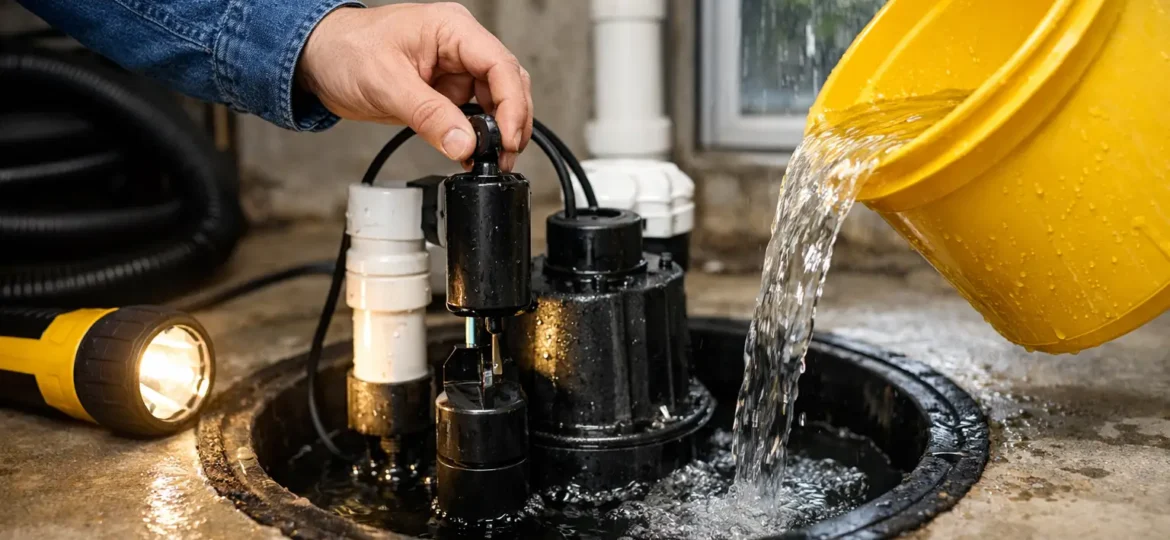
The simplest test is to make the pump do its job. You will need a bucket of water, a flashlight, and a few minutes to watch the system.
First, look inside the sump pit. Remove leaves, dirt, gravel, or other debris that could interfere with the float or clog the pump intake. The pit should not be packed with sediment. A little buildup is common, but a dirty basin can prevent the float switch from moving freely.
Next, slowly pour enough water into the pit to raise the float. On many pumps, the float is a round ball or a small component attached to the side of the pump. As the water rises, the float should trigger the pump. You should hear the motor start, see the water level drop, and hear water moving through the discharge pipe.
Stay nearby until the cycle finishes. A healthy sump pump should turn on, remove the water, and shut off once the float drops back down. If it runs but the water level barely changes, the pump may be clogged, undersized, worn out, or dealing with a blocked discharge line.
Do not keep adding water if the pump is not removing it. Shut it off or unplug it if you can do so safely, then call for service. Letting a struggling pump run dry or run continuously can burn up the motor.
What a Normal Test Looks Like
A normal test is straightforward: water enters the basin, the float rises, the pump starts, water leaves the pit, and the pump shuts off. The cycle should be smooth, not dramatic.
Some vibration and motor noise are normal. Grinding, screeching, repeated clicking, or loud rattling are not. A pump that turns on and off every few seconds may have a float problem, a check valve issue, or a discharge line that is sending water back into the pit.
Check the Power Before You Assume the Pump Is Bad
A sump pump is only useful if it has power when the storm arrives. Before testing with water, check that the pump is plugged directly into a working outlet. Avoid extension cords, power strips, and overloaded outlets in damp areas.
If the pump does not start during the water test, verify the outlet is live. You can test it with a lamp or another small device if the area is dry and safe. Also check your electrical panel for a tripped breaker or a tripped GFCI outlet.
Never handle a plug, cord, or electrical connection while standing in water. If there is water near the outlet or you suspect an electrical issue, stop there. That is a job for a qualified professional.
Inspect the power cord while you are at it. Cracks, fraying, loose plugs, or signs of overheating mean the pump should not be trusted. A damaged cord is not a minor inconvenience in a wet basement or crawl space.
Test the Float Switch Separately
The float switch tells the sump pump when to turn on. It is one of the most common failure points because it can get tangled, stuck against the basin wall, or jammed by debris.
With the pump unplugged, carefully move the float by hand. It should travel freely without catching on the pump, discharge pipe, or electrical cord. Then plug the pump back in and repeat the water test.
Some sump pumps use a vertical float that slides on a rod. Others use a tethered float attached by a cord. Tethered floats need enough room to swing. If the basin is too small or the float is tangled, it may never rise high enough to activate the pump.
If you have a pump with a manual test lever or test button, use it according to the manufacturer instructions. That feature can help confirm the motor works, but it does not replace a water test. The real question is whether the float activates the pump and whether the pump can actually move water out of the pit.
Inspect the Discharge Line Outside
A pump can sound like it is working while water goes nowhere. Follow the discharge pipe from the pump as far as you can safely inspect it. Make sure it is not crushed, disconnected, clogged, or frozen.
Outside, the discharge should carry water away from the foundation. If it empties right beside the house, the same water can drain back toward the basement or crawl space and force the pump to work harder. It should also not discharge where it creates an icy walkway in winter.
Look for a check valve on the discharge pipe near the pump. This one-way valve keeps pumped water from flowing backward into the sump pit after the motor shuts off. If you hear a heavy thud after every cycle or see water rushing back into the basin, the check valve may be installed backward, damaged, or worn out.
A blocked discharge line can be caused by mud, leaves, a frozen pipe, or even a buried outlet that has become obstructed over time. In that case, replacing the pump alone will not solve the problem.
Test Your Battery Backup Sump Pump
A standard sump pump depends on utility power, and storms are exactly when power outages happen. If your home has a battery backup sump pump, test it separately at least twice a year.
Most backup systems have a test button or alarm panel. Check the battery condition, terminal connections, alarm function, and indicator lights. Then follow the system instructions to confirm the backup pump activates when the primary pump is unplugged or when water rises.
A backup pump is not a set-it-and-forget-it device. Batteries age, terminals corrode, and alarms get ignored. If the battery is old, swollen, leaking, or unable to hold a charge, replace it before the next major storm.
For homes with frequent water problems, a battery backup is a smart second line of defense. It does have limits, though. Battery runtime depends on the battery capacity, the size of the pump, and how often it must run. During a long outage with heavy inflow, even a good backup system can eventually run out of power.
Signs Your Sump Pump Needs Professional Service
A pump that fails the water test needs attention, but there are other warning signs worth acting on before it quits completely. Call for help if you notice any of the following:
- The pump runs constantly or cycles on and off too often.
- Water remains in the pit or rises despite the pump running.
- The motor hums but does not pump water.
- The pump makes grinding, banging, or unusually loud noises.
- The float is stuck, the pit is full of sediment, or the discharge line is blocked.
- You smell burning, see damaged wiring, or find water near electrical connections.
Sump pumps do not last forever. Many units last roughly seven to 10 years, but actual lifespan depends on how often the pump runs, the quality of the installation, water conditions, and maintenance. A pump that has handled repeated flooding may wear out sooner than one in a dry basement.
How Often Should You Test a Sump Pump?
Test your sump pump every three to four months, and always test it before a season of heavy rain. If your property has a history of flooding, a finished basement, a crawl space that takes on water, or a pump that runs frequently, monthly checks are worth the effort.
Keep the test simple: inspect the pit, pour in water, watch the float, confirm the discharge, and check the backup system. That routine catches most problems early.
If your pump will not start, will not empty the basin, or is showing signs of electrical trouble, do not wait for the next storm to prove the problem. Chatta-Rooter Plumbing can inspect the pump, discharge line, check valve, and drainage setup, then give you a clear recommendation and upfront pricing. A quick test today can be the difference between a routine repair and a flooded home tomorrow.