

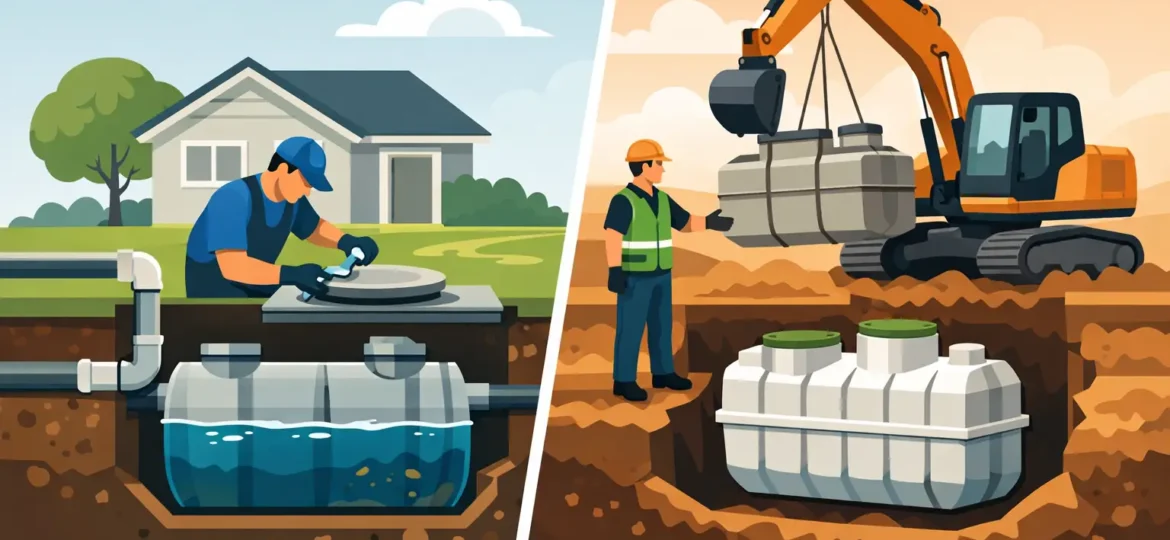
A septic system usually does not fail all at once. It starts with slow drains, wet spots in the yard, sewage smells, or backups that show up at the worst possible time. When that happens, most property owners ask the same question: septic repair versus replacement – which one actually makes sense?
The honest answer is that it depends on what failed, how old the system is, and whether the problem is isolated or spread through the whole setup. Some septic issues can be repaired quickly and affordably. Others keep eating your money until a full replacement is the smarter move. The key is getting the diagnosis right before you spend a dollar.
Septic repair versus replacement: start with the real problem
A septic system has several working parts, and not all failures carry the same price tag. A broken baffle, damaged lid, bad effluent filter, failing pump, crushed line, or isolated drain field issue may be repairable. If the tank is structurally sound and the rest of the system is still doing its job, a targeted repair can buy you years of reliable service.
But if the tank is collapsing, the drain field is saturated across a wide area, roots have invaded major lines, or the system was undersized from the beginning, replacement starts to look more practical. The wrong move is guessing. Pumping the tank without finding the cause may only buy a few days or weeks. A cheap repair on a system that is already near the end of its life can turn into repeat service calls, property damage, and more disruption.
This is why inspection matters. You need to know whether the issue is mechanical, structural, hydraulic, or related to soil absorption. Those are very different problems, and they do not get solved the same way.
When septic repair is the better call
Repair is usually the right move when the failure is limited and the system still has good bones. If your septic tank is in decent shape and the drain field is still accepting wastewater properly, it often makes sense to fix the bad component instead of replacing everything.
A common example is a pump failure. If you have a pump tank, grinder pump, or sewage ejector setup, one failed part can stop the whole system. That is serious, but it does not always mean the entire septic system is done. Replacing a pump, float, alarm, or control component is often far more cost-effective than full system replacement.
The same goes for broken tees, cracked access lids, damaged inlet or outlet pipes, or minor line issues caused by settling or root intrusion. In some cases, a drain field can also be partially repaired, especially if the failure is limited to a section and the rest of the field is still performing.
Age matters here too. A newer system with one clear problem is usually a strong repair candidate. If the system was installed properly, pumped on schedule, and not overloaded by years of neglect, repair can be the smart play.
When replacement makes more sense
There comes a point when repair stops being practical. If your septic system is old, has a history of recurring backups, or has multiple failing components, replacement may cost more upfront but less over time.
A failed drain field is one of the biggest reasons replacement enters the conversation. If the soil can no longer absorb effluent and the field is fully saturated, patching a line or pumping the tank will not solve the root problem. You may see standing water, sewage odors, lush green strips over the field, or backups every time water use increases. That usually points to a bigger system failure.
Tank condition matters too. Concrete tanks can crack or deteriorate. Metal tanks can rust through. If the tank is structurally unsafe, repair options narrow fast. Once a tank starts collapsing or leaking badly, replacement becomes a safety issue as much as a plumbing issue.
Code compliance can also push the decision. Some older systems were installed under outdated standards or on lots that have changed over time. If a major repair triggers permitting requirements, you may find that bringing an old system up to current code is close to the price of replacement anyway. In that case, replacing the system may give you a better long-term result and fewer headaches.
Cost is important, but it is not the only factor
Most people naturally compare repair cost to replacement cost and want the lower number. That makes sense, but the cheapest option on day one is not always the least expensive option over the next five years.
A repair can be a solid investment if it solves the issue and restores dependable service. But if you are paying for frequent pumping, repeated backups, yard damage, emergency calls, and temporary fixes, those bills stack up quickly. At some point, replacement stops looking expensive and starts looking efficient.
Downtime matters too. For a homeowner, a failing septic system can make daily life miserable. For a business, rental property, or commercial site, it can interfere with operations, upset tenants, and create sanitation problems. In those cases, reliability has real value.
That is why a good estimate should not just say what can be done. It should explain what is worth doing.
Septic repair versus replacement for older systems
Older systems deserve a harder look. If your septic setup is 20, 30, or 40 years old, the decision is not just about the current failure. It is about what is likely to fail next.
An older tank may survive one repair, but if the lines are deteriorating, the field is weak, and the layout no longer fits current demand, you may be pouring money into a system that is already winding down. That does not mean every older system needs replacement. Some hold up well with proper maintenance. But age raises the odds that one problem is connected to others.
Usage changes matter too. A house that once had two occupants may now have six. A property that was lightly used may now have added bathrooms, more laundry, or more frequent guests. If the original system is undersized for how the property is used now, recurring problems are not always repairable in a lasting way.
What a proper inspection should tell you
Before choosing repair or replacement, the system needs to be evaluated as a whole. That means looking beyond the symptom you can see.
A proper septic inspection should consider the tank condition, liquid levels, inlet and outlet flow, baffles, filters, pump operation if applicable, visible line issues, and drain field performance. The yard conditions matter. The usage history matters. The pumping history matters. So does whether the issue showed up suddenly or has been building over time.
If a contractor jumps straight to replacement without explaining why, ask questions. If somebody promises a cheap repair without checking the system thoroughly, be careful there too. Good septic work is not guesswork. It is diagnosis first, then a fix that matches the actual condition of the system.
For property owners in this area, that local experience matters. Chattanooga soils, slopes, rainfall, and site conditions can all affect how a septic system performs and what repair options are realistic.
How to make the right call without wasting money
If the problem is isolated, the system is structurally sound, and the repair has a good chance of lasting, repair is often the smart move. If the system is old, failing in more than one area, or no longer capable of handling demand, replacement is usually the better investment.
The big mistake is waiting too long. Septic problems rarely get cheaper with time. A small issue in a line, pump, or baffle can become a major mess if it is ignored. A struggling drain field can damage your yard and create health concerns. A backup inside the building is never just a plumbing inconvenience.
At Chatta-Rooter Plumbing, this is where straightforward advice matters most. Property owners do not need scare tactics or guesswork. They need someone to tell them whether the system can be repaired, whether replacement is the smarter call, and what each option will really cost them in the long run.
If your septic system is giving you signs of trouble, do not focus only on the fastest fix. Focus on the right fix. A good repair can save you serious money. A timely replacement can save you from months of repeat problems. Either way, the best move starts with getting the full picture before the next backup forces the decision for you.