

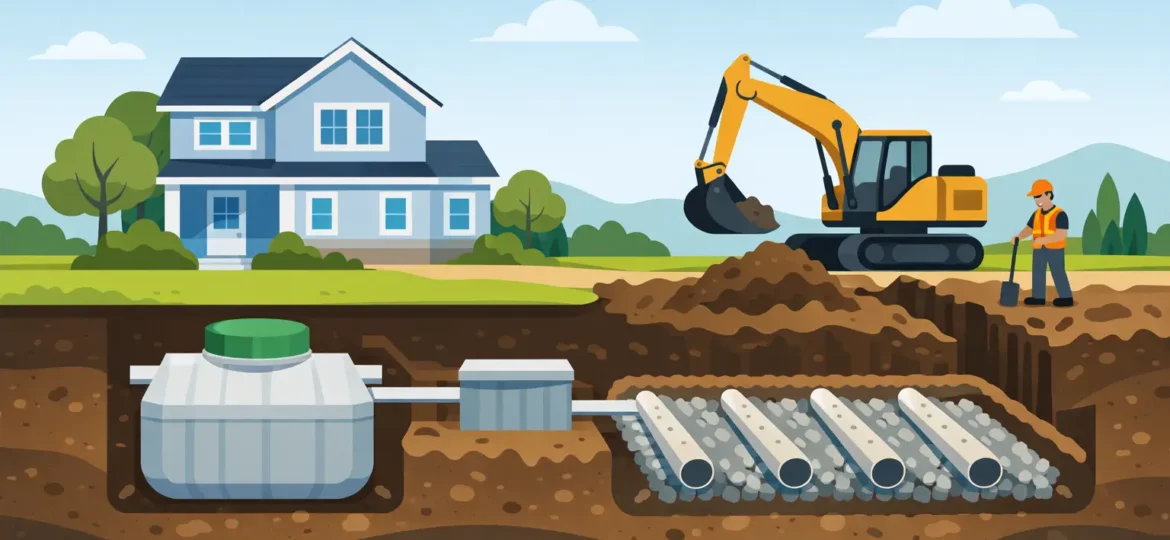
A septic system is not a place to guess, cut corners, or chase the cheapest bid. If you are building a home, replacing a failed system, or developing rural property, this guide to septic system installation will help you understand what has to happen before the first trench is dug – and what separates a system that lasts from one that becomes a headache.
What septic system installation really involves
Most people think septic installation starts with a tank going in the ground. It does not. The real work starts with the property itself. Soil conditions, slope, lot size, water table, local code, and daily wastewater demand all affect what kind of system can be installed and whether the plan will be approved at all.
A good installer does not start by selling a tank size or promising a quick turnaround. They start by asking the right questions. How many bedrooms are in the home? Is there room for a repair area? Has the property had drainage issues? Is the site flat, steep, wooded, or rocky? Those details matter because a septic system is only as good as the soil and layout supporting it.
That is why septic system installation is part engineering, part excavation, and part code compliance. It is not just plumbing work. It is a full wastewater solution built around the property.
Start with the site, not the equipment
Before a system can be designed, the land has to be evaluated. In most cases, that means a soil test and percolation testing or a site review required by local health or environmental authorities. This determines how well the ground can absorb and treat wastewater.
If the soil drains too fast, untreated wastewater can move too quickly. If it drains too slowly, the drain field can stay saturated and fail. Clay-heavy soil, shallow bedrock, high groundwater, and limited usable space can all narrow your options.
This is where many property owners get surprised. Two lots next to each other can require totally different septic designs. One may handle a standard gravity-fed system. The other may need a pump tank, advanced treatment, or an alternative drain field layout. That changes the price, the timeline, and the maintenance needs down the road.
Permits and design come before installation
Once the site has been evaluated, the next step is system design and permitting. This is not paperwork for the sake of paperwork. The permit process exists to make sure the system matches the property and meets health requirements.
A proper design will account for tank size, pipe layout, drain field dimensions, setbacks from wells and property lines, and any pump or dosing requirements. For commercial properties, the design may also need to account for higher flow volumes or variable usage patterns.
If a contractor is willing to skip permits or move ahead before approvals are in place, that is a red flag. Septic systems are buried, but the problems from a bad install do not stay hidden. Failed inspections, expensive rework, drainage issues, and legal trouble can all follow.
Choosing the right type of septic system
A practical guide to septic system installation has to address system type, because there is no one-size-fits-all answer. The right system depends on the site and the building it serves.
A conventional septic system is the most familiar setup. Wastewater flows from the house into a septic tank, where solids settle and scum rises. The liquid effluent then moves into a drain field, where the soil finishes the treatment process. This works well on properties with suitable soil, enough space, and the right drainage conditions.
A chamber system is similar in purpose but uses a drain field with chambers instead of gravel trenches. In some installations, that can reduce material needs and speed up the process.
A pressure distribution or low-pressure pipe system may be used when the site needs more even wastewater distribution. This often includes a pump and adds mechanical components, which can improve performance but also adds maintenance responsibility.
Mound systems and other alternative designs come into play when natural soil conditions are poor. These systems can solve difficult site problems, but they typically cost more and require more precision during installation.
The trade-off is simple. Simpler systems usually cost less and are easier to maintain, but only if the land supports them. Forcing a conventional system onto a bad site is not saving money. It is delaying failure.
What happens during installation
After approvals are in place, the physical installation can begin. The site is cleared as needed, excavation equipment is brought in, and the layout is marked based on the approved plan.
The tank excavation has to be done to the correct depth and grade. The tank itself must be placed level and connected with proper inlet and outlet piping. If pumps, alarms, or risers are part of the design, they need to be installed correctly the first time. Small mistakes in slope or connection points can create long-term performance problems.
The drain field installation is just as critical. Trenches or chambers have to be placed at the proper depth and spacing. Soil disturbance needs to be controlled. Heavy equipment should not compact the future drain field area more than necessary. That compacted soil can affect how well wastewater disperses.
Once the system is installed, inspection usually takes place before final cover. That step confirms the work matches the approved design. After approval, the system is backfilled and finished.
A clean install does not mean the yard looks untouched. Septic work is excavation work. There will be equipment, disturbed soil, and a jobsite. What matters is whether the system was installed to spec and whether the site is left stable and ready for final grading.
How long septic installation takes
The actual installation may only take a few days, but the full process often takes longer. Testing, design, permitting, weather, inspection scheduling, and site access all affect the timeline.
If the property is straightforward and approvals move quickly, the job can move fast. If the lot has poor soil, steep terrain, or permit complications, expect more time. Rain can also delay excavation or create muddy conditions that are not suitable for proper installation.
That is why realistic scheduling matters. A contractor who promises a lightning-fast install before checking the property may be telling you what you want to hear, not what the job actually requires.
What septic system installation costs
Cost depends on the system type, site conditions, permit requirements, excavation difficulty, and whether pumps or advanced treatment components are needed. There is a big difference between a basic conventional system on an easy lot and a complex engineered system on a difficult one.
Homeowners often focus on tank price because it feels concrete. The real cost driver is usually the site. Rock excavation, wet ground, limited access, imported fill, alternative systems, and electrical work for pumps can all move the number upward.
The cheapest estimate is not always the lowest total cost. If the work is undersized, poorly graded, or rushed, you may pay again in repairs, premature failure, or replacement. Upfront flat-rate pricing and a clear scope of work matter because they reduce surprises.
Common mistakes to avoid
The biggest mistake is treating septic installation like a commodity. It is not the same from one property to the next. Hiring based on price alone often leads to weak planning, poor communication, or shortcuts that do not show up until the system is under stress.
Another mistake is ignoring future access. Tanks should be serviceable. Components should be installed with maintenance in mind. If lids, risers, or pump access are buried too deep or hard to reach, routine pumping and service become harder and more expensive.
Property owners also make the mistake of building too close to the drain field area or failing to protect it after installation. Parking vehicles on it, adding structures, or changing drainage patterns can shorten the life of the system.
Why local experience matters
Septic work is local by nature. Soil conditions, permitting rules, and installation standards vary by area. A contractor with real field experience understands how the ground behaves, what local officials expect, and what system designs tend to hold up in that region.
That matters in places where rain, red clay, slopes, or tight lots can complicate an otherwise simple job. A company that handles septic work every week is more likely to spot issues early, plan around them, and keep the project moving. That is one reason many property owners in this area call Chatta-Rooter Plumbing when they need straight answers and dependable septic work.
Before you move forward
If you are planning new construction or replacing an old system, ask better questions. Ask what the site can actually support. Ask what permits are required. Ask how future maintenance will be handled. And ask what could change the price before the job starts.
A septic system should do its job quietly for years. That only happens when the installation is handled the right way, from soil evaluation to final inspection. When the ground is right, the design is right, and the workmanship is right, you are not just putting in a tank. You are building the wastewater system your property will rely on every day.