

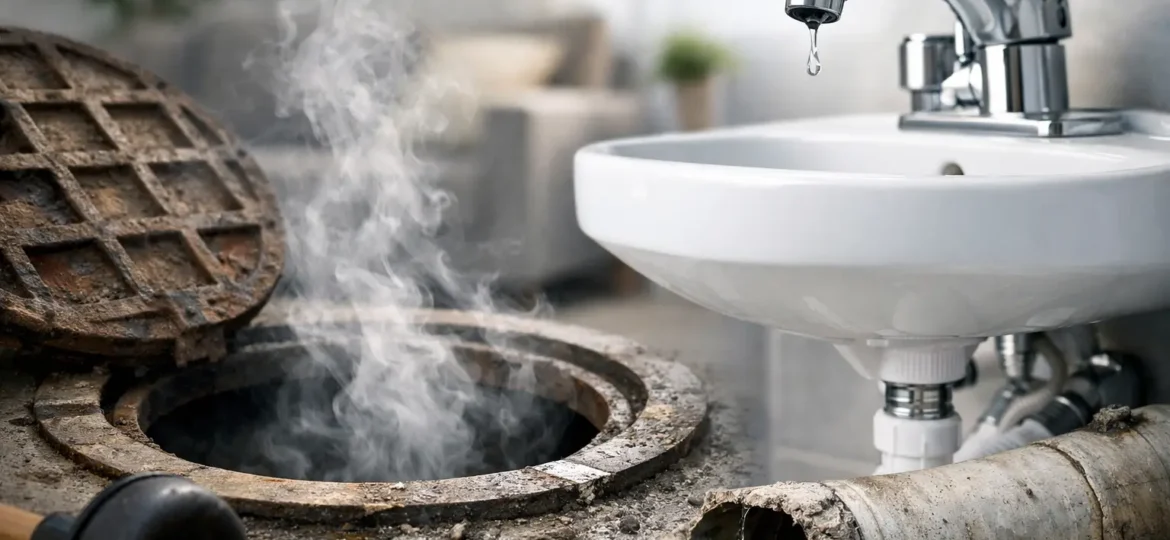
A sewer smell in the bathroom, kitchen, basement, or yard is not something to cover up with air freshener. The top causes of sewer odors usually point to a missing water seal, a drain blockage, a plumbing vent problem, or a failing sewer or septic system. Some are quick fixes. Others can turn into a backup, sewage cleanup job, or expensive property damage if they are ignored.
The key is knowing where the odor is strongest, when it shows up, and whether other plumbing fixtures are acting differently. That information helps separate a simple dry drain from a problem that needs professional sewer or septic service.
Top Causes of Sewer Odors in Homes and Businesses
Dry P-traps let sewer gas into the building
Every sink, shower, tub, floor drain, and laundry drain should have a P-trap. It is the curved section of pipe below the drain that holds water. That water creates a seal between your building and the sewer gas inside the drain line.
When a fixture is rarely used, the water in the trap can evaporate. This is common in guest bathrooms, basement floor drains, utility rooms, vacant rentals, and commercial spaces with unused restrooms. Once the trap is dry, sewer gas has a direct path into the room.
If the odor is coming from one little-used drain and there are no backups, run water into it for a minute. For a floor drain that dries out often, a small amount of mineral oil after adding water can slow evaporation. If the smell returns quickly, the trap may be cracked, leaking, or being siphoned dry by a venting issue.
A clogged or dirty drain is holding waste
Not every sewer-like smell is coming from the main sewer line. Hair, soap residue, food waste, grease, and sludge can build up inside a branch drain and create a nasty odor close to the fixture. Kitchen sink drains are especially prone to this, particularly when grease has been rinsed down the line or food waste has collected around a garbage disposal.
A bathroom sink may smell because biofilm is growing in the overflow opening or on the stopper assembly. A shower drain may be loaded with hair and soap scum. The odor can get worse after hot water runs because the heat stirs up trapped gases and residue.
Basic cleaning can help when the issue is limited to one fixture. But repeated slow drains, gurgling, or smells coming from several drains at once call for a proper inspection. Chemical drain cleaners are not a reliable answer. They can damage older pipes, fail to remove the actual blockage, and make later repairs harder on both the plumbing and the technician.
A blocked plumbing vent creates pressure problems
Your plumbing vent system runs through the roof and allows sewer gases to exit safely outdoors. It also lets air into the drain system so wastewater can flow without pulling water out of nearby traps.
Leaves, nests, debris, and even frost during cold weather can block a vent. When that happens, drains may gurgle, toilets may flush poorly, or you may notice sewer odors after flushing or draining a tub. In more serious cases, pressure changes can siphon the water out of a P-trap and leave the room exposed to sewer gas.
Vent problems are easy to miss because the drain may still appear to work. Do not climb on the roof or force tools into a vent pipe unless you know exactly what you are dealing with. A sewer camera inspection and proper diagnosis can determine whether the blockage is in the vent, a branch line, or the main sewer.
A loose toilet seal can leak odor without leaking much water
The wax ring or toilet seal under the base of a toilet blocks sewer gas from escaping around the drain connection. When that seal fails, you may smell sewer gas near the toilet even if there is no obvious water on the floor.
A toilet that rocks, shifts when someone sits on it, or has recently been removed is more likely to have a damaged seal. Staining around the base, moisture on the floor, and an odor that gets worse after flushing are all warning signs. This is not a repair to put off. A failed seal can allow wastewater to damage the flooring and subfloor before the problem becomes visible.
Main sewer line trouble affects more than one fixture
When several drains smell bad, drain slowly, or make gurgling sounds, the problem may be in the main sewer line. Tree roots, grease buildup, wipes, broken pipe, settling soil, and old cast-iron or clay pipe can restrict the line. Wastewater may not be fully backing up yet, but it is no longer moving through the system the way it should.
Pay attention to patterns. A toilet bubbling when the washing machine drains, sewage odor around a basement drain, or water appearing in the tub after a flush are serious clues. These symptoms mean the line may be under pressure and looking for the lowest place to release wastewater.
A professional sewer line inspection takes the guesswork out of it. Camera equipment can show root intrusion, cracks, bellies in the pipe, heavy buildup, or a full blockage. Depending on what is found, hydro jetting, main line cleaning, spot repair, or sewer line replacement may be the right move. The best repair depends on the pipe material, age, damage location, and condition of the entire line.
Septic tank or drain field problems can cause outdoor odors
For homes and properties on septic systems, sewer odors outside are often a warning that the system needs attention. A septic tank that is overdue for pumping can become too full to separate solids and wastewater properly. Solids may move toward the drain field, contributing to clogs and reducing the field’s ability to absorb treated wastewater.
Odors near the septic tank, drain field, or yard can also come with wet ground, unusually green grass in one area, slow indoor drains, or sewage odors after heavy rain. Rain does not cause a healthy system to fail, but saturated soil can expose an existing drain field problem by leaving wastewater with nowhere to go.
Do not wait for raw sewage to surface. Septic pumping on a regular schedule is far less disruptive than an emergency backup. If a system has already been neglected or the drain field is failing, pumping alone may provide temporary relief but will not repair damaged components or saturated soil. The right solution may involve septic repair, a baffle or filter issue, a pump problem, or drain field work.
Cracked pipes and damaged cleanouts release gas underground
Sewer pipe damage does not always produce an immediate indoor backup. A cracked pipe, separated joint, or broken cleanout cap can release odor into a crawl space, basement, yard, or utility area. Older homes are more likely to have aging pipe materials and connections that have shifted over time.
A persistent sewage odor outside near the foundation deserves attention, especially if the ground is soft, drains are slow, or you see signs of rodents or insects around the area. Sewer gas can travel through openings and make its way indoors through crawl spaces, wall penetrations, or gaps around plumbing lines.
This is another case where a camera inspection matters. Digging without locating the failure first can waste time and tear up landscaping unnecessarily. A clear diagnosis allows the repair to be focused where it needs to be.
When a Sewer Odor Is an Emergency
A brief odor from a dry, unused drain is usually not an emergency. A strong, ongoing smell paired with sewage backup, standing wastewater, toilet overflow, multiple slow drains, or a wet septic area is different. Keep people and pets away from contaminated water, avoid using additional fixtures, and get the system checked right away.
Commercial properties should move especially fast. A sewer odor in a restroom, kitchen, tenant space, or customer area can disrupt operations and create sanitation concerns. Fast diagnosis protects the building, the people using it, and your ability to stay open.
Do Not Let a Smell Become a Backup
Sewer odors are your plumbing system telling you something has changed. The smell may be as simple as a dry P-trap, or it may be the first warning of a blocked sewer line or septic failure. If the odor keeps returning, affects more than one area, or comes with slow drains and gurgling, get it inspected before wastewater has a chance to come back into the building.
For property owners in the Chattanooga area, Chatta-Rooter Plumbing can identify the source, explain the repair clearly, and handle tough sewer and septic problems without wasting time. A quick, accurate diagnosis is usually the cheapest place to start.