

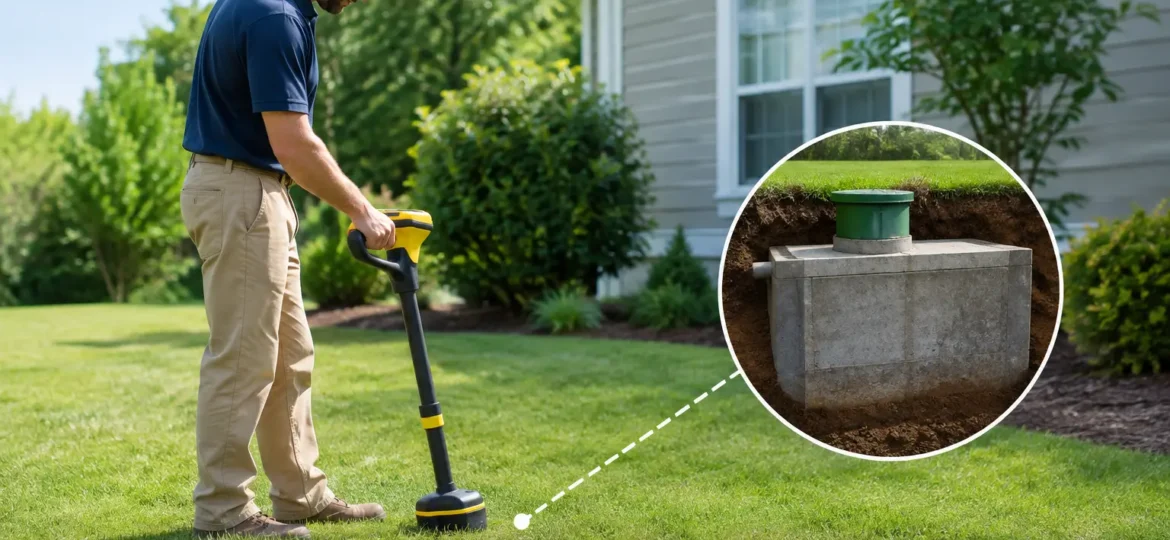
A septic problem is stressful enough. The last thing you need is a backhoe tearing up the wrong part of your yard while the real tank is still buried somewhere else. If you need to locate septic tank equipment before pumping, repairs, landscaping, or a home sale, start with a plan – not a shovel.
Most septic tanks are not impossible to find. They are usually installed in a logical location between the house and the drain field. But older homes, additions, changing property lines, missing records, and buried lids can turn a simple search into a costly guessing game.
Why Finding Your Septic Tank Matters
Knowing where the tank sits makes routine maintenance faster and protects the system from accidental damage. A septic tank needs pumping access. If the lid cannot be reached, every service visit may require extra digging, which adds time and expense.
The location also matters before installing a fence, driveway, deck, pool, shed, or major landscaping. Heavy equipment and permanent structures do not belong over a septic tank or drain field. Vehicle traffic can crack lids, crush pipes, compact soil, and interfere with proper drainage.
For landlords and commercial property owners, keeping a clear record of the system location helps avoid delays when a backup happens. In a sewage emergency, nobody wants to spend hours searching the property before service can begin.
Start With Septic Records and Site Clues
The best first step is checking the paperwork. Look through your home purchase file, septic permit, property survey, inspection report, building plans, or previous pumping invoices. A septic diagram may show the tank, cleanouts, drain field, and the direction of the sewer line from the house.
In Chattanooga and surrounding counties, local health department or permitting records may be available for some properties. Records are especially useful when the system was permitted properly and the home has not been heavily altered since installation. Still, treat an old drawing as a starting point. It may be approximate, and it may not reflect a replacement tank or rerouted line.
Then walk the property. Septic tanks are commonly located 10 to 25 feet from the home, often in the rear or side yard, though every property is different. Look for a slightly raised or sunken area, a rectangular patch of different grass, exposed riser lids, or a cleanout pipe near the foundation.
The drain field is usually farther downhill or away from the house than the tank. It may appear as a broad open area where the grass grows greener or dries differently. Do not assume the greenest spot is the drain field, though. Water runoff, shade, and irrigation can create the same clues.
Follow the Main Sewer Line Carefully
Your home’s main sewer line runs from the plumbing system to the septic tank. Finding its exit point can narrow down the search area.
Check the basement, crawl space, or utility area for the main drain line. Its path often points toward the side of the house where the sewer pipe leaves the foundation. Outside, look for a capped cleanout near that area. The tank is often in line with that pipe, but the line can bend around obstacles, so do not rely on a straight line alone.
A metal probe can sometimes help identify the tank lid or the solid edges of the tank. Use it gently and only after calling 811 to have public utility lines marked. Never force a probe into the ground. You could damage a shallow pipe, electrical line, irrigation line, or the tank lid itself.
Avoid using a long steel rod near suspected gas, electric, water, or communication lines. Utility marking is not optional just because the job seems small.
Methods That Often Waste Time or Cause Damage
Homeowners sometimes try to find a tank by digging random holes, using a metal detector, or flushing a transmitter down a toilet. These approaches can work in limited situations, but they are not always reliable.
A standard metal detector may react to buried scrap, fence hardware, old pipes, or rebar instead of the septic tank. It may also miss a plastic or fiberglass tank completely. Dye placed in a toilet can help identify a drain field during a professional inspection, but it will not magically reveal a buried tank lid.
Do not open or enter a septic tank. Septic gases can overcome a person without warning, and a damaged or loose lid can collapse. Keep children, pets, and equipment away from any exposed opening until it is properly secured.
Random excavation is the biggest mistake. Tank lids, inlet baffles, outlet baffles, distribution boxes, and pipes can all be damaged by digging equipment. What began as a search can become a repair bill.
When Professional Septic Locating Is the Smart Move
Call a septic professional when records are missing, the tank has never been pumped, the yard has been altered, or you are already dealing with slow drains, sewage odors, wet ground, or a backup. Those signs may mean the system needs attention now, not just a location check.
A qualified technician can use electronic locating equipment, sewer camera inspection, probing methods, and field experience to trace the line and pinpoint access points with less unnecessary digging. If the tank is buried deep or has no risers, the technician can expose the correct lid and discuss adding risers for easier future pumping.
This is also the right choice before buying a property with an unknown septic system. A tank location alone does not prove the system is working properly. A complete inspection may reveal tank condition, liquid levels, damaged components, drain field concerns, and whether the system is sized appropriately for the property.
At Chatta-Rooter Plumbing, septic work is handled by people who deal with buried tanks, blocked lines, drain field issues, and emergency backups every day. The goal is simple: find the system, diagnose the problem accurately, and avoid tearing up more of your property than necessary.
What to Do Once You Find the Tank
Mark the location on a property sketch and save it with your home records. Include the tank lids, cleanouts, drain field, distribution box if known, and the direction of the sewer line. Take photos with fixed landmarks, such as house corners, trees, or fence lines, but remember that removable landscaping can change.
Keep the tank accessible. Do not cover it with concrete, build over it, or plant large trees nearby. Roots can invade pipes and make future service harder. If the lid is far below grade, ask about installing a secure riser and lid. It can reduce digging during future pumping and make emergency service much faster.
Once the tank is found, follow a pumping schedule based on household size, tank capacity, water use, and system condition. Many homes need service every three to five years, but that is a general range, not a guarantee. A large family, garbage disposal use, high water use, or an undersized tank may require more frequent pumping.
A Tank Location Is More Than a Dot on the Yard
Finding the septic tank gives you control over one of the most important systems on your property. It helps you plan projects, protect the drain field, prepare for maintenance, and respond faster if wastewater starts backing up.
If your search has turned into guesswork, stop before the yard gets damaged. A proper septic location service can save time now and prevent a much bigger repair later.