
A toilet that will not flush is frustrating. A toilet, shower, and floor drain backing up at the same time is a main sewer problem until proven otherwise. When you need to unclog a main sewer line, acting quickly can limit sewage damage, protect your property, and prevent a small backup from turning into a cleanup job.
The wrong move can make matters worse. Repeated flushing, pouring in chemical drain cleaner, or forcing a rented machine through an unknown blockage can crack pipes, damage fixtures, or send sewage across the floor. Start by identifying what is happening, stop adding water to the system, and know when it is time to bring in a sewer professional.
Signs Your Main Sewer Line Is Clogged
A clog in one sink is usually a local drain issue. A clog in the main line affects multiple fixtures because it blocks the pipe carrying wastewater out of the building and toward the city sewer or septic tank.
The clearest warning sign is water coming up in the lowest drain when another fixture is used. You may flush an upstairs toilet and see dirty water rise in a basement shower, first-floor tub, or floor drain. You may also hear gurgling from toilets and drains, notice slow drainage throughout the property, or smell sewer gas near drains.
For homes on septic systems, a backup does not automatically mean the line is clogged. A full septic tank, a failed pump, a blocked outlet baffle, or a drain field issue can create nearly identical symptoms. That is why a proper diagnosis matters. Clearing a line may restore flow temporarily, but it will not fix a tank or drain field that cannot accept wastewater.
What to Do Before You Try to Unclog a Main Sewer Line
First, stop using water. Do not run the dishwasher, washing machine, shower, or faucets. Do not keep testing toilets with extra flushes. Every gallon sent down the drain can come back through the lowest opening in the house.
If sewage has reached the floor, keep people and pets away from the area. Raw sewage can carry bacteria and other contaminants. Put on gloves and avoid direct contact, but do not start aggressive cleanup until the backup is under control. If water is near outlets, appliances, or electrical equipment, stay clear and call for help.
Next, check whether the problem affects the whole building or only one fixture. A single slow bathroom sink usually does not call for main line work. Multiple fixtures backing up, especially on different levels, does.
If you live in a house, locate the sewer cleanout if it is safely accessible. It is often a capped PVC or metal pipe outside near the foundation, in a crawlspace, basement, utility room, or near the septic tank line. Never open a cleanout blindly. If the line is blocked, sewage may be standing behind that cap under pressure. Open it slowly, from the side, while wearing eye protection and protective clothing. If sewage spills out, stop there. The obstruction is downstream of the cleanout and the line needs to be cleared.
When a DIY Attempt Makes Sense
A homeowner can sometimes handle a minor blockage if there is no sewage on the floor, the cleanout is accessible, and the person has the right tool and understands the risk. A hand-crank drain auger may help with a short, soft blockage near the cleanout. It is not the same as a professional sewer machine, and it may not reach or remove a deep obstruction.
Use caution with any cable. Sewer cables can bind, whip, damage older pipe, or get stuck in roots and broken sections. Never force the cable if it stops hard. A stoppage may be roots, a collapsed line, a belly holding waste, grease buildup, or a foreign object. More force does not always mean more progress.
Avoid chemical drain openers. They rarely solve a main sewer blockage, especially one caused by roots, heavy paper buildup, grease, or pipe damage. They can also create a hazardous mess for anyone opening the line later. Acid and caustic chemicals may harm certain piping and do not belong in a septic system.
A plunger is useful for a single toilet clog. It will not clear a blocked main line. The same goes for pouring boiling water, vinegar, baking soda, or store-bought enzyme products down the drain. Those methods may help with light maintenance in the right situation, but they are not an answer when wastewater is backing up through several fixtures.
The Right Equipment for a Main Sewer Clog
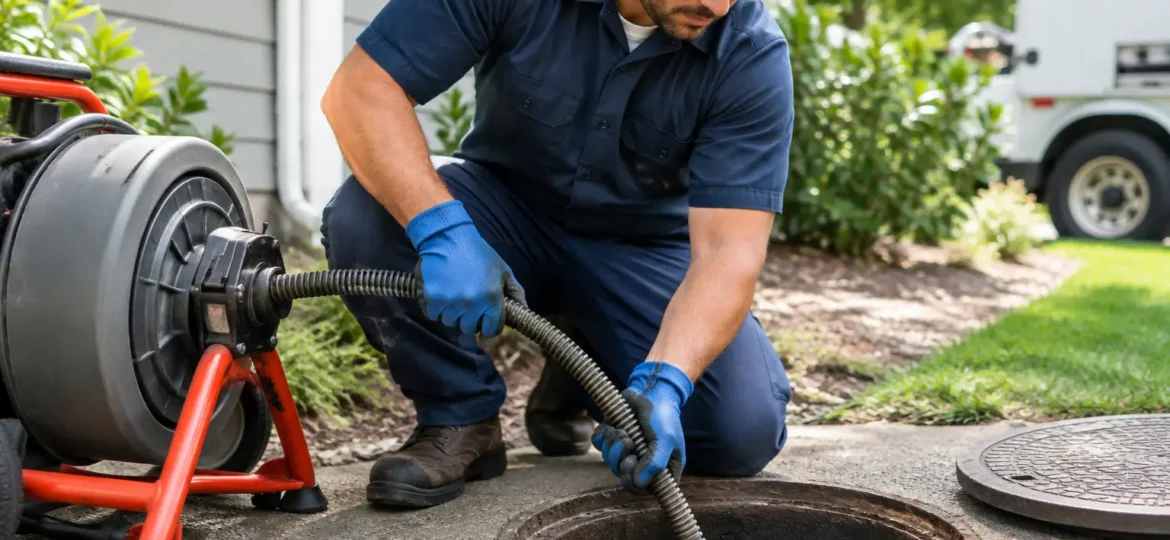
Professional main line cleaning starts with the right diagnosis and equipment. A heavy-duty cable machine can cut through common obstructions and retrieve some materials. Different cutting heads are selected based on pipe size and the likely cause of the blockage. For example, a root cutter is used differently than a tool meant to pull back wipes or break up soft buildup.
Hydro jetting is often the better choice when the pipe is structurally sound but coated with grease, sludge, scale, or recurring debris. A jetter uses high-pressure water to scour the inside of the pipe and flush material out. It cleans more thoroughly than simply poking a hole through the blockage. However, hydro jetting is not the first move for every sewer. A severely cracked, collapsed, or deteriorated pipe may need camera inspection before high-pressure cleaning.
A sewer camera inspection shows what is actually in the line. This is especially valuable after a recurring backup, after clearing roots, or when a cable keeps hitting the same spot. The camera can reveal root intrusion, offset joints, cracked pipe, sagging sections, construction debris, and the exact location of a problem. That evidence helps avoid guessing and helps determine whether cleaning, repair, or replacement is the right call.
Why Main Sewer Lines Clog
Many main line clogs build over time. Grease poured down kitchen drains cools and sticks to pipe walls. Wipes, paper towels, feminine products, and so-called flushable wipes do not break down like toilet paper. They catch on rough pipe interiors or roots and create a dam.
In Chattanooga-area properties, tree roots are also a frequent problem. Roots naturally seek moisture and can enter old clay pipe, cast iron joints, and small cracks in other materials. Once inside, they trap paper and waste. Clearing roots can restore flow, but roots will return unless the damaged section is repaired or the line is maintained on a schedule.
Older homes may also have pipe materials and installation conditions that increase the risk of trouble. Cast iron can corrode and develop rough interiors. Clay pipe joints can shift. A line with poor slope can hold solids. In some cases, the clog is only the symptom of a pipe that has reached the end of its useful life.
Commercial properties have their own risks. Restaurants and food operations often deal with grease accumulation. Rental properties may see more foreign objects flushed. Offices, shops, and facilities with restrooms used by the public need a fast response because a sewer backup can interrupt business, create unsafe conditions, and damage floors or inventory.
When to Call for Emergency Sewer Service
Call for professional help right away if sewage is backing up inside, multiple fixtures are affected, the cleanout is overflowing, or you have already tried a basic step without success. The same applies if you smell strong sewer gas, suspect a septic tank issue, or keep experiencing the same backup every few months.
A qualified crew can clear the line, inspect it, explain what caused the issue, and give you an upfront recommendation based on what the pipe actually needs. If the problem is connected to a septic tank, pump, grinder pump, or drain field, the job may require more than drain cleaning. Getting the full system checked prevents repeat emergencies and wasted money.
Chatta-Rooter Plumbing provides 24/7 sewer and septic response for homeowners, landlords, and businesses across the Chattanooga area. A backed-up main line is not a wait-and-see problem. Shut off the water, protect the area, and get the blockage diagnosed before the next flush becomes a bigger mess.
The best time to address a recurring sewer problem is after the first warning sign, not after sewage reaches the floor. A proper cleaning and camera inspection can give you a clear answer and a practical plan for keeping wastewater where it belongs.