

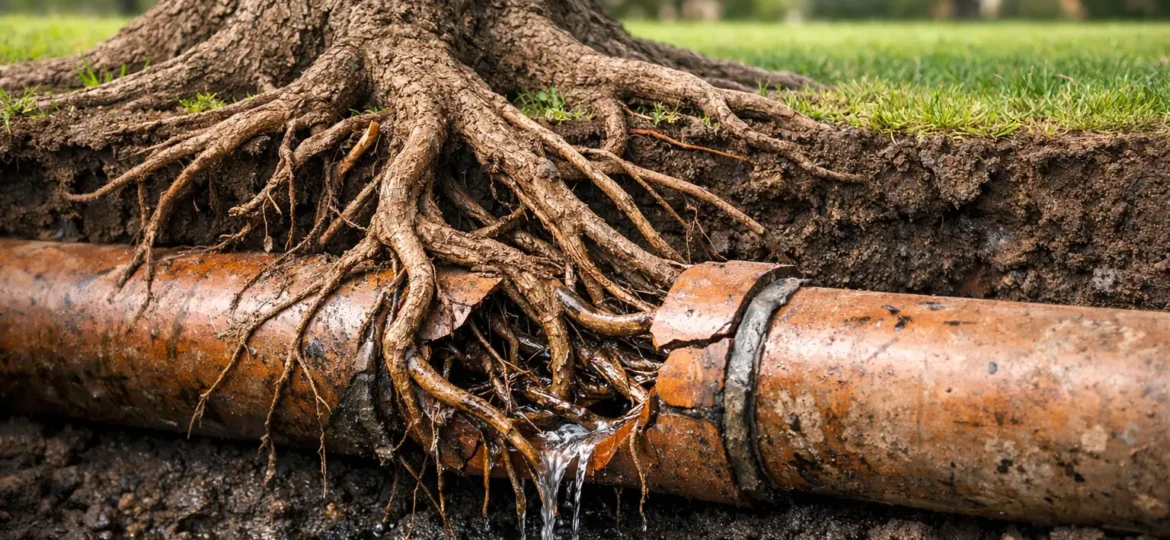
That slow drain in the bathroom and the gurgling toilet might not be a simple clog. If you are asking, can tree roots damage sewer lines, the answer is yes – and they do it more often than most property owners realize. Roots are persistent, sewer lines carry moisture and nutrients, and even a small crack in the pipe can turn into a target.
This is one of those problems that can stay quiet for a while, then hit all at once. A line can work fine for months with partial root intrusion, then back up when heavy use, rain, grease, or toilet paper catches on the root mass. By the time sewage starts coming back into the house or yard, the damage is usually beyond a basic drain cleaning.
Can tree roots damage sewer pipes?
Yes, and the older the pipe, the higher the risk. Tree roots do not usually smash through a solid, healthy pipe wall like people imagine. What they do is find weak points – loose joints, hairline cracks, worn seals, corrosion, or slight separations in the line. Once roots sense moisture escaping from those openings, they grow toward it and work their way inside.
After they enter the pipe, the problem grows fast. Fine feeder roots catch waste and paper. That creates a snag point. More debris builds up, water flow slows down, and the roots continue to thicken. Over time, what started as a small intrusion can become a major blockage or even cause pipe collapse.
Clay pipes, cast iron, Orangeburg, and older sewer materials are especially vulnerable. Newer PVC lines are generally more resistant, but they are not immune. If a joint shifts, an installation settles, or the line gets cracked by ground movement, roots can still get in.
Why tree roots go after sewer lines
Roots are not hunting your plumbing system on purpose. They are doing what roots are built to do – searching for water, oxygen, and nutrients. A sewer line gives them all three if it has even a small leak.
That is why this issue is common in yards with large established trees, fast-growing species, or landscaping planted too close to the house or main line path. The bigger the root system, the more likely some part of it will reach the sewer line. A tree does not need to sit directly over the pipe to cause trouble either. Roots can spread much farther than the canopy.
This is also why cutting the visible roots in the yard does not always solve the problem. The actual intrusion is often underground, inside the pipe, and outside the reach of surface-level fixes.
Signs roots may be in your sewer line
Most root problems start with drainage issues that seem minor. Homeowners often notice one fixture acting up, then another. The warning signs usually build in stages.
Slow drains throughout the house are a common early signal, especially if plunging or store-bought drain cleaners do not make much difference. Toilets may gurgle when sinks or tubs drain. You might also notice sewage odors in the yard or near drains. In more serious cases, wastewater can back up into tubs, showers, or floor drains.
Outside, soggy patches in the yard, extra-green strips of grass, or a sunken area near the sewer route can point to a damaged line. If backups seem worse after rain, that can also mean the system is already compromised and struggling under extra groundwater pressure.
What happens if you ignore it
A root intrusion rarely fixes itself. It gets worse.
At first, you may only be dealing with slower flow and recurring clogs. Then the blockage becomes more frequent. Eventually, the line may stop draining altogether, which can lead to indoor sewage backup, contaminated soil, bad odors, and costly cleanup. If roots continue to expand inside a weakened pipe, they can force sections apart or contribute to collapse.
For landlords and commercial property owners, the cost of waiting can climb fast. One blocked sewer line can affect multiple bathrooms, tenants, or business operations. Even if the line can still be cleared, repeated stoppages usually mean the pipe needs to be inspected and a real plan put in place.
How professionals confirm root damage
The right first step is not guessing. It is inspecting.
A sewer camera inspection shows exactly what is happening inside the line. That matters because not every recurring clog is caused by roots, and not every root intrusion needs the same repair. A camera can show whether the roots are light and removable, whether the pipe is cracked or offset, and whether there are multiple trouble spots along the line.
This is where experience matters. A line with minor root entry may respond well to cleaning and follow-up maintenance. A line with heavy intrusion, broken joints, or deteriorated pipe material may need repair or replacement. If you skip the inspection and only clear the blockage, you are often buying time instead of solving the problem.
The best ways to remove roots from a sewer line
The fix depends on how bad the damage is.
Mechanical root cutting can clear roots from inside the line and restore flow. This is often used when the pipe is still structurally sound enough to stay in service. Hydro jetting may also help remove root fragments and built-up sludge from the pipe walls, though the line condition has to be considered before high-pressure cleaning is used.
If the roots got in because of a damaged section, clearing them is only part of the job. The opening they used is still there. That means roots can come right back unless the pipe is repaired. Spot repairs work in some cases. In others, a full sewer line replacement is the smarter long-term move.
There is no one-size-fits-all answer here. The cheapest option today is not always the least expensive option over the next two years.
Can tree roots damage sewer enough to require replacement?
Absolutely. If you are wondering can tree roots damage sewer systems badly enough to require excavation or replacement, they can. Once roots have caused major cracking, joint separation, sagging, or collapse, cleaning alone will not restore the pipe.
That does not mean every root problem calls for a full replacement. Sometimes only one section is compromised. Sometimes the pipe material is failing in multiple spots and replacement is the better value. The key is knowing what the camera shows and whether the line has enough life left to justify repeated maintenance.
For older homes, especially those with clay or cast iron sewer lines, replacement can end the cycle of recurring root intrusion and emergency backups. It is a bigger job up front, but in the right situation it saves money, cleanup costs, and headaches.
How to reduce the chances of root intrusion
Prevention starts before there is a backup.
If you know where your sewer line runs, be careful about planting trees or large shrubs nearby. Fast-growing species with aggressive root systems need even more distance. If your property has mature trees and an older sewer line, periodic inspections are a smart move, especially if you have had past stoppages.
It also helps to act early when drainage changes. A slow drain across multiple fixtures is not something to brush off for months. The sooner a line is inspected, the better your odds of catching root intrusion before it turns into a broken sewer line and a yard excavation.
Routine maintenance can also make sense for some properties. If a line has a known history of root intrusion but is still serviceable, scheduled cleaning may help prevent full blockages while you plan for eventual repair. That is not a forever solution, but it can be a practical one depending on the condition of the pipe and your budget.
When it is time to call for help
If more than one drain is acting up, if toilets are gurgling, or if sewage is backing up anywhere on the property, it is time to stop guessing. Drain chemicals will not remove roots buried in a sewer line. Repeated plunging will not fix a cracked pipe. And waiting usually makes the repair bigger.
A qualified plumbing and sewer contractor can inspect the line, show you what is happening, and give you a straight answer on whether the problem needs cleaning, repair, or replacement. That is the kind of job Chatta-Rooter Plumbing handles every day for homeowners and property owners dealing with tough sewer problems.
Tree roots are strong, patient, and relentless – but they are not unbeatable. The sooner you catch the problem, the more options you usually have, and the better chance you have of avoiding a full-blown sewer mess.