
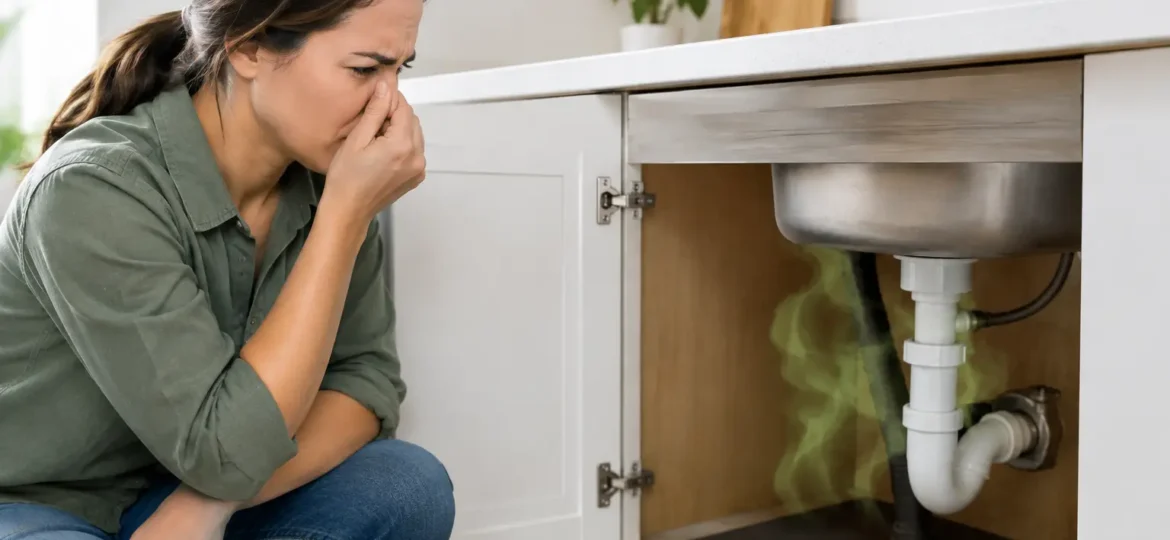
A sewer odor in the bathroom, kitchen, basement, or yard is not something to cover up with air freshener. If you are asking, why does sewer smell keep coming back, your plumbing or septic system may be warning you about a dry drain trap, blocked vent, drain clog, sewer line problem, or septic issue. Some causes are simple. Others need fast attention before they turn into a backup, water damage, or an unsafe mess.
The smell itself is often sewer gas. It can contain methane, hydrogen sulfide, and other gases produced as wastewater breaks down. A brief odor after a drain has been unused is usually different from a strong, ongoing smell that spreads through the building. The location, timing, and strength of the odor give a good plumber a head start on finding the real problem.
Why Does Sewer Smell Inside a House?
Your drain system is designed to keep sewer gases outside. Every sink, shower, floor drain, and toilet has a barrier that helps make that happen. When one part of that system fails, the odor can come through.
A Dry P-Trap Is Often the Easy Fix
The curved section of pipe below a sink or inside a floor drain is called a P-trap. It holds water, and that water blocks gases from coming back through the drain. In a guest bathroom, utility room, basement, vacant property, or rarely used shower, the water can evaporate.
If the smell seems to come directly from one unused drain, run water for 30 to 60 seconds. Flush unused toilets as well. For floor drains that dry out frequently, a small amount of mineral oil added after the water can slow evaporation. If the odor returns quickly, there may be a venting issue or a trap problem that needs inspection.
A Damaged Toilet Seal Can Leak Gas
A toilet does more than carry waste away. Its base is sealed to the drain pipe with a wax ring or another approved seal. When that seal fails, sewer gas can escape around the bottom of the toilet, even if you do not see a major water leak.
Watch for a toilet that rocks, moisture around the base, staining on the floor, or an odor that gets stronger near the toilet. Do not keep tightening floor bolts to force the toilet down. A cracked toilet base or damaged flange can make the repair bigger. A plumber can remove the toilet, inspect the flange, and replace the seal correctly.
Clogged or Improper Plumbing Vents
Plumbing vents run through the roof and allow air to move through the drain system. Without proper venting, drains can gurgle, toilets may flush poorly, and water can be pulled out of P-traps. Once that water seal is gone, sewer gas has an open path indoors.
Leaves, nests, debris, ice, or a damaged vent pipe can cause trouble. Vent problems are not always visible from the ground, and climbing on a roof is not a good DIY gamble. If you have odors along with gurgling fixtures or slow drains throughout the building, have the drainage and vent system checked.
A Partial Main Line Clog Can Push Odor Back
A drain may still move water while a blockage is building farther down the line. Grease, wipes, roots, scale, and damaged pipe can restrict the main sewer line. As wastewater and air struggle to move past the restriction, odor may come up through the lowest drains.
This is when homeowners often notice a basement shower drain smelling bad, a toilet bubbling when the washing machine drains, or multiple fixtures draining slowly at once. Those are warning signs, not minor inconveniences. Main line cleaning, camera inspection, or hydro jetting may be needed depending on the pipe condition and the type of blockage.
Sewer Smell Outside Can Point to a Septic or Sewer Problem
A sewer smell outdoors should not be ignored simply because it is outside. It may be coming from a vent, a cleanout, a damaged sewer pipe, a septic tank, or a failing drain field.
A faint smell near a plumbing vent can happen occasionally, especially in still, humid weather. A strong odor around the yard, however, is different. Wet or unusually green patches over a septic drain field, standing water, slow drains inside, and sewage odor near the tank area can mean the septic system is overloaded or failing to treat wastewater properly.
A full septic tank is one possible cause, but pumping alone is not always the complete answer. If the tank is pumped and the same symptoms return soon afterward, the drain field, outlet baffle, filter, pump, or connecting lines may need repair. The right fix depends on what the inspection finds. Guessing can waste money and leave the real issue underground.
For properties connected to a municipal sewer, an odor near the yard or foundation may point to a cracked sewer line, loose cleanout cap, root intrusion, or a broken connection. A camera inspection can locate many of these problems without tearing up the whole yard first.
Check These Things Before Calling for Service
Start with simple, safe checks. Run water in every rarely used sink, shower, tub, and floor drain. Flush toilets that have not been used recently. Look for obvious leaks under sinks, around toilet bases, and near cleanout caps. Pay attention to whether the odor is tied to one fixture, one room, or the entire building.
Also notice when it happens. Does the smell appear after heavy rain? When the washing machine drains? After a long vacancy? When temperatures rise? Those details help separate a dry trap from a main line, sewer, or septic problem.
Do not pour harsh chemicals, bleach, or drain cleaner into every drain hoping the odor disappears. Chemicals can damage older piping, create dangerous fumes, and do nothing for a failed toilet seal, broken pipe, or overloaded septic system. Avoid opening a septic tank or entering a crawlspace with a strong odor. Sewer gases and confined spaces can be dangerous.
When a Sewer Smell Is an Emergency
Call for professional help right away if sewage is backing up into tubs, showers, sinks, or floor drains. Act fast if toilets will not flush, multiple drains are clogged, wastewater is surfacing in the yard, or the odor is strong enough to cause headaches, nausea, or burning eyes. Keep children and pets away from affected areas, avoid using water, and do not run the dishwasher or washing machine until the issue is diagnosed.
For commercial properties, a sewer odor can quickly become a health, sanitation, and customer-service problem. Restaurants, rental properties, offices, and facilities with restrooms should not wait for a minor odor to become a closure, cleanup, or tenant complaint. Fast diagnosis protects the building and the people using it.
Get the Right Repair, Not a Temporary Cover-Up
The best repair starts with finding where the gas is entering the building or escaping outside. That may mean checking traps and toilet seals, testing drains, inspecting the main line with a camera, locating a sewer break, or evaluating the septic tank and drain field. A good diagnosis prevents repeat service calls and helps you avoid paying for work that does not address the source.
Chatta-Rooter Plumbing provides emergency plumbing, sewer, drain, and septic service for homeowners and businesses across the Chattanooga area, with upfront pricing and experienced technicians for difficult wastewater problems. Whether the cause is a dried-out floor drain or a septic system that needs immediate attention, getting it checked early is usually the fastest, cleanest, and least expensive move.
A sewer smell is your property telling you something is off. Trust that warning, use the safe checks above, and get qualified help before odor turns into a backup.