
A septic system is not a place to cut corners. Once the tank is buried and the drain field is covered, bad design choices can stay hidden until sewage backs up, odors show up in the yard, or the system starts failing far sooner than it should. The right Catoosa septic installers do the hard work before excavation begins: they evaluate the property, build the system around the soil and layout, and make sure the installation is ready for real daily use.
For homeowners, landlords, and property managers in Catoosa County, a new septic system is a major investment. The goal is not simply to get a tank in the ground. The goal is a dependable wastewater system that handles the building’s needs, protects the property, and can be serviced without a fight down the road.
A Septic Installation Starts With the Ground
Every lot has different conditions. Soil depth, soil texture, slope, seasonal groundwater, rock, drainage patterns, and available space all affect what kind of septic system can work there. A system that performs well on one property may be completely wrong for the lot next door.
That is why a proper site evaluation comes before equipment rolls in. The installer and the required local process need to determine where wastewater can safely be treated in the soil. The drain field is not just a set of pipes in a trench. It is the part of the system that finishes the treatment process after wastewater leaves the septic tank.
If the soil is shallow, rocky, wet, or poorly draining, a conventional gravity drain field may not be the right answer. The property may need an alternative design, such as a chamber system, a raised bed, or a pump-assisted setup. These options can cost more upfront, but forcing a basic system onto unsuitable ground usually costs much more after failure.
A good contractor will explain the trade-off in plain language. More equipment can mean more maintenance, but it may also be the only reliable way to install a system that meets the property’s conditions.
Permits and System Sizing Are Not Paperwork Details
Septic permitting is there to protect the home, neighboring properties, wells, and waterways. It also gives the owner a documented system design to refer to when repairs, inspections, or future property improvements are needed.
The system must be sized for the building it serves. In a home, that typically means accounting for the number of bedrooms and the expected wastewater load, not simply the number of people currently living there. A rental house may have a different occupancy pattern than an owner-occupied home. A business, church, office, or other commercial property needs a design based on its actual use, daily flow, and peak demand.
Undersizing creates predictable trouble. The tank may not provide enough time for solids to settle, and the drain field can be overloaded with wastewater. Oversizing without a sound design is not a cure-all either. The right answer comes from a qualified evaluation and an approved plan, not a guess based on tank size alone.
What a Proper Installation Should Include
Once the design is approved, the real work begins. An experienced septic crew coordinates excavation, tank placement, piping, drain field construction, connections, and final inspection requirements. This work has to be done in the right order, with the right elevations and materials.
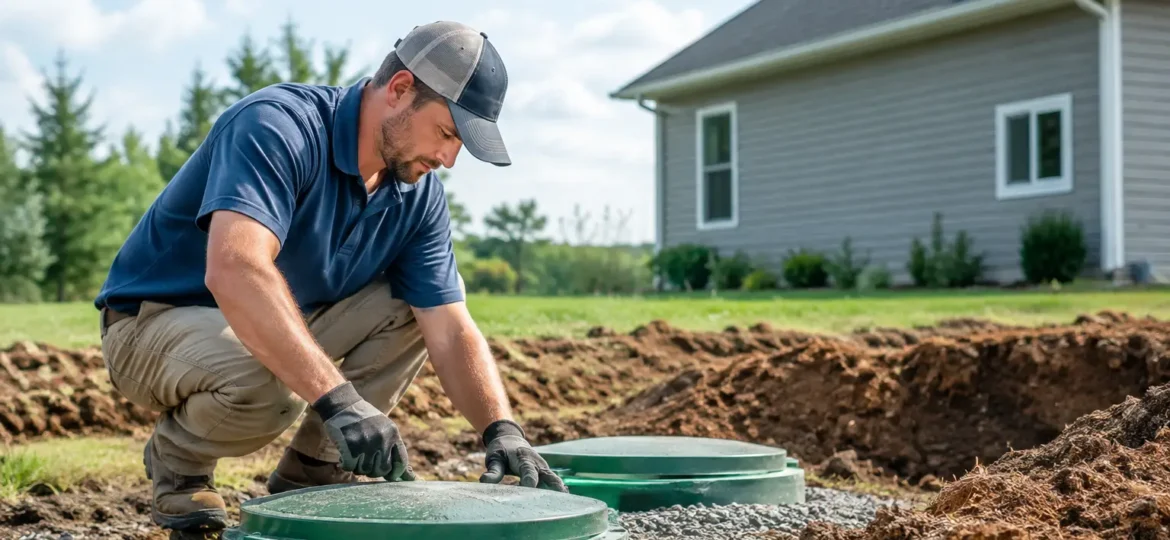
The septic tank should be installed level and accessible for future pumping. Inlet and outlet connections need to be properly sealed. Effluent filters, risers, and access lids should be installed where the system design calls for them. These details matter because they make future service safer, faster, and less destructive to the yard.
The drain field requires even more care. Trenches or beds must be built to the approved dimensions and elevation. Distribution lines need to move effluent where it is supposed to go rather than dumping too much volume into one area. Heavy equipment should not compact the soil intended to absorb and treat wastewater. Compacted soil loses the open space needed for proper drainage.
Before backfilling, the crew should verify the work rather than rush to hide it. A septic installation is one job where careful measurements beat quick appearances every time.
Gravity Systems Versus Pump Systems
A gravity system is usually simpler when the lot has enough fall from the house to the tank and from the tank to the drain field. Fewer moving parts generally means fewer mechanical issues over the life of the system.
But not every property has the elevation needed for gravity flow. A pump tank may be necessary to lift effluent to the drain field or distribute it evenly across a larger or more challenging field. Pump systems can work very well, but they require dependable electrical components, alarms, and regular inspection.
If your new system includes a pump, do not ignore the alarm panel. An alarm is a warning that the system needs attention, not an inconvenience to silence. Fast service can prevent a pump issue from becoming an indoor backup or an overloaded drain field.
Questions to Ask Catoosa Septic Installers
Hiring based on the lowest price alone is risky. Septic work involves excavation, wastewater, soil conditions, permitting, and long-term performance. An unusually cheap quote may leave out necessary site work, access risers, pump components, restoration, or other parts of the job that will appear later as added costs.
Ask whether the contractor performs septic work regularly and whether they can explain the proposed system clearly. You should know what type of system is being installed, why it fits the property, where the tank and field will be located, and what maintenance it will need. Ask for an upfront written scope so you can see what is included before work starts.
It also helps to ask who will handle excavation, inspections, and coordination with the required local authorities. One experienced septic contractor managing the work is usually easier than trying to line up separate crews yourself.
Chatta-Rooter Plumbing brings septic-focused experience to difficult installations, repairs, pumping, and emergency wastewater problems throughout the greater Chattanooga area, including Catoosa County. The job is not done when the equipment leaves. It is done when the system is installed correctly and the owner understands how to protect it.
Protect the New System From Day One
A new septic system can last for many years, but no system is maintenance-free. The best time to protect a drain field is before it ever gets overloaded or driven across.
Keep vehicles, equipment, sheds, and livestock off the tank and drain field area. Heavy weight can crack components, crush piping, and compact the soil. Direct roof runoff, sump discharge, and surface water away from the drain field. Extra water can saturate the soil and reduce its ability to handle treated effluent.
Inside the building, treat the septic system like the wastewater equipment it is. Flush only toilet paper and human waste. Wipes, grease, paper towels, feminine products, cat litter, and harsh amounts of chemicals do not belong in the system. Garbage disposals can also add extra solids and grease, which may mean more frequent pumping.
Routine pumping is part of ownership, not proof that the system is failing. Pumping removes accumulated solids before they can leave the tank and damage the drain field. The right schedule depends on household size, tank capacity, water use, and what goes down the drains.
Watch for Trouble Before It Gets Expensive
Slow drains throughout the building, sewage odors, wet spots near the drain field, gurgling toilets, and backups are all signs that should be checked promptly. The cause may be a full tank, a clogged filter, a failed pump, a broken line, or drain field trouble. Waiting does not make any of those problems cheaper.
If a backup happens, reduce water use right away. Do not keep running loads of laundry, taking long showers, or sending more wastewater into a system that may already be overloaded. A professional inspection can identify whether the issue is inside plumbing, the septic tank, the pump system, or the field.
A septic system should be built for the property you have, not for the easiest excavation day. Choose an installer who does the evaluation, explains the plan, and stands behind the work. That is how you protect the yard, the building, and the people who depend on both.