
A sewer line failure used to mean one thing for most property owners: prepare for a trench. That could mean removing landscaping, breaking concrete, digging through a driveway, or tearing up a section of a commercial lot just to reach the damaged pipe.
The future of trenchless sewer repair is changing that expectation. Better cameras, stronger lining materials, more accurate locating equipment, and improved pipe-bursting methods are allowing qualified sewer contractors to repair many underground lines with far less disruption. It is not magic, and it is not the right answer for every sewer problem. But when conditions are right, trenchless work can save time, protect your property, and get wastewater moving again without turning the yard into a construction zone.
For homeowners, landlords, and business owners, the real benefit is not a flashy new method. It is having more than one way to solve a serious sewer problem.
Why Sewer Repair Is Moving Away From Big Excavations
Traditional excavation still has a place. A collapsed line, a pipe with severe belly issues, or a sewer run that needs its slope corrected may require digging. Good plumbing companies do not force a trenchless repair where it will not hold up.
But many sewer lines fail in ways that are well suited to less invasive repairs. Tree roots can enter through joints. Older cast iron can crack, scale up, or develop rough interior surfaces that keep catching paper and waste. Clay tile joints can separate. Orangeburg pipe can deform and deteriorate. A line may have a localized break while the rest of the system remains workable.
In the past, even a small trouble spot could lead to digging up a long section of pipe. Modern camera inspections allow a technician to see the inside of the line, locate the defect from above ground, and measure the condition of the entire run. That changes the conversation from “Where do we start digging?” to “What is actually wrong, and what is the smartest repair?”
That is a major shift, especially around Chattanooga-area homes where mature trees, sloped lots, concrete, and established landscaping can make excavation more expensive than the pipe repair itself.
The Tools Shaping the Future of Trenchless Sewer Repair
Trenchless repair is not one service. It is a group of methods used for different pipe conditions. The equipment is improving quickly, but diagnosis still comes first.
High-Definition Sewer Camera Inspections
The camera is the foundation of a good trenchless decision. Today’s inspection equipment can show cracks, root intrusion, offsets, standing water, corrosion, and failed joints in real time. A locator above ground helps identify the pipe’s depth and path.
Future systems will continue to improve image quality and reporting. Software may help identify defects faster, compare inspections over time, and document exactly where a repair is needed. That can be especially useful for commercial properties and landlords responsible for multiple buildings.
Still, a camera does not replace an experienced technician. A video can show a problem, but someone has to determine whether the pipe can be cleaned, lined, burst, spot-repaired, or replaced by excavation.
Cured-in-Place Pipe Lining
Cured-in-place pipe, often called CIPP lining, creates a new pipe inside the existing damaged pipe. After the line is properly cleaned, a resin-saturated liner is installed and cured in place. The finished liner seals cracks and joints while creating a smooth interior path for wastewater.
This can be a strong option for pipes with root intrusion, minor cracking, leaking joints, and corrosion. It is often valuable when the sewer line runs beneath a slab, driveway, patio, landscaping, or other areas that are costly to disturb.
The trade-off is that lining needs a pipe with enough structural integrity and a reasonably correct grade. If the line is badly crushed, has a major collapse, or holds water because of a severe belly, lining will not correct the underlying issue. The pipe must also be cleaned thoroughly. Lining over roots, heavy scale, or loose debris is not a quality repair.
Pipe Bursting
Pipe bursting replaces an old underground pipe by pulling a new pipe through the same general path. A bursting head breaks apart the failing pipe while the replacement pipe is pulled into position behind it.
This method can be a good fit for certain failed sewer lines, including pipes with serious deterioration that are not candidates for lining. It usually requires access pits at key points, but it can avoid opening the entire length of the yard.
Pipe bursting is not always possible. Nearby utilities, tight clearances, pipe material, ground conditions, and the route of the existing line all matter. A professional inspection and utility locating process are essential before choosing this approach.
Precision Cleaning and Hydro Jetting
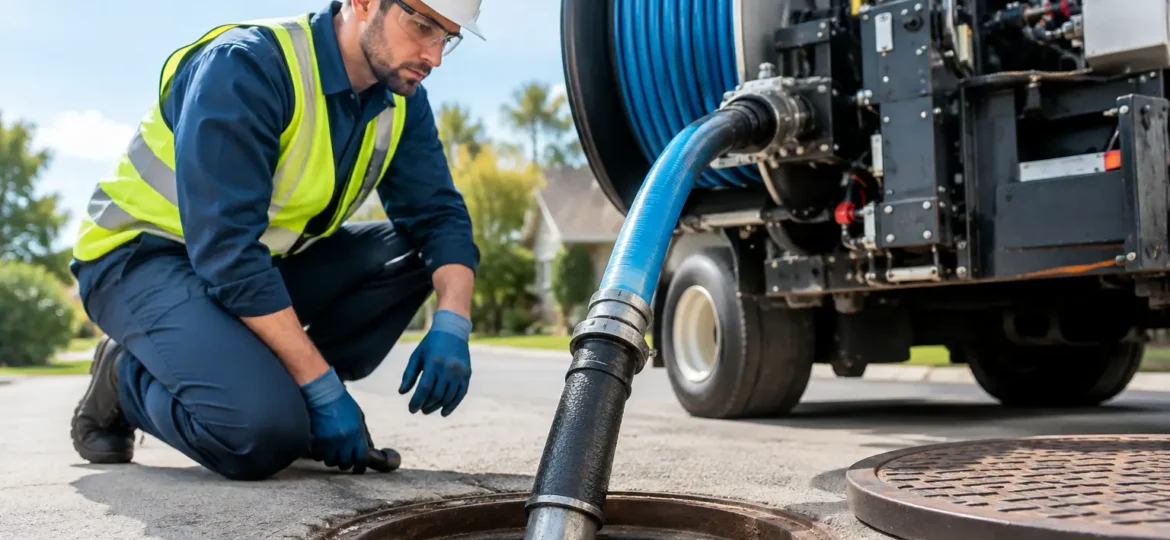
The future of sewer repair also includes better preparation. Hydro jetting uses high-pressure water to remove grease, roots, sludge, scale, and buildup from a sewer line. It can restore flow in many lines and prepare a pipe for camera inspection or trenchless repair.
Hydro jetting is powerful equipment, not a one-size-fits-all drain cleaner. The correct pressure and nozzle depend on the pipe material and condition. A badly damaged or fragile pipe may need a gentler approach. Used correctly, though, professional cleaning can reveal whether the line needs a repair now or simply needs maintenance before it becomes an emergency.
What This Means for Homeowners and Property Managers
The best part of trenchless technology is not that it eliminates every excavation. It is that it gives you a better chance of preserving what is above the pipe.
For a homeowner, that may mean keeping a driveway, retaining wall, garden, or established lawn intact. For a commercial property, it may mean reducing disruption to parking, customer access, and day-to-day operations. For landlords, it can mean a faster repair with less impact on tenants.
There is also a planning advantage. When a camera inspection catches roots, scaling, or early pipe damage before a full backup occurs, you may be able to schedule the work instead of making a midnight emergency decision with sewage coming up through a drain.
Cost still depends on the job. Trenchless repair can cost more than a simple exposed pipe repair because of specialized equipment, materials, and preparation. On the other hand, the total project cost may be lower when you factor in concrete replacement, landscaping, cleanup, and lost use of the property. The right comparison is not just repair method versus repair method. It is the complete cost of getting the sewer system back in service.
When Trenchless Repair Is Not the Right Call
A dependable sewer contractor should be willing to say when digging is the better answer. That is not bad news. It is an honest diagnosis.
Excavation may be necessary when a line has collapsed, shifted badly, lost its proper slope, or has extensive damage that cannot support a liner. A sewer pipe that repeatedly fills with standing water may have a grade problem that lining cannot fix. In some cases, a short exposed repair is faster and more affordable than setting up a trenchless process.
The goal is not to sell the newest method. The goal is to install a repair that will perform for years.
How to Prepare for a Sewer Repair Decision
Start with a full sewer camera inspection whenever the situation allows. Ask to understand the location of the damage, the condition of the rest of the line, and whether roots, corrosion, cracks, offsets, or bellies are present. If a repair is recommended, make sure you know why that method fits your pipe.
You should also ask what preparation is needed, whether permits apply, how access points will be handled, and what the expected disruption will be. Upfront answers matter when your home, tenants, customers, or business operations are on the line.
For sewer backups, recurring drain clogs, wet areas in the yard, or foul sewer odors, waiting rarely makes the repair cheaper. A problem that starts as root intrusion or a small crack can turn into a full blockage, wastewater backup, or pipe collapse.
Chatta-Rooter Plumbing uses practical diagnostics to help property owners understand the condition of their sewer line before recommending the next step. The right repair may be trenchless, excavated, or a targeted cleanup and maintenance plan. What matters is getting a straight answer and work that holds up.
A damaged sewer line is stressful enough without guessing what is happening underground. Get the line inspected early, protect your property where possible, and choose the repair that fixes the actual problem rather than simply covering it up.