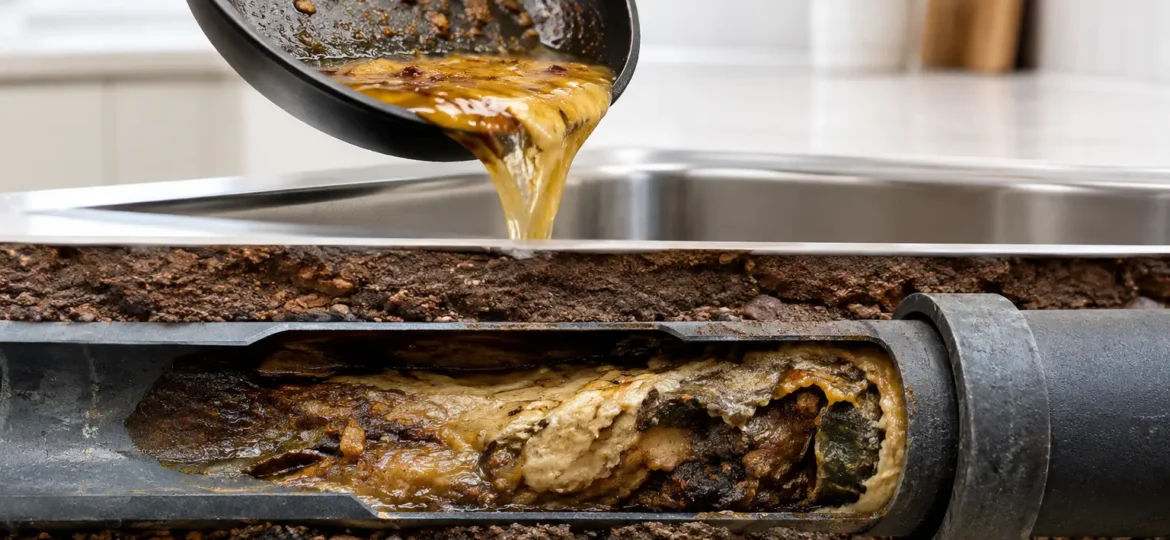
A little grease poured down the kitchen sink does not always cause an immediate backup. That is why the problem gets ignored. But can grease clog a main sewer? Yes. Over time, cooking grease can build up inside drain piping, catch other debris, and restrict the main sewer line until wastewater has nowhere to go but back into the house or business.
For Chattanooga-area property owners, this is not a minor inconvenience. A main line blockage can shut down bathrooms, flood floors with sewage, interrupt a commercial kitchen, and create an expensive cleanup. Grease-related clogs are preventable, but once the line is heavily coated, hot water and store-bought drain cleaner will not fix it.
How Grease Turns Into a Main Sewer Clog
Grease usually enters the plumbing system warm and liquid. Bacon drippings, fryer oil, pan residue, gravy, butter, meat fat, and oily sauces can look harmless as they wash down the sink. Inside the pipe, though, the temperature drops. The grease cools, thickens, and sticks to the pipe wall.
That first thin coating may not slow anything down. The trouble starts when more grease lands on the coating. Food particles, soap residue, coffee grounds, paper products, and sludge begin catching on the sticky surface. The opening inside the pipe gets smaller a little at a time.
In a home, the kitchen branch drain often clogs first. But grease can travel farther than many people expect, especially when it is chased with hot water. If it reaches the building sewer, it can contribute to a blockage in the main line. Older pipes, low spots in a sewer line, root intrusion, damaged pipe, and heavy use make the risk worse.
A commercial kitchen has even more at stake. Grease traps need regular service, but a trap is not a free pass to send oil and food waste down the drain. When grease management slips, a restricted line can become an emergency during the busiest part of the day.
Signs Grease May Be Affecting Your Main Sewer
A slow kitchen sink by itself can be a local kitchen drain clog. The concern rises when more than one fixture starts acting up. A main sewer problem affects the shared pipe that carries wastewater away from the building.
Watch for toilets that bubble when the washing machine drains, tubs or showers that back up after flushing, sewage odors near floor drains, or water appearing at a basement drain. If the lowest drain in the home is backing up, stop using water right away. Running another load of laundry or taking a shower can force more wastewater onto the floor.
Grease can be part of the problem even if the backup shows up in a bathroom. The clog may be downstream from every fixture, and the wastewater will come back through the lowest available opening. That is why the location of the mess does not always identify the source of the blockage.
Why the Problem Can Seem Sudden
Most grease clogs build slowly, then fail quickly. The line may have been draining at half capacity for weeks or months without obvious warning. One busy holiday meal, dishwasher cycle, rain event, or load of laundry can push enough water through the restricted line to trigger a complete backup.
The same thing happens with partial root blockages and damaged sewer pipes. Grease becomes the material that catches on the rough area and finishes the clog. That is why a professional inspection matters after a serious main line backup. Clearing the water does not always reveal why the line blocked in the first place.
What Not to Do When the Main Line Is Backing Up
Do not keep testing drains. If sewage is coming up through a tub, shower, floor drain, or cleanout, every gallon sent down another drain can make the cleanup worse. Shut off water use inside the building until the line is checked.
Avoid pouring chemical drain opener into a suspected main sewer clog. Those products are rarely effective against a heavy grease blockage, and they can leave harsh chemicals sitting in a pipe or standing wastewater. That puts anyone working on the line at risk and can damage certain plumbing components.
Do not try to solve a recurring main line issue with a small hand snake from a sink drain. A cable may punch a temporary hole through soft buildup without cleaning the pipe wall. Water may start moving again, but the grease remains and the blockage returns. A main sewer line needs the right equipment, the right cable head, and often a camera inspection to confirm the condition of the pipe.
The Right Fix Depends on What Is Inside the Pipe
For many grease-related clogs, professional drain cleaning can restore flow. A heavy-duty cable machine may break up a blockage and remove material from the line. When grease is coating the pipe walls, hydro jetting can be a better long-term cleaning method. It uses controlled high-pressure water to scour buildup from the inside of suitable sewer pipes.
Hydro jetting is not automatically the answer for every property. If the sewer line is old, cracked, collapsed, badly corroded, or made from fragile material, the pipe should be inspected before high-pressure cleaning. A camera inspection shows whether the issue is grease buildup, roots, a belly in the line, a broken section, or a combination of problems.
If the sewer line has structural damage, cleaning alone may only buy time. Repair or replacement may be the honest recommendation. A dependable plumbing company should explain what the camera shows, what can be cleaned, and what work is actually necessary before moving forward.
For septic customers, grease deserves the same attention. Fats, oils, and grease can interfere with the natural treatment process in a septic tank and add to drain field problems. Regular septic pumping removes accumulated solids, but it does not make grease disposal safe. Keeping grease out of the system protects both the tank and the drain field.
How to Keep Grease Out of Your Sewer Line
The best prevention is simple: let grease cool, collect it in a can or disposable container, and throw it in the trash. Wipe greasy pans with a paper towel before washing them. Scrape plates into the garbage instead of rinsing food scraps into the disposal.
Be careful with products advertised as disposable or flushable. Wipes, paper towels, feminine hygiene products, and similar items do not belong in toilets. They combine with grease and create thick, stubborn blockages that can stop a main sewer line cold.
For restaurants, churches, rental properties, and other high-use facilities, maintenance should match the amount of grease and wastewater the property produces. A grease trap or interceptor needs routine service, and the building sewer should be professionally cleaned on a schedule when recurring buildup is known. Waiting for a Friday-night backup costs more than planned maintenance.
When to Call for Main Sewer Service
Call for professional help immediately if sewage is backing up, several drains are slow at once, or a toilet causes water to rise in a tub or shower. Those are main line warning signs, not a good time for another bottle of drain cleaner.
Chatta-Rooter Plumbing handles tough sewer and drain problems with main line cleaning, camera inspections, hydro jetting, sewer repair, and emergency response. You should get a clear diagnosis and upfront explanation of the work, not guesswork when wastewater is on the floor.
Grease belongs in a container, not in a drain. If your plumbing is already showing warning signs, stop adding water to the system and get the line checked before a partial clog turns into a full sewer backup.