
A sewer line can fail long before it completely stops draining. You may notice recurring backups, slow toilets, foul odors outside, or wet spots where the yard should be dry. When the line is cracked, crushed, separated, or invaded by roots, pipe bursting may replace it without excavating a long trench through your lawn, driveway, or landscaping.
For many property owners, that means less mess and less restoration after the repair. But pipe bursting is not a shortcut for every sewer problem. The line still needs to be inspected, the route needs to make sense, and the crew needs enough room to perform the work safely and correctly.
What Is Pipe Bursting?
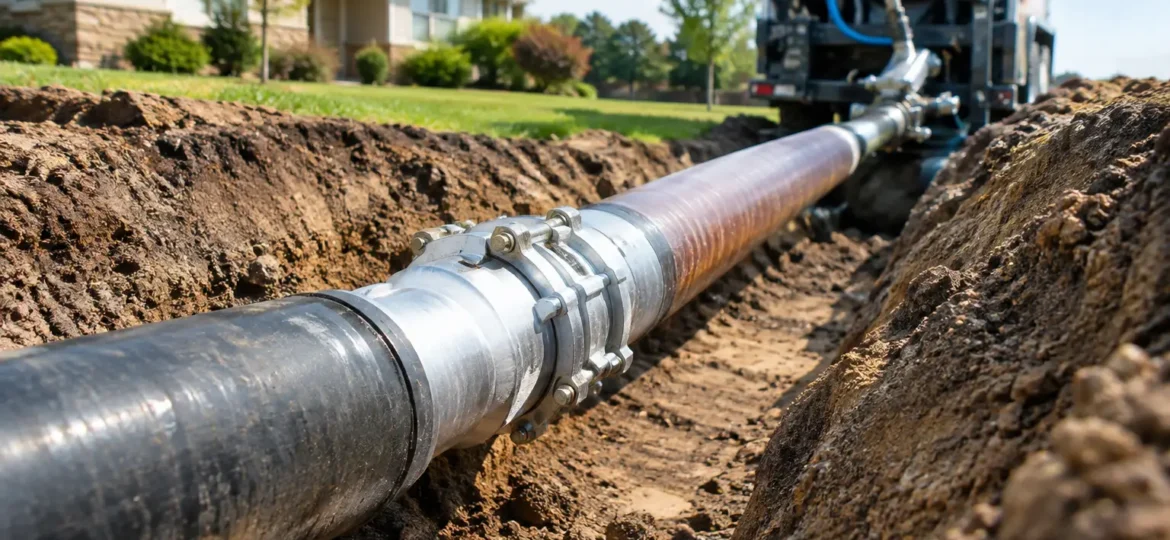
Pipe bursting is a trenchless sewer replacement method. A plumbing crew digs access pits at each end of the damaged section, then pulls a bursting head through the old pipe. The head breaks apart the failed pipe while pulling a new, durable pipe into the same path.
The replacement pipe is typically high-density polyethylene, commonly called HDPE. It is a flexible, fused pipe with no joints along the run, which helps eliminate common failure points where roots often enter older sewer lines. The result is a new sewer line installed underground with far less surface digging than a traditional replacement.
This method works especially well for many older clay, cast-iron, Orangeburg, and certain plastic sewer lines. Those materials can crack, deteriorate, shift, or collapse over time. Pipe bursting replaces the damaged line rather than simply trying to keep it open for another season.
Why a New Sewer Line May Be the Better Call
Drain cleaning and hydro jetting are valuable services, especially when a blockage is caused by grease, roots, wipes, or buildup. However, cleaning cannot repair a sewer pipe that is broken, bellied, badly offset, or falling apart. If the same main line backs up again and again, the issue may be the pipe itself.
A camera inspection gives the crew a clear look at what is happening underground. It can show root intrusion, cracks, standing water, separated joints, scale buildup, and collapsed sections. That inspection is how a good contractor decides whether cleaning, spot repair, lining, pipe bursting, or conventional excavation is the right answer.
Replacing a failed line can prevent the bigger problem nobody wants: sewage backing into a home, rental property, restaurant, office, or retail building. The damage from a sewage backup can spread quickly, affect flooring and walls, interrupt business, and create a serious cleanup job.
When Pipe Bursting Makes Sense
Pipe bursting is often a strong option when the existing sewer route is still usable but the pipe material has reached the end of its life. It is particularly helpful when a conventional trench would cut through established landscaping, sidewalks, patios, parking areas, or driveways.
It can also be a practical choice for properties with a long sewer lateral between the building and the public connection or septic system. Instead of opening the entire route, the crew may only need access pits at key points. That reduces the amount of dirt moved and the amount of restoration needed afterward.
The best candidates usually have a line that follows a reasonably straight path and has enough surrounding soil to allow the old pipe to break outward as the new pipe is pulled through. Proper access is also necessary for the equipment. Every property is different, which is why a camera inspection and on-site estimate matter before anyone promises a trenchless solution.
When Pipe Bursting May Not Work
There are times when digging is still the better repair. If the sewer line has severe grade problems, for example, replacing it in the same path may not correct the slope. Sewage needs the proper fall to move reliably. A new pipe installed on a bad grade can leave you with a new line that still drains poorly.
A fully collapsed line can also complicate the work. Depending on the location and condition of the collapse, the crew may not be able to get the bursting equipment through the route. Major changes in direction, unusual connections, large obstructions, or underground utilities can also make conventional excavation the safer choice.
Pipe bursting generally follows the existing line. If the line needs to be rerouted away from a structure, brought to a different connection point, or redesigned to solve a drainage issue, excavation may be necessary. There is no one-size-fits-all sewer repair, and a contractor who recommends the same method for every job is not looking closely enough.
What the Pipe Bursting Process Looks Like
The work starts with locating the sewer line and inspecting it by camera. The crew identifies the damaged area, confirms the pipe route, checks access points, and looks for conditions that could affect the repair. Local permit requirements and utility locations should be handled before digging begins.
Next, access pits are excavated. One pit gives the crew a place to set the bursting equipment, while the other provides an exit point for the old pipe and a connection point for the new line. The exact setup depends on the property layout, line length, depth, and connection locations.
A cable or pulling rod is run through the existing sewer line. The bursting head is attached on the pulling end, with the new HDPE pipe connected behind it. As the equipment pulls the head through, it fractures the old pipe and draws the replacement pipe into place.
After the pull is complete, the crew makes the required connections, tests the new line, and confirms flow. A final camera inspection may be used to verify that the installation is clean, properly connected, and free of problems. Then the access pits are backfilled and the site is restored as much as practical.
What Affects Pipe Bursting Cost?
The cost of pipe bursting depends on the job, not just the number of feet of pipe. Line depth, pipe diameter, soil conditions, access, utility conflicts, required permits, connection work, and restoration all affect the final price. A short line under open ground is a different job than a deep line running beneath a concrete driveway.
The condition of the old pipe also matters. Heavy root growth, collapsed sections, hidden connections, or difficult cleanout access can add time and equipment needs. For commercial properties, work hours, traffic control, and the need to keep restrooms operational may also affect the plan.
The lowest quote is not always the lowest final cost. Ask what is included: camera inspection, locating, permits, excavation, replacement material, connections, testing, backfill, and surface restoration. Upfront, flat-rate pricing helps avoid the unpleasant surprise of extras appearing after the work has started.
Protecting the New Sewer Line
Once a sewer line has been replaced, treat it like the critical part of the property that it is. Keep grease, wipes, paper towels, hygiene products, and so-called flushable wipes out of the drain system. They can clog even a new pipe, especially at bends, pumps, or downstream connections.
If roots were a problem in the old line, consider the trees and shrubs planted near the sewer route before adding new landscaping. The fused joints in HDPE make root intrusion much less likely, but roots can still create trouble around connections or other parts of the drainage system.
For homes with septic systems, a clear sewer line does not replace septic maintenance. The tank still needs pumping on an appropriate schedule, and the drain field still needs protection from excess water, vehicles, and improper waste. Your building drain, sewer line, septic tank, and drain field all work together.
Get the Right Diagnosis Before Digging
A sewer backup puts people under pressure, and that is when rushed decisions can cost the most. Start with a camera inspection and an honest explanation of what the line is doing underground. If pipe bursting fits the condition of the pipe and the layout of the property, it can save your yard from major excavation while giving you a long-term replacement.
Chatta-Rooter Plumbing handles difficult sewer and septic problems across the Chattanooga area with straightforward recommendations, free in-person estimates, and 24/7 help when the backup cannot wait. The right repair is the one that fixes the real failure, protects your property, and keeps wastewater moving where it belongs.