

A Chattanooga cold snap can turn a forgotten garden hose into a split pipe behind the wall. To winterize outdoor plumbing correctly, you need to remove trapped water before temperatures stay below freezing. It is a short job when done early. Waiting until the forecast calls for single digits can leave you dealing with a burst pipe, water damage, and an emergency plumbing bill.
Outdoor faucets, hose connections, irrigation systems, pool lines, and exposed pipes all need attention. The right steps depend on what is installed at your home or commercial property, but the goal stays the same: shut off the water where possible and get standing water out of the lines.
Why outdoor plumbing freezes and breaks
Water expands as it freezes. When water is trapped inside a hose bib, irrigation pipe, backflow device, or exposed supply line, that expansion puts pressure on the pipe walls and fittings. Copper, PVC, PEX, and older galvanized lines can all fail under the right conditions.
The break is not always obvious while everything is frozen. A cracked pipe may stay quiet until temperatures rise and the ice thaws. Then water starts running inside a wall, crawl space, basement, or exterior fixture. That is why winter preparation matters more than wrapping a faucet after the first hard freeze.
In our area, the biggest risk often comes from quick temperature swings. Homeowners may get several mild days, assume the danger has passed, then get hit with an overnight freeze. A little preparation before winter gives you far more protection than reacting after the weather changes.
Start with hoses and outdoor faucets
Disconnect every garden hose from every outdoor faucet. This includes hoses attached to hose reels, pressure washers, splitters, timers, sprinklers, and other accessories. Leaving a hose connected can trap water against the faucet and prevent a frost-free hose bib from draining as designed.
Once hoses are disconnected, drain them fully and store them in a shed, garage, or other protected spot. A hose left outside can freeze, crack, and become unusable by spring. More importantly, it can contribute to damage at the faucet connection.
Next, turn off the indoor shutoff valve that supplies each exterior faucet, if your plumbing has one. These valves are often found in a basement, crawl space, utility room, or near the water heater. After shutting off the valve, go outside and open the faucet. Let the remaining water drain out, then leave the exterior faucet open for the winter.
If your home does not have an interior shutoff for an outdoor faucet, consider having one installed. It gives you much better control during freezing weather and makes seasonal protection easier.
Do not assume every faucet is frost-proof
A frost-free faucet provides better protection, but it is not indestructible. It only drains correctly when the hose is removed and the faucet is installed with the proper slope. A damaged vacuum breaker, worn stem, or pipe located in an unheated wall can still create a freeze risk.
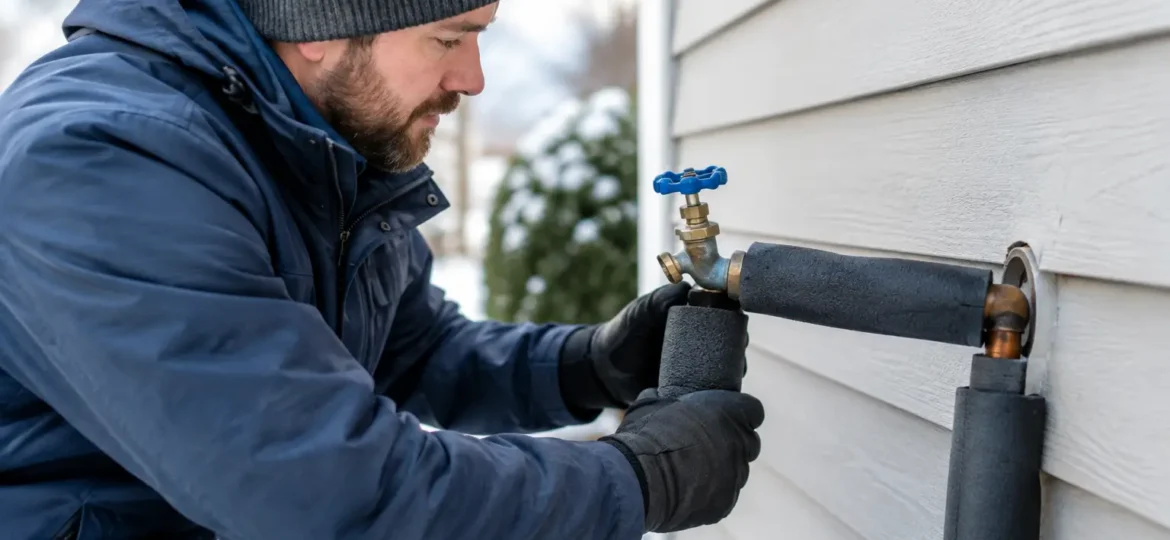
Faucet covers can help block cold wind and add a layer of insulation, especially during a hard freeze. They are a backup, not a substitute for disconnecting hoses and shutting off the supply line. If you use covers, secure them tightly and check that they are dry inside before installing them.
Protect exposed pipes and vulnerable areas
Walk around the property and look for plumbing that sits in unheated or exposed spaces. Common trouble spots include crawl spaces, garages, unfinished basements, exterior walls, pump houses, utility closets, and outdoor kitchens.
Pipe insulation helps slow heat loss, but it does not create heat. Use foam pipe sleeves or insulation rated for plumbing pipes, making sure seams and elbows are covered. Pay close attention to pipes near foundation vents, garage doors, and other areas where cold air enters.
For pipes that freeze repeatedly, insulation alone may not be enough. Heat cable or heat tape can be a practical option when it is installed according to the manufacturer’s instructions. It needs to be the correct type for the pipe material and kept in good condition. Poorly installed heat tape can create an electrical or fire hazard, so this is not a place to guess.
Crawl space doors, vents, and access panels should also be checked for gaps. You do not need to seal off ventilation systems that are designed to remain open year-round, but obvious holes and damaged access doors allow cold air to blow directly across water lines. Fixing those problems can protect both plumbing and energy efficiency.
Winterize outdoor plumbing for irrigation systems
Sprinkler and irrigation systems need more than turning off the controller. If water remains in underground or above-ground irrigation lines, freezing can crack pipes, valves, manifolds, and backflow preventers.
Start by shutting off the irrigation water supply. Then follow the system manufacturer’s winterization procedure. Some systems can be drained through manual drain valves. Others need a professional blowout using regulated compressed air. The pressure must be carefully controlled. Too much pressure can damage valves, fittings, sprinkler heads, and polyethylene pipe.
Backflow preventers deserve special attention because they are often installed above ground and exposed to cold air. Drain them as directed for the unit, then insulate them with a purpose-built cover. Do not pack them tightly with materials that hold moisture or prevent access for inspection.
If you are not sure whether your irrigation system is self-draining or needs a blowout, have it inspected. Replacing a broken backflow assembly in January costs more than preparing it properly in the fall.
Do not forget septic, pumps, and outdoor equipment
A healthy septic tank is underground and generally protected from freezing by soil cover and regular use. The concern is usually not the tank itself. The vulnerable parts are exposed pipes, pump components, risers that are not properly sealed, and plumbing serving a seasonal or vacant building.
If your property has a grinder pump, sewage ejector pump, or pump station, keep the electrical connection protected and make sure the access lid is secure. Do not shut down a working septic or pump system without professional guidance. Systems that remain in normal use are typically safer than systems left idle with water sitting in vulnerable lines.
Seasonal cabins, vacant rentals, detached garages with plumbing, and outdoor kitchens need a different approach. These spaces may need their water supply shut off, fixtures drained, and lines professionally winterized. A small space heater is not a reliable plan for a vacant building. Power outages happen, heaters fail, and one frozen line can cause major damage before anyone notices.
What to do when a hard freeze is coming
If you have already prepared your plumbing, a hard freeze calls for a quick check, not panic. Confirm hoses are disconnected, exterior shutoffs are closed, faucet covers are in place, and crawl space access points are secured.
For indoor pipes near exterior walls, open cabinet doors to let warmer air circulate. Keep the thermostat set to a consistent temperature, including when you travel. If a specific pipe has frozen in the past, a slow drip from the affected faucet may help during extreme cold, but it is not a cure for poor insulation or an exposed pipe.
Never use an open flame, propane torch, or high-heat tool to thaw frozen plumbing. You can damage the pipe, start a fire, or create a dangerous steam burn. If you have no water at a faucet, see frost on a pipe, hear unusual dripping, or find water near an exterior wall, act fast. Shut off the main water supply if a pipe has burst and call a plumber.
When it is worth calling a plumber
Some winter work is simple. Disconnecting hoses, using faucet covers, and insulating accessible pipes are reasonable homeowner tasks. The line changes when you cannot locate shutoff valves, have a leaking hose bib, need irrigation blowout service, or have pipes in a difficult crawl space.
Professional help is also the smart move for commercial properties, rental homes, restaurants, and buildings that will sit vacant. These properties often have more fixtures, more exposed plumbing, and more to lose if a line breaks after hours. Chatta-Rooter Plumbing can inspect vulnerable plumbing, repair failed outdoor faucets, and help protect water and wastewater systems before freezing weather arrives.
A freeze does not have to become a plumbing emergency. Handle the easy work early, take exposed lines seriously, and get help with anything you cannot fully drain or safely protect. That is how you keep winter weather outside where it belongs.