

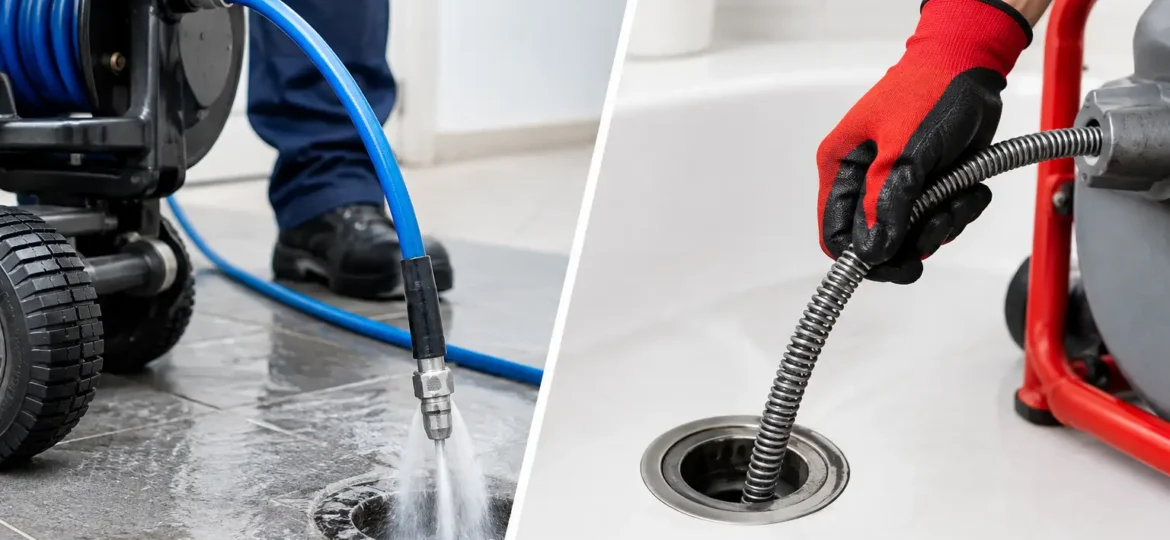
A kitchen sink that keeps backing up, toilets that gurgle after flushing, or a floor drain with standing water all point to the same question: jetting versus snaking, which service will actually solve the problem? Both methods clear blocked pipes, but they do very different jobs. Picking the wrong one can leave buildup behind and put you right back where you started.
For Chattanooga-area homeowners, landlords, and business owners, the right answer depends on what is inside the line, how often the clog returns, and the condition of the pipe itself. A professional drain inspection and an honest diagnosis matter more than sending the biggest machine down the drain.
What Is the Difference Between Jetting and Snaking?
Drain snaking uses a flexible cable with a cutting head, corkscrew tip, or retrieval tool. The technician feeds the cable into the drain and works it through the blockage. The head breaks up, cuts through, or pulls back the material stopping the flow.
Hydro jetting uses a specialized hose and high-pressure water nozzle. The nozzle moves through the pipe while spraying water forward and backward. It breaks up blockages and scours grease, sludge, soap residue, mineral scale, and other buildup from the pipe walls.
A snake is often the right tool for opening a blocked line quickly. Jetting is often the better choice when the entire pipe needs a serious cleaning.
When Drain Snaking Makes Sense
Snaking is a practical first response for many common clogs. Hair-packed bathroom drains, a wad of paper in a toilet branch line, or a small obstruction near a fixture can often be cleared efficiently with the right cable machine.
It is also useful when a technician needs to locate resistance in the line or retrieve an object. If a child’s toy, hygiene product, or other foreign item has made its way into a drain, a snake may pull it back out instead of pushing it farther down the system.
For a one-time clog in an otherwise healthy pipe, snaking can be fast, effective, and cost-conscious. It restores flow without doing more work than the situation requires.
When Hydro Jetting Is the Better Tool
Hydro jetting is built for heavy, recurring, or widespread buildup. Restaurant kitchen lines are a common example. Grease does not just form one plug in a pipe. It coats the interior over time, catches food waste, and slowly narrows the line until it cannot carry water anymore.
The same thing happens in residential sewer lines with years of soap scum, wipes, sludge, and mineral deposits. A snake may punch a channel through that material. Water starts draining again, but the pipe walls are still coated. Hydro jetting removes much more of that buildup, helping restore the line closer to its original carrying capacity.
Jetting can also help with root intrusion after the roots have been mechanically cut. The high-pressure water flushes loose root material and debris out of the line. But it does not repair the crack, failed joint, or damaged pipe that allowed roots to get inside in the first place.
Jetting Versus Snaking: Which Is Better for Your Clog?
Neither method wins every time. The right choice comes down to the blockage and the pipe.
A snake is usually better for a localized obstruction, a simple fixture clog, or an emergency where the goal is to get flow moving quickly. It can cut through certain root masses and remove physical objects. It is also the right starting point when the line cannot be safely jetted until its condition is known.
Hydro jetting is generally better for grease, scale, sludge, and recurring sewer backups caused by buildup along a long section of pipe. It is especially valuable for commercial kitchens, multi-unit properties, and older homes where years of waste have collected inside the drain line.
Here is the key difference: snaking creates an opening through a clog. Jetting cleans the pipe around the clog. That does not mean jetting is automatically necessary. If the issue is a single item lodged in the line, water pressure alone may not be the best way to remove it.
Why Camera Inspection Matters Before Hydro Jetting
High-pressure water is powerful, and that is exactly why a qualified technician should evaluate the line before choosing hydro jetting. A pipe with major cracks, a collapse, separated joints, or badly deteriorated material may need repair rather than aggressive cleaning.
A sewer camera inspection shows what is actually happening underground. It can reveal roots, grease buildup, bellies in the line, broken pipe, offset joints, or a blockage at the connection to the main sewer. It also helps confirm whether a drain issue is in the building line, the sewer lateral, or part of a septic system problem.
If the pipe is structurally sound, jetting may be a strong option. If the camera shows a collapsed section or major root damage, cleaning the line may only provide temporary relief. Repair is the honest answer.
What About Tree Roots in Sewer Lines?
Tree roots are one of the most frustrating causes of repeat sewer backups. They seek moisture, find a tiny opening in an older sewer line, and expand inside the pipe. Eventually, they catch toilet paper and waste until the line blocks completely.
A drain snake with a root-cutting head can cut through roots and reopen the line. This is often the fastest way to get a backed-up sewer flowing again. Hydro jetting can then flush the cut root material and built-up debris from the pipe.
Still, roots almost always come back unless the entry point is repaired or the damaged pipe is replaced. If your main line needs root cutting every year, you are not dealing with a cleaning problem alone. You likely have a sewer repair decision ahead of you.
Septic Systems Need a Different Diagnosis
A backed-up drain does not always mean the drain line is clogged. For homes on septic, slow drains, sewage odors, gurgling fixtures, or wastewater backing up indoors may point to a full septic tank, a failed effluent filter, a pump issue, or trouble in the drain field.
Snaking a bathroom drain will not fix a full tank. Jetting a line will not correct a failed drain field. This is why septic troubleshooting has to start with the whole system, not just the fixture where the backup appears.
If multiple drains are slow or sewage is coming up through the lowest drain in the house, stop using water where possible. Running more water into an overloaded septic or sewer system can make the cleanup worse. A trained septic and drain professional can determine whether the blockage is in the house line, the sewer line, the tank, or beyond it.
How to Know You Need More Than a Quick Drain Cleaning
A single slow sink may be a simple local clog. Repeated backups are different. Pay attention if drains improve after being cleared but clog again within weeks or months, if more than one fixture is affected, or if flushing a toilet causes water to rise in a tub or shower.
Those signs often point to a main line restriction rather than a fixture drain issue. Grease, roots, scale, damaged pipe, or a septic problem may be involved. Repeatedly pouring chemical drain cleaner into the line is not a fix. These products can be harsh on plumbing, unsafe to handle, and ineffective against serious sewer blockages.
For commercial properties, regular maintenance can prevent the emergency call in the first place. Restaurants, rental properties, and high-use facilities benefit from scheduled drain cleaning because grease and heavy traffic do not wait for a convenient time to cause trouble.
Get the Right Tool on the First Visit
The best drain service is not the one that uses the most equipment. It is the one that identifies the problem, explains the options clearly, and fixes the issue without wasting your time or money.
Chatta-Rooter Plumbing handles tough drain, sewer, and septic problems across the Chattanooga area with upfront pricing and 24/7 response when a backup cannot wait. If your drains keep clogging, ask for a real diagnosis. The right cleaning method can get water moving today, while the right repair plan can keep the problem from coming back.