

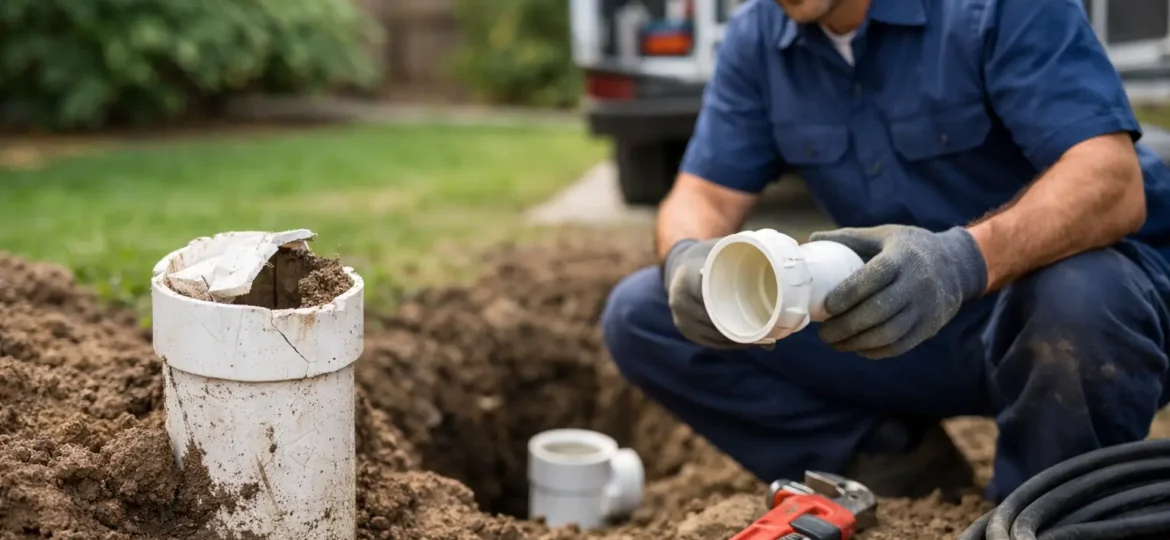
A broken cleanout can turn a routine drain problem into sewage on the ground, foul odors near the house, or a backup inside the building. When homeowners ask who repairs broken sewer cleanouts, the answer is usually a qualified plumbing and sewer contractor – not a handyman and not the city in most cases. The right crew can locate the damage, inspect the line, determine who owns that section of pipe, and make a repair that holds up.
A sewer cleanout is one of the most useful access points in your plumbing system. It gives a technician a direct path into the main sewer line for cable cleaning, hydro jetting, camera inspection, and repairs. When its cap, pipe, fitting, or surrounding line is broken, you lose that access and may also have an opening where wastewater can escape.
Who repairs broken sewer cleanouts?
Licensed plumbers and sewer line repair specialists handle damaged sewer cleanouts. If the cleanout connects to a septic system, a contractor with both plumbing and septic experience is often the better call. They can look beyond the visible broken fitting and determine whether the actual problem is a cracked cleanout riser, a failed connection, root intrusion, a clogged main line, a damaged septic line, or a settling issue around the tank or drain field.
For most homes and commercial properties, the owner is responsible for the cleanout and sewer piping on the private side of the property. That commonly includes the line from the building to the connection point at the public sewer, though local rules and the exact location can change the answer. If the failure is at the street, public easement, or city-owned main, the utility may be responsible. A sewer contractor can identify the likely boundary before you spend money repairing the wrong section.
Do not assume a cleanout near the curb belongs to the city. Its location alone does not determine ownership. A camera inspection and a review of the line layout usually provide a much clearer answer.
Signs the cleanout needs more than a new cap
A missing or cracked cap is often a simple repair. Replacing it quickly still matters because rainwater, dirt, roots, and debris can enter the line. But a cap that will not stay on, a cleanout pipe leaning out of the ground, or sewage pooling around the opening points to a larger issue.
Call for service if you notice wastewater coming from the cleanout, repeated toilet or tub backups, gurgling drains, slow drains throughout the building, sewer odor outdoors, or wet ground near the cleanout. These signs can mean the main line is blocked downstream. The cleanout may be doing its job by releasing pressure before sewage comes up through a shower, toilet, or floor drain.
A cleanout that was hit by a mower, vehicle, or landscaping equipment may look like a minor break. However, underground PVC or cast-iron fittings can crack below grade. If the pipe is no longer sealed or aligned, it can allow soil to enter the line and create a future blockage.
Why sewage at the cleanout is an urgent problem
When wastewater rises out of a cleanout, the sewer line is not moving water away fast enough. The blockage could be grease buildup, wipes, roots, damaged pipe, a sag in the line, or a full septic tank. Running more water often makes the mess worse.
Stop using water-heavy fixtures if sewage is surfacing outside. Avoid laundry, dishwashing, long showers, and repeated toilet flushing until a technician can inspect the system. Keep children and pets away from the area, since raw sewage can carry harmful bacteria. If sewage has entered the home or business, professional cleanup may be needed in addition to the plumbing repair.
How a plumber repairs a sewer cleanout
The proper repair depends on the material, location, depth, and condition of the main line. A good repair starts with diagnosis, not just replacing what is visible above the ground.
First, the technician checks whether the line is backed up and clears it if necessary. Cleaning may involve a drain cable machine or hydro jetting, depending on the blockage and pipe condition. Next, a sewer camera can inspect the pipe from the cleanout and show whether roots, cracks, offsets, bellies, or collapsed sections caused the failure.
If the cleanout riser or threaded fitting is cracked, the repair may involve excavating a small area, cutting out the damaged pipe, and installing new fittings with the proper slope and secure connections. The cleanout should sit at a usable height and receive a tight cap. A cleanout buried too deep, left exposed where it can be struck, or installed without proper support can become another repair call later.
If the inspection finds a damaged main line, more extensive work may be necessary. In some cases, a targeted spot repair solves the problem. In others, a longer sewer line replacement is the honest recommendation because the pipe has widespread root damage, corrosion, or multiple failing sections. The cheapest visible fix is not always the least expensive option once repeated backups and emergency calls are considered.
For septic properties, the technician may also inspect the tank level and the line between the home and tank. A full tank, clogged inlet baffle, failed effluent pump, or blockage in the building sewer can force sewage back toward the cleanout. That is why a contractor who understands the whole wastewater system can save time.
What affects the cost of cleanout repair?
There is no responsible flat answer without seeing the pipe. Replacing a cap costs far less than excavating a broken cleanout several feet underground. The total can change based on access, pipe depth, pipe material, whether the line is actively backed up, landscaping or concrete that must be opened, and whether camera inspection reveals a larger sewer issue.
A straightforward repair in open soil is generally simpler than one under a driveway, slab, retaining wall, or busy commercial parking area. Older homes can add another variable because cast iron, clay, Orangeburg, and poorly repaired PVC lines each fail differently.
Ask for an in-person assessment and upfront pricing before work begins. You should know what is broken, what repair is recommended, whether the line was inspected, and what could change the price. A contractor should explain the findings in plain language, not pressure you into replacing pipe that has not been diagnosed.
Should you repair a broken cleanout yourself?
Changing an accessible, undamaged cap can be a reasonable property-owner task if there is no sewage present and the threads are intact. Beyond that, sewer cleanout repairs are usually not a good DIY project.
Digging near buried sewer pipe can break more fittings, damage other utilities, or leave the new pipe at the wrong grade. Opening a backed-up cleanout can also release sewage under pressure. Store-bought drain chemicals are not a solution for a broken cleanout or a blocked main line. They can damage pipes, create a hazard for the person working on the drain, and do little against roots or a collapsed line.
The better move is to protect the area, limit water use if there is a backup, and get the line inspected. A repair that includes proper cleaning and camera work addresses the reason the cleanout failed instead of covering up the symptom.
Preventing another sewer cleanout failure
Keep the cleanout visible and accessible. Do not bury it under mulch, concrete, or heavy landscaping, and do not park vehicles over the sewer route. If the cap is missing, replace it promptly. For properties with mature trees near the sewer line, periodic camera inspections and root control can catch trouble before roots split fittings or create a full blockage.
Be careful about what goes down drains. Grease, wipes labeled flushable, paper towels, hygiene products, and large food debris are common causes of main line clogs. On septic systems, regular pumping and inspection help prevent backups that can show up first at the cleanout.
Chatta-Rooter Plumbing handles sewer cleanout repairs, main line cleaning, camera inspections, and septic-related backups for property owners who need a straight answer and a repair that lasts. If you see sewage at the cleanout or drains are backing up across the building, treat it as a wastewater problem that needs prompt attention. Acting before the next flush can be the difference between a contained outdoor repair and sewage cleanup inside your property.