

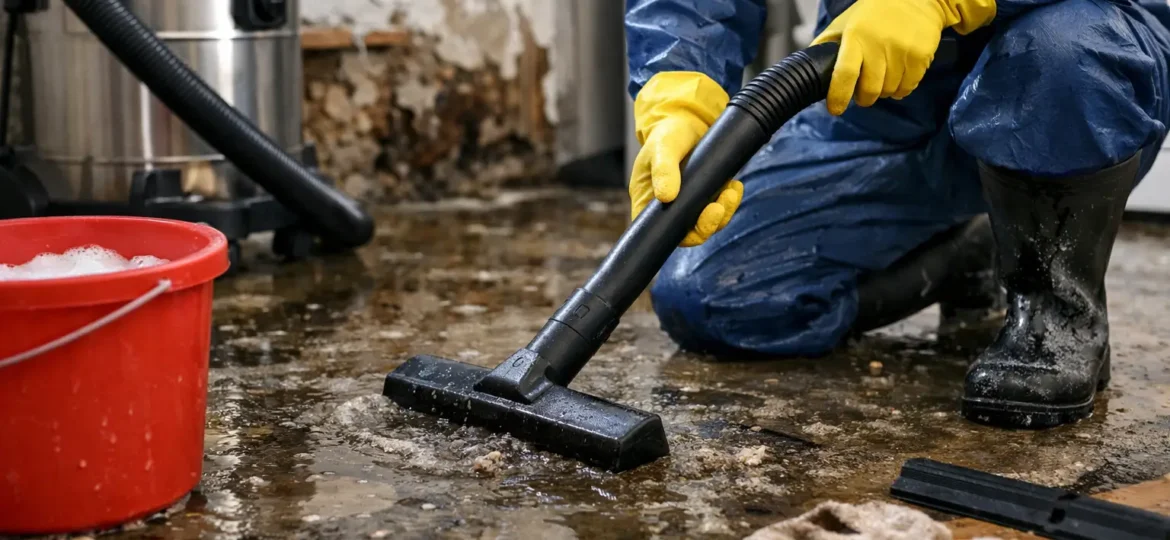
A sewage backup is not a regular cleaning job. Water from a toilet, floor drain, sewer line, or failed septic system can carry bacteria, viruses, and contaminants into your home or business. The first rule of how to clean sewage after backup is simple: protect people first, stop the source if you can do so safely, and do not treat contaminated water like a minor spill.
If sewage has reached carpet, drywall, HVAC equipment, electrical outlets, or a large part of the building, call a professional cleanup and plumbing team right away. Fast action limits damage, but rushing in without the right protection can create a bigger health problem.
Start by Making the Area Safe
Keep children, pets, customers, and employees out of the affected area. Sewage water is considered Category 3 water, also called black water. It may contain human waste, harmful microorganisms, chemicals, and debris from the sewer system.
Do not walk through the area in bare feet, socks, sandals, or regular work shoes. Do not run fans, turn on the HVAC system, or use a household vacuum to pick up sewage. Air movement can spread contaminants to cleaner areas, while standard vacuums are not built to handle biohazard waste.
If water is close to electrical outlets, appliances, a breaker panel, or extension cords, stay clear until the power can be shut off safely. Do not enter a flooded basement or crawlspace if you cannot see what is under the water. A hidden electrical hazard, sharp object, or unstable floor is not worth the risk.
If the backup is still active, stop using water throughout the property. Do not flush toilets, run the dishwasher, shower, or start the washing machine. Every gallon sent down the drain can add to the backup while the main sewer line, septic tank, pump, or drain field issue remains unresolved.
Wear the Right Protective Gear
For a very small, contained sewage spill on a hard, nonporous surface, wear proper protection before beginning any cleanup. At minimum, use:
- Disposable waterproof gloves
- Rubber boots that can be disinfected
- Eye protection and a face mask or respirator
- Disposable coveralls or clothing that can be washed separately in hot water
Cover cuts or scrapes before putting on gloves. Avoid touching your face, phone, door handles, light switches, or clean surfaces with contaminated gloves. When you finish, remove protective gear carefully so the outside of it does not touch your skin or clothing.
This is one of the biggest trade-offs homeowners face. A small spill on sealed tile may be manageable with the right precautions. Sewage soaking into carpet, padding, wood floors, insulation, drywall, or furniture is a different situation. Those materials can trap contamination where surface cleaning will not reach.
Remove Sewage and Damaged Materials
After the source has been stopped, remove standing sewage using equipment made for wastewater cleanup. A professional-grade wet vacuum, extraction pump, or truck-mounted system is usually required for anything beyond a small puddle. Do not use a household shop vacuum unless it is specifically rated and dedicated for contaminated-water extraction.
Hard, nonporous surfaces such as sealed concrete, ceramic tile, metal, and some plastic can often be cleaned and disinfected. First remove solid waste and debris with disposable tools or equipment that can be fully decontaminated. Bag contaminated debris securely and follow local disposal requirements.
Porous materials usually need to be removed. That can include carpet and carpet padding, upholstered furniture, cardboard, insulation, mattresses, ceiling tiles, and items made from untreated wood or particleboard. Drywall that has absorbed sewage water may need to be cut out above the visible water line. Trying to save everything can leave odor, bacteria, and moisture behind the wall.
For business owners and landlords, document the damage before materials are removed when it is safe to do so. Take clear photos of affected rooms, flooring, contents, and the apparent source of the backup. This can help with insurance claims, tenant communication, and repair planning.
Do not forget hidden areas
Sewage often travels farther than the visible water line. Check baseboards, behind appliances, under cabinets, inside low wall cavities, and beneath flooring. In a basement, sewage can work into cracks, storage areas, and unfinished framing. In a commercial building, it may move through shared drains, utility chases, and low-lying rooms.
A professional moisture inspection is especially valuable when the backup involved a finished basement, crawlspace, or large commercial area. The goal is not just to make the floor look clean. The goal is to remove contamination and dry the structure correctly.
Clean First, Then Disinfect
Disinfectant does not work well through dirt, grease, sewage residue, or standing water. Clean all salvageable hard surfaces first with detergent and water. Then apply an EPA-registered disinfectant labeled for sewage or biohazard cleanup, following the product directions for dilution, contact time, and ventilation.
Never mix bleach with ammonia, acids, drain cleaners, or any other chemical. Mixing products can release dangerous fumes. If you use a bleach solution on a compatible hard surface, prepare it fresh, keep the area ventilated, and allow the required wet contact time before wiping or rinsing.
Pay close attention to toilet bases, floor drains, walls near the backup, door thresholds, tools, and anything that may have been carried through the affected area. Wash reusable boots, tools, and protective equipment before bringing them into a clean space.
Wash clothing separately from other laundry using hot water and detergent. If clothing or fabric cannot be thoroughly washed and disinfected, throw it away. After cleanup, wash hands and exposed skin thoroughly with soap and warm water, even if you wore gloves.
Dry the Area Completely
Once contaminated materials are removed and hard surfaces are cleaned and disinfected, drying needs to begin immediately. Use professional air movers and dehumidifiers only after the sewage has been extracted and the area has been cleaned. The building needs dry air circulation, not contaminated air being blown around.
Open windows when weather and security allow. In humid conditions, outside air may not help much, so mechanical dehumidification becomes more important. A moisture meter can confirm whether flooring, framing, and wall materials are actually dry instead of just dry to the touch.
Musty odor, staining, peeling paint, warped flooring, or recurring moisture are signs that contamination or water remains. Do not close walls, reinstall flooring, or move furniture back until the structure is dry and repairs are complete.
Fix the Cause Before Using the Plumbing Again
Cleanup is only half the job. If the cause is not corrected, the next flush or load of laundry can send sewage back into the building.
Common causes include a blocked main sewer line, tree root intrusion, damaged or collapsed sewer pipe, a full septic tank, a failed septic pump, a clogged effluent filter, drain field trouble, or a grinder pump failure. In some neighborhoods, heavy rain can overwhelm municipal sewer systems and force sewage backward through low drains.
A camera inspection, drain cleaning, hydro jetting, septic pumping, or pump diagnosis may be needed, depending on the system. The right fix depends on what failed. Repeatedly snaking a line with a broken pipe, for example, may restore flow temporarily but will not repair the underlying damage.
If sewage is backing up from multiple drains, coming up through a basement floor drain, or affecting toilets and tubs at the same time, stop using the plumbing and get help immediately. Those are common signs of a main line or septic system problem rather than a simple sink clog.
When to Call for Professional Sewage Cleanup
Call a professional when sewage covers more than a small area, has been sitting for several hours, entered porous materials, or involves a crawlspace, basement, or commercial property. Professional help is also the smart call for anyone with respiratory issues, a weakened immune system, limited mobility, or uncertainty about the source of the water.
In Hamilton County and surrounding areas, Chatta-Rooter Plumbing can respond to sewage backups with plumbing, septic, drain, and cleanup expertise in one call. The priority is to stop the backup, identify the cause, remove the contamination, and give you a clear path to getting the property safely back in service.
Do not let embarrassment or the hope that it will drain away delay the call. Sewage damage gets more expensive as contamination spreads, materials absorb moisture, and odors settle into the building. A fast, properly handled response protects your property and the people who depend on it.