

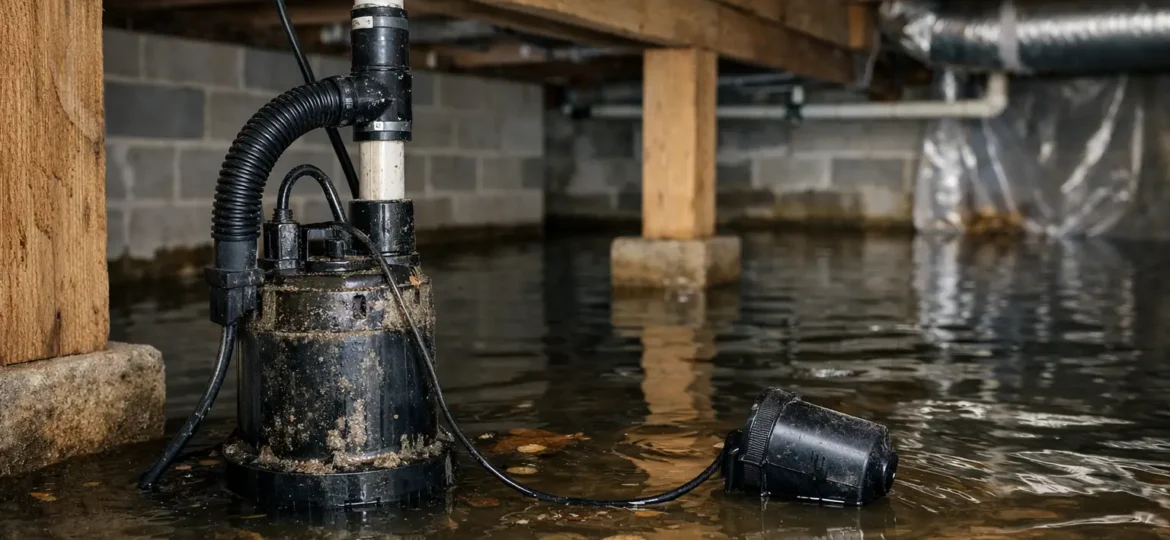
A flooded crawlspace pump failure case rarely starts as a dramatic emergency. Often, it starts with a little standing water, a damp smell indoors, or a pump that seems to run longer than usual. Then a hard rain hits, a float switch sticks, or a discharge line backs up. By the time someone looks under the house, water may be covering insulation, ductwork, vapor barrier, and electrical components.
That is when fast diagnosis matters. The goal is not simply to get water out. The real job is finding out why the pump failed, stopping more water from entering, and making sure the crawlspace is safe before damage gets worse.
What Happened in This Pump Failure Case
In a typical flooded crawlspace call, the home has a sump pump in a basin at the lowest point under the house. Its job is simple: collect groundwater and pump it away from the foundation. The system works well until one weak point fails.
In this type of case, the pump ran but did not lower the water level. The basin kept filling, water spread across the crawlspace, and the homeowner noticed moisture and a musty odor inside the home. The pump itself was not the only problem. The discharge line had become restricted, forcing water back toward the pit. At the same time, the float switch was hanging up against the basin wall, so the pump was not cycling correctly.
That combination is common. A homeowner may replace a pump, see it run for a few minutes, and assume the problem is fixed. But if the discharge piping is blocked, the check valve is installed wrong, the pit is undersized, or outside drainage keeps feeding the crawlspace, a new pump can fail again under the next heavy rain.
Why Crawlspace Pumps Fail When You Need Them Most
A sump pump has a hard job during storms. It may sit unused for long stretches, then suddenly be expected to run continuously for hours. That is why a pump that sounds fine on a dry day can fail when groundwater is at its highest.
The most common causes include power loss, a tripped GFCI outlet, a failed float switch, a burned-out motor, or a clogged intake screen. Mechanical problems are only part of the picture. The water still has to leave the property through a clear, properly routed discharge line. If that line is crushed, clogged with mud, frozen in cold weather, or dumping too close to the foundation, water can return right where it started.
Pump size matters too. A small pump may handle normal seepage but fall behind during long periods of heavy rain. On the other hand, installing the biggest pump available is not always the answer. An oversized pump cycling on and off too quickly can wear itself out, especially if the basin is too small. The right setup depends on the amount of incoming water, the lift required, the discharge distance, and the condition of the drainage around the home.
A Sump Pump Is Not a Sewage Pump
This distinction can prevent a major mistake. A crawlspace sump pump is generally designed to move groundwater. It is not built to handle toilet paper, sewage solids, grease, or wastewater from plumbing fixtures.
If the water under the house smells like sewage or appeared after a septic backup, sewer line break, or failed sewage ejector pump, treat it as contaminated water. Do not try to pump it with a standard sump pump or walk through it without proper protection. That situation needs a wastewater and cleanup response, not a basic pump replacement.
What to Do When Your Crawlspace Is Flooding
Do not crawl into standing water to inspect a pump. Water and electricity are a dangerous mix, particularly in a tight space with exposed wiring, junction boxes, HVAC equipment, or damaged extension cords.
Take these steps while help is on the way:
- Keep children, pets, and anyone without protective equipment out of the crawlspace.
- If it is safe to reach the electrical panel from a dry area, shut off power to the crawlspace circuit. Do not touch switches, plugs, or cords near standing water.
- Stop obvious sources of water when possible. That may mean turning off a leaking supply line or avoiding heavy water use if there is a suspected sewer or septic backup.
- Move valuables and stored items away from the affected area if they can be reached safely without entering the water.
- Take photos from a safe location. They can help document the extent of the damage for repair decisions and insurance discussions.
If rainwater is still pouring toward the foundation, look for obvious surface drainage issues from outside. Overflowing gutters, disconnected downspouts, low grading, and runoff directed toward the house can overwhelm a perfectly good pump system.
Diagnosing the Real Cause of a Flooded Crawlspace Pump Failure
Once the area is safe, a proper service call should go beyond plugging in another pump. The technician needs to verify whether power is reaching the unit, test the float operation, inspect the basin, and check whether the pump can move water at the required rate.
The discharge route deserves just as much attention. A pump may be working properly at the pit but still fail to protect the crawlspace because water cannot travel through the discharge line. A missing or failed check valve can let water drain back into the pit after every cycle. A buried line can clog. A discharge outlet placed too close to the home can create a loop where the same water keeps returning to the foundation.
The crawlspace itself also tells part of the story. Saturated insulation, muddy water trails, wet foundation walls, and water entering near one corner can point to drainage problems rather than a pump problem alone. If water is rising from the ground across the entire area, the drainage system may need more capacity. If the water is concentrated around plumbing, sewer piping, or a septic line, the source may be a leak or wastewater issue instead.
Repairs That Actually Hold Up
The right repair depends on what failed. Sometimes a new float switch, check valve, or properly sized replacement pump solves the issue. In other cases, the fix requires cleaning or replacing the discharge line, enlarging the basin, adding a backup pump, or correcting exterior drainage.
Battery backup systems are worth considering for homes that lose power during storms. They are not a replacement for a properly sized primary pump, but they can keep water moving during a short outage. For properties with frequent or extended outages, a generator connection may be the better answer. It depends on how much water the system handles and how long the home can go without power.
For homes with repeated crawlspace flooding, repairs may need to include the water source itself. That can involve redirecting downspouts, repairing broken drain lines, improving grading, addressing foundation drainage, or installing a more capable sump setup. Replacing a pump without fixing the incoming water is like bailing out a boat without plugging the hole.
Do Not Ignore the Damage After the Water Is Gone
Standing water can leave behind more than a wet floor. Moisture under the house can damage insulation, promote mold growth, rot wood components, corrode metal ductwork, and create odors that make their way indoors. If wastewater was involved, cleanup becomes even more urgent because contamination can affect materials throughout the crawlspace.
Drying the area properly may require water removal, debris cleanup, dehumidification, and removal of damaged materials. The faster that work begins, the better the chance of limiting long-term repair costs.
When to Call for Professional Help
Call for help immediately if the water level is rising, the pump has no power, the area may contain sewage, or electrical equipment is exposed. A professional can identify whether you are dealing with a failed sump pump, a drainage failure, a plumbing leak, or a septic or sewer problem before the wrong repair wastes time and money.
For homeowners and property managers in the Chattanooga area, Chatta-Rooter Plumbing handles emergency pump, sewer, septic, and drainage-related problems with upfront pricing and a straight answer about what needs to be fixed. A flooded crawlspace is stressful enough. You should not have to guess whether the pump is the cause or just the first sign of a bigger water problem.
The best time to test a crawlspace pump is before the next storm, not while water is already spreading under the house. A quick inspection of the pump, float, basin, outlet, and discharge path can turn a costly emergency into a routine repair.