

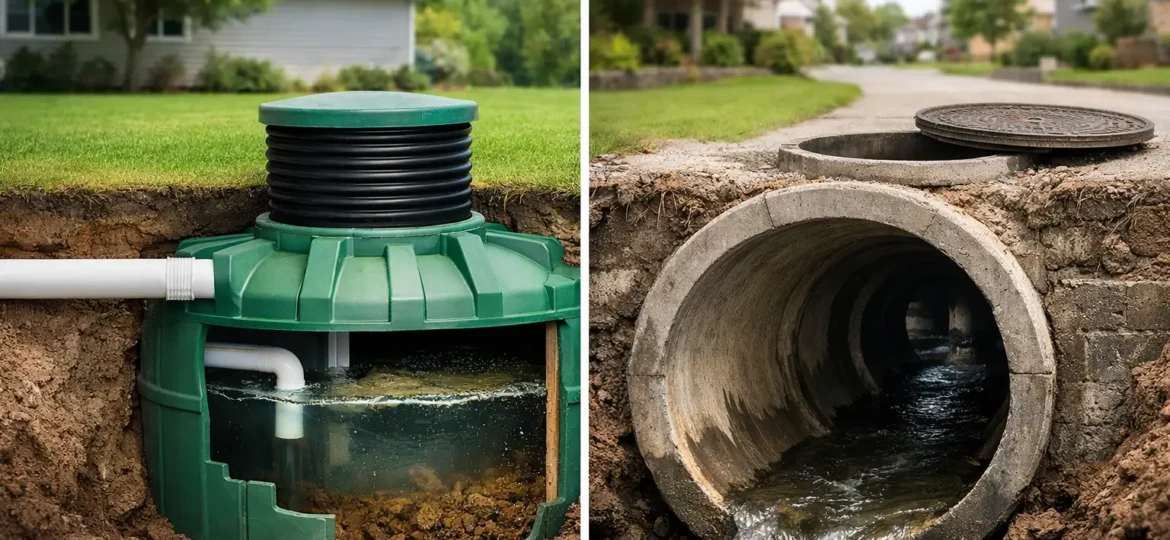
A slow drain, sewage odor in the yard, or a backup in the lowest bathroom can make septic versus sewer feel like a very urgent question. For a homeowner buying property, building a home, or dealing with a failing wastewater system, the answer affects monthly costs, maintenance responsibilities, repair risk, and how quickly you need professional help.
Neither system is automatically better. A public sewer connection can be convenient, but it comes with ongoing utility bills and a shared municipal line. A properly designed septic system gives a property more independence, but the owner is responsible for pumping, repairs, and protecting the drain field. The right choice depends on the property, local availability, soil conditions, budget, and how the system will be used.
Septic Versus Sewer: The Main Difference
A sewer system moves wastewater from your home or business through a private service line and into a public sewer main. From there, the local utility transports and treats that wastewater. You generally pay a monthly sewer charge, while the utility maintains the public main and treatment system.
A septic system treats wastewater on the property. Wastewater enters a septic tank, where solids settle and natural bacterial action begins breaking down waste. Liquid wastewater then flows into a drain field, where it filters through soil for further treatment. The homeowner or property owner owns the system and is responsible for keeping it working.
That ownership difference is the heart of the decision. With sewer service, you have less hands-on responsibility but less control over your monthly bill. With septic, you avoid a sewer bill in many cases, but maintenance is not optional. Ignore it long enough, and a preventable pumping job can turn into a drain field repair or replacement.
When a Sewer Connection Makes Sense
Public sewer is often the practical choice when it is available at the property line and the connection cost is reasonable. It can be especially useful for homes with high water use, commercial properties, rental units, and buildings where wastewater volume is difficult to control.
A sewer connection also removes the need to maintain a tank and drain field. You do not need routine septic pumping, and you do not have to worry about vehicles compacting a drain field or tree roots affecting septic components. For many buyers, municipal sewer can make a property easier to understand because the responsibility is familiar: pay the bill, protect your plumbing, and call for service if the private line develops a problem.
That does not mean sewer lines are trouble-free. Your home still has a private sewer lateral, and it can clog, crack, sag, separate, or become invaded by roots. Grease, wipes, hygiene products, and heavy paper products can still create serious backups. If the public main backs up, the situation may involve the utility, but the cause needs to be diagnosed before anyone can say where responsibility begins.
Older neighborhoods can have aging sewer infrastructure, and a sewer camera inspection is often smart before purchasing an older home. A damaged line below a driveway, foundation, or landscaped yard can be a major repair even when the property is connected to city sewer.
When a Septic System Makes Sense
Septic is common on rural properties and in areas where public sewer lines do not reach. If sewer is unavailable, a correctly sized and professionally installed septic system is not a second-rate option. It is a dependable wastewater solution that can serve a home for decades when it is maintained and used properly.
A septic system can also make financial sense over time. There may be no monthly sewer bill, although you should set aside money for regular pumping and eventual repairs. The system’s lifespan depends on the soil, design, household size, water use, maintenance history, and whether the drain field has been protected.
The biggest advantage is independence. The biggest responsibility is that the system is yours. If a tank is full, a baffle fails, a pump quits, or the drain field becomes saturated, there is no utility department taking over the repair. You need a septic company that can inspect the system, locate the actual failure, and explain the repair without guesswork.
Costs: Monthly Bills Versus Long-Term Maintenance
Comparing costs takes more than looking at one bill. Sewer customers usually pay a recurring charge based on water use, a flat fee, or both. There may also be a connection fee, tap fee, and the cost to install or repair the private sewer line. Those costs vary by location and property layout.
Septic owners often have lower monthly utility costs, but they need to budget for pumping. Most residential tanks should be pumped on a regular schedule, commonly every three to five years. A smaller tank, larger household, garbage disposal use, or heavy water use may require more frequent service.
Septic repairs range from straightforward to expensive. Replacing a lid, filter, baffle, riser, or pump is very different from repairing a failed drain field. The best way to control costs is to pump the tank before solids reach the outlet and create damage downstream. Waiting until sewage is backing up is never a money-saving strategy.
Sewer repairs can also be costly, especially if a main line must be excavated. A camera inspection can show whether a clog can be cleared with drain cleaning or hydro jetting, or whether the pipe has root intrusion, breaks, offsets, or a collapsed section that needs repair.
Maintenance That Prevents Emergency Calls
The habits that protect septic and sewer systems overlap. Keep grease, wipes, paper towels, feminine products, dental floss, cat litter, and food scraps out of drains and toilets. Products labeled flushable can still hang up in pipes, pumps, and sewer lines. They are not a safe substitute for toilet paper.
For septic systems, protect the drain field as carefully as the tank itself. Do not drive, park, build, or place heavy equipment over it. Direct roof runoff, sump pump discharge, and surface water away from the drain field so the soil can accept treated wastewater. Repair leaking toilets and faucets quickly because excess water can overload the system.
Know where your tank, cleanouts, and drain field are located. Keep service records, especially if you are selling, buying, or managing rental property. A record of pumping and repairs gives the next owner useful information and helps a technician diagnose a problem faster.
What to Check Before Buying a Property
Do not accept “it works fine” as the full answer when a property has septic or an older sewer line. Ask for documentation and get the system inspected. For septic, that means identifying the tank size, system type, pumping history, drain field location, permits, and any pumps or alarms. A septic inspection should evaluate condition, not just whether water disappears when a toilet is flushed.
For a sewer-connected property, consider a camera inspection of the private line. This is particularly valuable for older homes, homes with mature trees, or properties where the sewer line runs beneath concrete or a driveway. A short inspection before closing can reveal a repair that would otherwise become your problem after the sale.
If a property has access to public sewer but currently uses septic, ask about the cost and requirement to connect. Some areas require connection when a sewer main becomes available or when a septic system fails. Confirm local rules before making plans based only on the current setup.
Signs You Need Help Now
A wastewater issue needs prompt attention when multiple drains are slow, toilets gurgle, sewage backs up into a tub or floor drain, the yard is wet or smells like sewage, or a septic alarm is sounding. Do not keep running water to test the problem. That can add more wastewater to an already overloaded system.
For a septic backup, reduce water use immediately and arrange service. For a suspected sewer backup, avoid using fixtures until the line can be inspected and cleared. If sewage has entered a home or business, cleanup matters as much as restoring flow because wastewater creates a serious sanitation problem.
Chatta-Rooter Plumbing handles septic pumping, septic repairs, sewer line inspections, drain cleaning, and emergency wastewater problems across the Chattanooga area. The goal is simple: find the real cause, explain the options clearly, and get the system working without wasting your time or money.
A wastewater system should stay out of sight and out of mind. The way to keep it that way is simple: know whether you have septic or sewer, maintain the part you own, and call for service at the first real warning sign instead of waiting for a backup.