

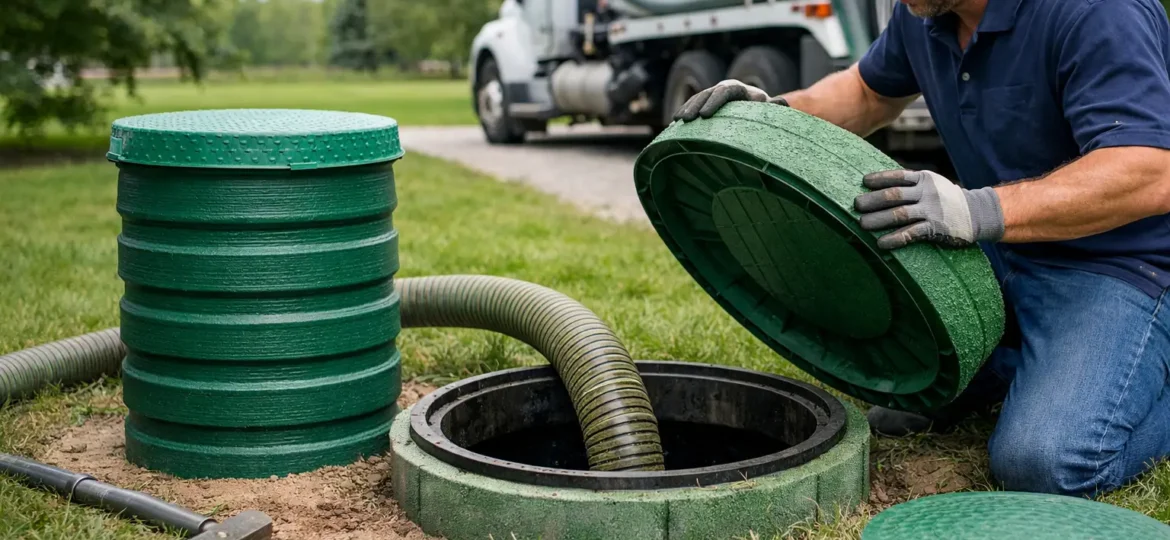
A septic pumping visit should not start with tearing up your yard to find a buried lid. Septic tank risers bring the tank access point to or near ground level, so routine pumping, inspections, and repairs can be handled without repeated digging. It is a practical upgrade that saves time now and can prevent a bigger mess later.
For homeowners, landlords, and commercial property owners, risers are about access. When a septic contractor can reach the tank quickly, it is easier to keep up with service, spot problems early, and avoid unnecessary damage to landscaping, driveways, or hardscaping.
What Are Septic Tank Risers?
A septic tank riser is a vertical extension installed over an existing tank opening. The riser runs from the tank lid up to the surface and is finished with a secure lid. Most modern risers are made from durable plastic, fiberglass, or concrete, although plastic systems are common because they are lightweight, corrosion-resistant, and easier to seal.
A properly installed riser should provide access to the tank’s main lid and, when needed, separate access points over the inlet and outlet baffles. That matters because pumping the tank alone is not the whole job. A proper inspection may require checking the baffles, filters, tank condition, and the way wastewater is moving through the system.
Without a riser, each service visit may involve locating the tank, digging down several feet, removing soil, and covering everything back up when the work is finished. That is extra labor, extra disruption, and more opportunity for the lid area to be damaged or left poorly sealed.
Why Ground-Level Access Is Worth It
The main benefit is simple: a riser makes septic maintenance easier to schedule and easier to complete correctly. When access is buried, homeowners sometimes put off pumping because they expect a torn-up yard and a longer service call. That delay can lead to solids leaving the tank and reaching the drain field, where repairs get much more expensive.
Ground-level access also helps during an urgent call. If sewage is backing up into a home or a tank is overflowing, nobody wants to spend an hour hunting for a buried opening. A visible, secure riser lets the crew get to work faster.
There are practical benefits beyond emergencies:
- Less digging during pumping, inspection, and repair work
- Less damage to grass, mulch beds, irrigation lines, and landscaping
- Faster access to clogged inlet or outlet baffles
- Easier routine service for rental properties and commercial sites
- Better odds that maintenance gets done on schedule
A riser does not make a septic system maintenance-free. It simply removes one of the biggest barriers to maintaining it the right way.
When a Septic Riser Makes the Most Sense
Risers are especially useful when the tank lid sits more than a few inches below grade, when the tank is located under landscaping, or when the property has had repeated pumping or repair work. They are also a smart add-on when a tank is already being uncovered for a repair, baffle replacement, filter service, or pumping appointment.
For a new septic system installation, adding risers from the start is usually the cleanest and most cost-effective option. The tank is already accessible, the location is known, and the contractor can set the riser height correctly before the final grading is complete.
For an older system, the decision depends on the tank condition and the layout of the property. A cracked tank lid, deteriorated concrete, damaged baffle, or poorly sealed opening should be addressed before a riser goes on top. A riser installed over a failing access point will not solve the underlying issue.
There are also cases where a riser needs careful placement. If the tank sits in a traffic area, near a driveway, or where mowing equipment regularly crosses it, the lid and riser system need to be rated and installed for that use. Standard lightweight lids are not made for vehicle traffic.
Choosing the Right Riser and Lid
The right riser is not just the one that reaches the surface. It must match the tank opening, seal tightly, stay structurally sound, and have a lid that fits the property’s use.
Plastic risers are a common choice for residential properties because they resist rust and are generally easier to handle than concrete. Concrete risers can work well, especially where a heavier-duty setup is needed, but they require solid installation and properly sealed joints. The best material depends on the tank, the depth, soil conditions, and whether the area is exposed to traffic.
The lid deserves just as much attention as the riser itself. It should be secure enough to prevent children or unauthorized people from opening it, yet accessible for a trained septic technician. A loose, cracked, or makeshift lid is a serious safety hazard. Never cover a septic opening with plywood, thin sheet metal, or an unapproved cover.
For most yards, the finished lid can sit flush with the lawn or just above grade. It can be placed in a clean, accessible location and blended into the landscape without burying it under decorative rock, shrubs, or heavy planters. The goal is easy access, not a lid nobody can find.
Proper Installation Matters
Installing septic tank risers is not a job to guess at. The tank must be located and uncovered carefully. Once the opening is exposed, the contractor checks the condition of the existing lid, measures the opening, selects compatible components, and seals the riser connections to prevent groundwater or surface water from entering the tank.
That seal is important. Groundwater infiltration can overload a septic system, especially during heavy rain. Extra water filling the tank can push wastewater through the system too quickly, reduce settling time, and put added strain on the drain field. Surface water should also be directed away from the tank area, not allowed to run toward the lid.
The final height needs to account for the surrounding grade. A lid set too low can collect runoff. A lid raised too high can become a mowing hazard or get hit by equipment. The best installation balances access, drainage, safety, and the look of the property.
A qualified septic contractor should also confirm which tank openings need access. Some tanks require one main riser for pumping, while others benefit from access over both compartments or over the inlet and outlet areas. It depends on the tank design and what the system needs for future maintenance.
What Risers Do Not Fix
Septic risers are a smart access upgrade, but they are not a cure for a full tank, a failed drain field, root intrusion, broken pipes, or sewage backup. If toilets are gurgling, drains are slow throughout the building, wastewater is surfacing in the yard, or sewage is backing up inside, the system needs to be inspected.
Do not assume the problem is only a buried lid or that pumping alone will always fix it. A tank that fills abnormally fast may have a plumbing leak, groundwater infiltration, a damaged tank, or a drain field that is no longer accepting effluent. Those problems need a real diagnosis before money is spent on the wrong repair.
The same goes for odors. A properly sealed riser lid should not create a constant sewage smell around the yard. If it does, the lid may be damaged, the seal may be failing, or the septic system may have a ventilation or operational issue that needs attention.
Plan Risers Around Regular Septic Service
A riser is most valuable when it supports a maintenance plan. Most septic tanks need pumping on a schedule based on household size, water use, tank size, and the type of system in place. Garbage disposals, frequent laundry loads, high-occupancy rentals, and commercial use can all increase the amount of solids and wastewater a system handles.
Keep the riser lid visible and accessible. Do not park vehicles over it, build a shed on top of the tank area, or plant deep-rooted trees nearby. If you own a rental property or manage a commercial site, document the riser location so a service crew can access it without delays when a problem comes up.
For properties in Chattanooga and the surrounding counties, Chatta-Rooter Plumbing can inspect the tank access, recommend the right riser setup, and handle pumping or repairs when the system needs more than routine maintenance. A secure, properly installed riser gives you one less obstacle between a septic problem and a fast, clean fix.
The best time to install a riser is when the tank is already uncovered, not after an emergency forces the issue. Make access easy now, and your next septic service call will be quicker, cleaner, and easier on your property.