

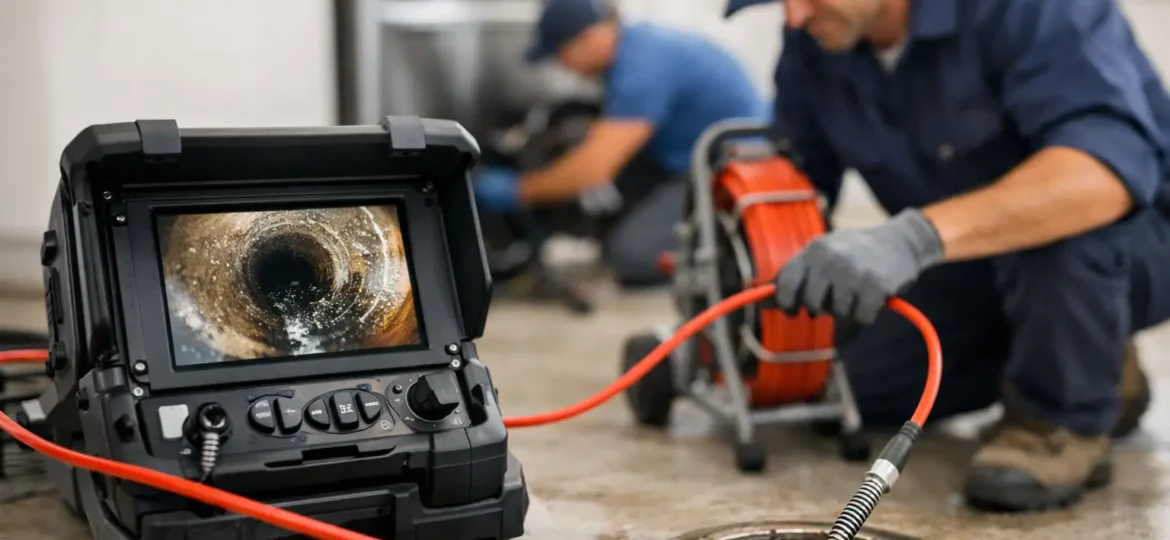
A drain that keeps backing up is not a problem to guess at. It is a problem to see. The biggest sewer camera benefits come down to getting eyes inside the pipe before anyone recommends a repair. Instead of treating the same clog over and over, a professional camera inspection can show what is actually blocking, cracking, or crushing your sewer line.
For homeowners, landlords, and business owners, that means fewer wasted service calls and a clearer path to the right repair. A sewer camera is a small waterproof camera attached to a flexible cable. It travels through the line while a technician watches a live video feed, locating trouble inside the pipe without tearing up a yard, floor, parking area, or landscaping just to find it.
Sewer Camera Benefits Start With a Straight Answer
When a toilet gurgles, a tub drains slowly, or sewage comes back through a low drain, several issues can create similar symptoms. Grease buildup, wipes, tree roots, a collapsed pipe, a broken cleanout, and a full septic system can all cause drainage trouble. The right fix depends on the cause.
A camera inspection takes much of the guesswork out of the job. It can show whether the line needs basic drain cleaning, hydro jetting, spot repair, pipe replacement, or a septic service call. That matters because the cheapest repair is not always the right repair. Clearing a blockage may restore flow today, but if the pipe is cracked or roots are pushing through multiple joints, the problem will keep coming back.
A good inspection also allows the technician to explain the findings in plain language. You should be able to see what is in the line, understand where the problem sits, and hear why a certain repair is being recommended. That is how you avoid paying for work that does not address the real issue.
1. Find the Exact Cause of Repeat Clogs
A plunger or drain machine may get water moving again, but repeat clogs are a warning sign. If one bathroom drain is slow, the problem may be local to that fixture. If multiple drains are slow, toilets bubble, or water appears in a shower when the washing machine drains, the main sewer line needs attention.
Camera footage can identify common causes such as root intrusion, hardened grease, heavy scale, settled debris, flushed wipes, and foreign objects. It can also reveal a belly in the pipe, which is a low section where waste and water collect instead of moving downhill. A cable may punch through a blockage in a belly, but it cannot correct the pipe slope.
For restaurants and commercial kitchens, grease is a frequent offender. For older homes around Chattanooga, clay tile, cast iron, Orangeburg, and aging PVC lines can each fail in different ways. Knowing the pipe material and condition helps determine whether cleaning is enough or replacement is the smarter long-term move.
2. Avoid Unnecessary Digging
Digging is sometimes necessary, especially when a pipe has collapsed, separated, or been damaged beyond cleaning. But excavation should be based on facts, not a hunch.
One of the most practical sewer camera benefits is locating the trouble before a repair starts. A camera system can often help identify the distance to a blockage or damaged section from the access point. With a locator, the technician can mark the likely position above ground. That makes it possible to target the repair area instead of opening a large section of yard or concrete.
Less unnecessary digging can protect landscaping, driveways, patios, and business operations. It can also shorten the repair timeline. If excavation is required, precise information helps the crew arrive prepared for the actual job rather than spending valuable time searching for the failure.
3. Confirm Whether Cleaning Actually Worked
Main line cleaning is often the first step when a sewer line is blocked. That is the right approach for many clogs, but the line should not be assumed clear just because water starts draining.
A post-cleaning camera inspection can confirm whether roots, debris, grease, or other material remains in the pipe. It can also show damage that was hidden behind the blockage. This is especially useful after hydro jetting, since the camera can verify that buildup has been removed and help show whether the pipe walls are still in serviceable condition.
There is a trade-off here. Not every simple, one-time bathroom sink clog needs a camera inspection. A basic fixture clog can often be handled quickly without it. But recurring main line issues, sewage backups, and stubborn blockages are different. In those cases, skipping the camera can mean paying to clean the same line again a few months later.
4. Catch Pipe Damage Before a Full Backup
Sewer line failures rarely improve on their own. A small crack can admit roots. A separated joint can catch paper and waste. Corrosion can thin old cast iron until the bottom of the pipe starts to fail. Ground movement can create a sag, and heavy equipment or a damaged line can cause a partial collapse.
Camera inspections help find these issues before they become a full sewage backup inside the building. Early action may allow for a focused repair instead of emergency cleanup and major property damage. For rental property owners, this can also help prevent a late-night call from tenants dealing with unusable toilets or wastewater coming up through a tub drain.
If sewage is already backing up, do not keep running water or flushing toilets to test the problem. That can push more wastewater into the home or business. Stop using the affected plumbing and get the line inspected and cleared as soon as possible.
5. Make Better Decisions About Repair or Replacement
A sewer camera is not just a clog-finding tool. It is a decision-making tool. The video can help answer whether a line has one isolated issue or is showing failure in multiple places.
A single root-filled joint in an otherwise solid pipe may be a good candidate for cleaning and repair. A line with repeated root intrusion, widespread corrosion, multiple breaks, or major bellies may be better served by replacement. The right answer depends on the pipe’s age, material, access, condition, and the cost of repeated repairs.
This is where upfront pricing and a clear explanation matter. A contractor should explain the available options, the likely lifespan of each option, and what could happen if you delay. No one wants to hear that a sewer line needs major work, but bad news is easier to manage when it is specific and backed by visible evidence.
6. Protect a Home Purchase or Commercial Property Investment
A standard home inspection may not reveal the condition of a buried sewer lateral. Everything can appear normal during a quick walkthrough, even when roots, cracks, offsets, or old pipe material are waiting to cause trouble after closing.
A sewer camera inspection is worth considering before purchasing an older home, a rental property, or a commercial building. It is particularly valuable when large trees are near the sewer route, the building has a history of drainage issues, or the line is made from older materials. The inspection may give you confidence to move forward, or it may reveal a repair cost that needs to be addressed before the deal is final.
For property managers, documented footage can also help establish a maintenance record. That can make it easier to plan repairs around tenant schedules instead of reacting only after a backup shuts down bathrooms or disrupts operations.
7. Separate Sewer Problems From Septic Problems
Not every wastewater problem is a sewer pipe problem. In homes with septic systems, slow drains and backups may be caused by a full tank, an outlet baffle issue, a clogged effluent filter, a failed pump, a damaged sewer line between the house and tank, or trouble in the drain field.
A camera inspection can help determine whether the building sewer is flowing properly toward the septic tank. If the pipe is clear but wastewater is backing up, the technician can investigate the septic side of the system. That prevents a common mistake: spending money on repeated drain cleaning when the real need is septic pumping, repair, or a drain field evaluation.
The same principle applies to grinder pumps and sewage ejector pumps. A camera may help rule out a blocked discharge line, but pump performance, alarms, floats, and electrical components may need separate testing. Good diagnosis means checking the entire system, not forcing every problem into one category.
When to Schedule a Sewer Camera Inspection
A camera inspection makes the most sense when you have recurring clogs, backups in more than one fixture, gurgling toilets, sewer odors, unexplained wet spots, or a drain line that has already been cleaned but keeps failing. It is also a smart step before major sewer repairs or a property purchase.
For an urgent backup, speed matters. For a recurring issue, accuracy matters just as much. Chatta-Rooter Plumbing uses camera inspections to help customers in Chattanooga and nearby areas see the condition of their lines and choose a repair based on the real problem, not a guess.
If your drains are sending the same warning more than once, do not wait for wastewater to reach the floor. A clear look inside the line can turn a stressful plumbing problem into a repair plan you can understand and act on.