

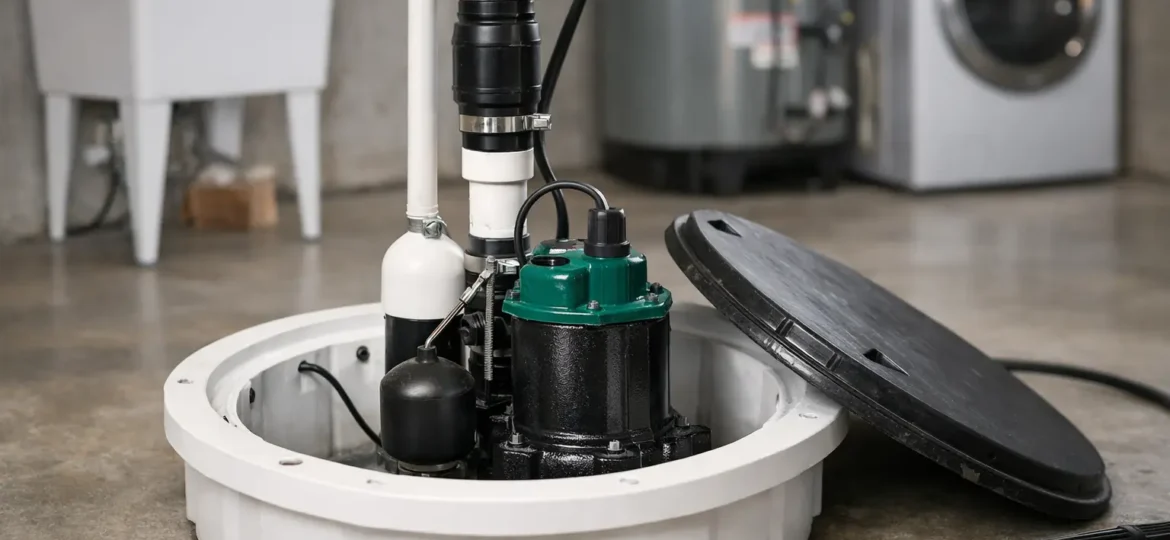
A basement bathroom can work perfectly for years, then suddenly leave you with a nasty surprise: a toilet that will not flush, a shower drain filling with wastewater, or sewage backing up around a floor drain. When plumbing fixtures sit below the level of the main sewer line, gravity cannot carry waste out on its own. That is where this guide to sewage ejector pumps comes in.
A sewage ejector pump is built to move wastewater uphill from a lower-level bathroom, laundry room, or utility area to the building’s main sewer or septic system. It is not a luxury appliance and it is not something to ignore when it starts acting up. A failed ejector pump can shut down a bathroom fast and create a sewage cleanup problem if the basin overflows.
What a Sewage Ejector Pump Does
A sewage ejector pump sits inside a sealed basin, often below the floor of a basement or lower-level bathroom. Wastewater from the toilet, sink, shower, and other fixtures drains into that basin. As the water level rises, a float switch turns the pump on. The pump pushes the wastewater through a discharge pipe until it reaches the main sewer line or septic line at a higher elevation.
Once the basin empties to a safe level, the float shuts the pump off. A check valve on the discharge line helps keep wastewater from running backward into the pit after the pump stops.
The basic idea is straightforward, but the system has to be sized, vented, sealed, and installed correctly. A weak pump, bad float switch, blocked discharge line, or failed check valve can all cause trouble. So can flushing items that do not belong in the system.
Sewage Ejector Pump vs. Grinder Pump vs. Sump Pump
These pumps get lumped together, but they serve different jobs.
A standard sewage ejector pump is commonly used for a basement bathroom where the pump has a reasonably clear path to move solids and wastewater into a sewer or septic line. It can handle normal toilet waste and toilet paper when properly sized.
A grinder pump cuts solids into a slurry before pumping. It is often used when wastewater has to travel a long distance, move through a smaller pressure line, or climb a substantial elevation. Grinder pumps are more specialized and are not automatically better for every property. They can be a smart choice when the layout demands one, but they also have components that need proper service.
A sump pump handles groundwater, not sewage. It protects a basement or crawl space from rainwater and rising groundwater. You should never connect bathroom waste to a sump pit or use a sump pump to move sewage. That is unsafe, unsanitary, and not what the equipment was built to handle.
Signs Your Ejector Pump Needs Attention
Most homeowners do not think about an ejector pump until it fails. The better move is to take warning signs seriously before wastewater reaches the floor.
A pump that runs constantly is a problem. It may have a stuck float, a failing switch, a check valve issue, or water flowing back into the basin. Constant running can burn out the motor and raise your power bill.
A pump that does not run when fixtures are used is even more urgent. If the basin fills and the pump stays silent, stop using the basement fixtures right away. Check whether the breaker has tripped, but do not keep flushing or running water to “test” the system. More water can turn a repair into a sewage overflow.
Loud rattling, grinding, humming, or repeated short cycling can also point to trouble. A humming pump that does not move water may have a jammed impeller, failed motor, or blocked discharge line. Gurgling drains and slow flushing may mean the basin or vent system is not moving air correctly.
Watch for these four red flags:
- Sewage odors around the basement bathroom or pump basin
- Water or wastewater appearing at a floor drain
- The pump alarm sounding, if your system has one
- A toilet, sink, or shower backing up after use
Sewage odors deserve quick attention even if everything still seems to drain. The basin lid may not be sealed, a vent may be blocked, or the pump may not be cycling correctly. Wastewater systems should not leave your home smelling like sewage.
What Causes Sewage Ejector Pump Failures?
Age is one factor, but plenty of pump failures start with what goes down the drain. “Flushable” wipes are one of the biggest problems. They do not break down like toilet paper and can wrap around a float or clog a pump intake. Paper towels, feminine products, diapers, cotton swabs, dental floss, grease, and small objects can cause the same kind of damage.
Electrical issues also matter. A tripped breaker, bad outlet, damaged power cord, or failed float switch can stop the pump from turning on. If a pump loses power during heavy use, the basin can fill quickly.
Discharge line problems are another common cause. The line may be clogged, frozen in an exposed area, improperly sloped, or blocked by a failed check valve. If the pump works but wastewater cannot move through the line, pressure builds and the system cannot clear the basin.
Then there is pump sizing. A pump has to match the amount of wastewater it handles, the vertical lift it must overcome, and the distance it must push waste. Installing the cheapest pump available can cost more later if it cannot keep up with the system’s demand.
Guide to Sewage Ejector Pump Maintenance
A sewage ejector pump does not need constant attention, but it should not be forgotten. If you have a basement bathroom or other fixtures connected to one, make pump checks part of routine home maintenance.
Start by listening. When the toilet flushes or the shower drains, you should hear the pump activate, run briefly, and shut off. Long run times, strange noises, or no sound at all are worth investigating.
Keep the area around the basin accessible. Do not bury the lid under storage boxes, flooring materials, or furniture. If a plumber needs to service the pump during an emergency, clear access saves time.
Use only toilet paper and human waste in the toilet. Keep grease, food scraps, wipes, and hygiene products out of drains connected to the basin. If a laundry drain enters the system, avoid excessive lint and do not pour paint, solvents, or harsh chemicals down the drain.
For homes with an alarm, test it according to the manufacturer’s instructions or have it checked during service. An alarm is useful because it warns you that the wastewater level is rising before the basin overflows.
Professional inspection is a good idea if the pump is older, serves a frequently used bathroom, or handles wastewater from a rental property or commercial space. A technician can inspect the basin, float operation, discharge piping, check valve, venting, electrical connections, and pump performance. That is a lot cheaper and cleaner than waiting for a full sewage backup.
When Repair Makes Sense and When Replacement Is Smarter
Not every ejector pump problem means you need a new pump. A damaged float switch, failed check valve, loose electrical connection, or clogged discharge line may be repairable. If the motor is sound and the pump is correctly sized, a targeted repair can make sense.
Replacement is often the better call when the pump is old, repeatedly failing, undersized, or badly damaged by debris. A pump that has been running dry, overheating, or struggling against a blocked line may not have much useful life left. Replacing it before it fails completely can protect finished basement space, flooring, drywall, and personal belongings.
Do not choose a replacement based on horsepower alone. The right pump depends on the total dynamic head, which includes the vertical lift and friction created by the length and layout of the discharge pipe. It also depends on whether the system needs a standard ejector pump or a grinder pump. This is where an experienced plumbing and septic professional can prevent an expensive mismatch.
What to Do During an Ejector Pump Emergency
If wastewater is backing up or the alarm is going off, stop using every fixture connected to that ejector basin. Do not flush the toilet, run the sink, take a shower, or start a washing machine if it drains into the same system.
Check the electrical panel for a tripped breaker, but do not repeatedly reset it if it trips again. That can point to a motor or wiring issue. Avoid opening a sewage basin unless you know exactly what you are doing. The basin contains contaminated wastewater and may release harmful sewer gases.
For homeowners and property managers in Chattanooga and nearby counties, Chatta-Rooter Plumbing can diagnose ejector pump failures, clear related drain issues, repair discharge problems, and replace worn-out equipment when needed. With sewage involved, fast action matters. The goal is to get the system moving again before a small pump issue becomes damage throughout the lower level.
A sewage ejector pump is easy to overlook when it is doing its job. Give it clear access, keep the wrong items out of the drain, and act quickly when it starts making noise, running too long, or failing to turn on. A prompt repair can keep a lower-level bathroom usable and keep sewage where it belongs – inside the pipes.