

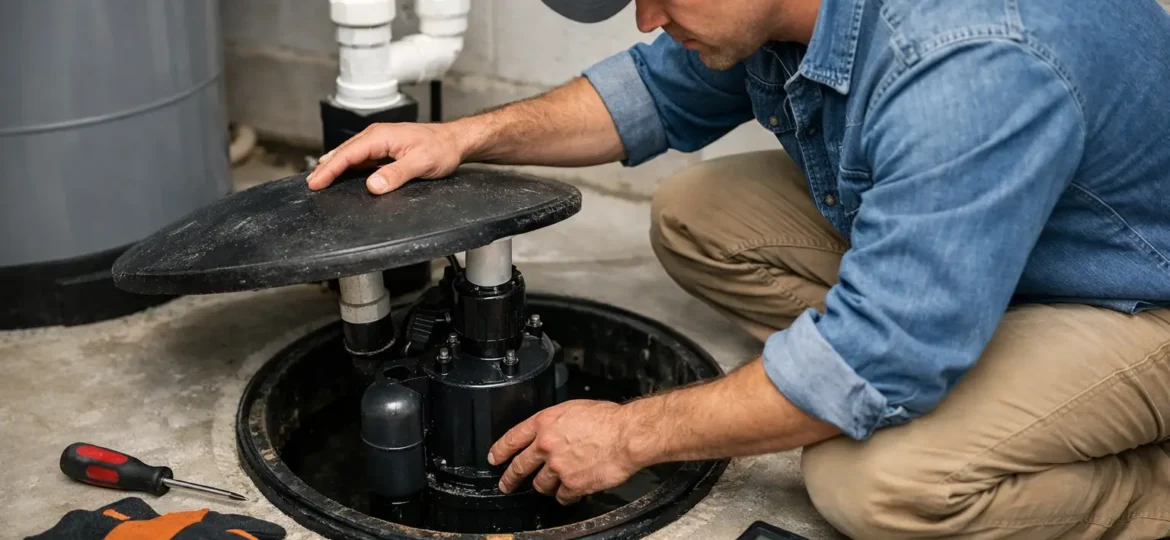
A sewage ejector pump can turn a normal basement bathroom into a problem fast when it stops running. If you need to reset ejector pump equipment after a power outage, alarm, or backup, do not start by repeatedly flipping switches. A reset may get the pump moving again, but it will not fix a jammed impeller, failed float, blocked discharge line, or overloaded electrical circuit.
The safest approach is simple: stop sending water into the system, check the easy outside causes, and reset the pump only when conditions are safe. If wastewater is rising, the alarm is sounding, or the pump will not restart, it is time to call a plumbing professional before sewage reaches the floor.
What an Ejector Pump Reset Actually Does
An ejector pump moves wastewater from a lower-level bathroom, laundry room, or commercial area up into the main sewer line or septic system. It sits in a sealed basin below the floor. When wastewater enters the basin, a float switch rises and tells the pump to turn on.
Many homeowners look for a reset button on the pump itself. Some systems have one, but many do not. In most cases, “resetting” an ejector pump means restoring power at the breaker, resetting a GFCI outlet, or allowing a thermal overload protector inside the motor to cool down and reset.
That distinction matters. If the pump tripped because it overheated once during a storm-related outage, a reset may be all it needs. If it overheated because wipes, rags, or debris jammed the pump, resetting it without correcting the cause can burn out the motor or cause a sewage backup.
Before You Reset an Ejector Pump
First, stop using every fixture that drains into that pump basin. That may include the basement toilet, shower, sink, washing machine, bar sink, or utility sink. Water keeps collecting in the basin even when the pump is off, and one more flush can be the one that sends sewage over the edge.
Keep people and pets away from any wastewater. Sewage can carry bacteria and create a serious cleanup problem. Do not open a sealed ejector pit lid to inspect the pump unless you are trained and equipped for the job. Ejector basins can contain harmful sewer gases, and the pump wiring is located in a wet environment.
If there is standing water around the outlet, control panel, cord, or basin lid, do not touch electrical components. Shut off power at the breaker only if you can do so safely from a dry location. Electrical shock is not a risk worth taking to save a service call.
How to Reset an Ejector Pump Safely
Start with the electrical supply. Go to your home or building electrical panel and look for a tripped breaker labeled sewage pump, ejector pump, basement bath, or something similar. A breaker that has tripped may sit between the ON and OFF positions. Push it firmly all the way to OFF, then back to ON once.
Next, check for a GFCI outlet. Some ejector pumps plug into a dedicated outlet near the basin, utility room, or mechanical room. If the outlet has TEST and RESET buttons, press RESET once. A tripped GFCI can cut power to the pump even when the breaker appears normal.
If the pump has a visible control panel or high-water alarm, check whether it has a reset function. Follow the manufacturer instructions on the panel. Do not hold a reset button down, bypass the alarm, or jumper wiring to force the pump to run. Those shortcuts can damage the equipment and remove the warning that tells you the basin is filling.
After restoring power, wait and listen. A working ejector pump should start when the basin level reaches the float switch, run long enough to discharge wastewater, then shut off. You may hear a brief humming sound followed by water movement through the discharge line.
If the pump begins running normally and the alarm stops, use the connected fixtures lightly for the next day. Pay attention to whether the pump cycles normally. A reset that works once does not always mean the problem is gone.
Signs the Pump Should Not Be Reset Again
One reset attempt is reasonable when a breaker or GFCI has clearly tripped after a power interruption. Repeated resets are a warning sign. If the breaker trips again, leave it off. A repeated trip can point to a failing motor, damaged cord, water intrusion, short circuit, or overloaded circuit.
A humming pump that does not move water is another reason to stop. The motor may be seized, the impeller may be jammed, or the discharge line may be blocked. Letting a seized motor hum can overheat it quickly.
You also need professional help if the alarm continues, the basin level stays high, sewage backs up into fixtures, or the pump runs continuously. A pump that never shuts off may have a stuck float switch, broken check valve, leaking discharge line, or a pump that cannot overcome a blockage.
Watch for these trouble signs:
- A sewage odor near the ejector pit or basement bathroom
- Gurgling drains, slow fixtures, or water coming up in a shower or floor drain
- A breaker that trips immediately after being reset
- Loud grinding, rattling, or banging from the pump basin
- A pump that runs but does not lower the water level
These are repair symptoms, not reset symptoms.
Common Reasons an Ejector Pump Stops Working
Power loss is one of the most common causes. A storm, tripped breaker, unplugged cord, or failed GFCI can shut down the system without damaging the pump itself. This is the best-case scenario, and a careful reset may solve it.
Float switch trouble is also common. The float is what tells the pump when to start and stop. It can become tangled, coated with buildup, or fail electrically. A failed float may leave the pump off while the basin fills, or keep it running long after the basin is empty.
Clogs and pump jams create more serious problems. Ejector pumps are designed for wastewater and toilet paper, not flushable wipes, feminine products, paper towels, dental floss, grease, or small objects. Products labeled “flushable” still cause trouble in real plumbing systems. If an item reaches the impeller, the pump can jam or lose pumping power.
The discharge pipe can also be the problem. Ejector pumps push waste uphill through a discharge line fitted with a check valve. If the line is blocked, frozen, broken, or restricted, wastewater cannot leave the basin. If the check valve fails, waste can drain backward into the pit and make the pump cycle more often than it should.
Finally, pumps wear out. Most ejector pumps do not fail on a convenient schedule. Their life depends on pump quality, household use, what goes into the drains, and whether the system has been maintained. A pump that is frequently tripping, noisy, or struggling to clear the basin may be near the end of its service life.
When a Chattanooga Plumbing Pro Should Handle It
An ejector pump failure is an urgent plumbing issue when it serves an active bathroom, laundry area, rental property, restaurant, office, or other occupied space. The longer wastewater cannot leave the basin, the greater the chance of a backup and contamination.
Chatta-Rooter Plumbing can diagnose the full system, not just reset a breaker. That includes checking pump operation, float switches, alarms, discharge piping, check valves, electrical supply, and the connected sewer or septic line. Sometimes the pump is the problem. Other times, the pump is doing its job but is pushing against a blocked line or a septic issue downstream.
A professional inspection is especially smart if the system has failed more than once. Replacing a pump without identifying a blockage, bad check valve, or electrical problem can leave you paying for the same repair twice.
Prevent the Next Ejector Pump Emergency
Treat every drain connected to the ejector basin with care. Flush only toilet paper and human waste. Keep wipes, grease, food scraps, hygiene products, and heavy paper products out of the system. Even one bad flush can create a costly service call.
It also helps to know where the pump breaker and GFCI outlet are before an emergency. If your system has an alarm, test it according to the manufacturer schedule so you know it will warn you before wastewater reaches the floor. For homes and businesses that depend on a basement bathroom, ask about routine pump inspections and battery backup options.
If a reset restores operation, stay alert. If it does not, stop using the connected fixtures and get the cause checked before a small pump issue becomes a sewage cleanup job.