

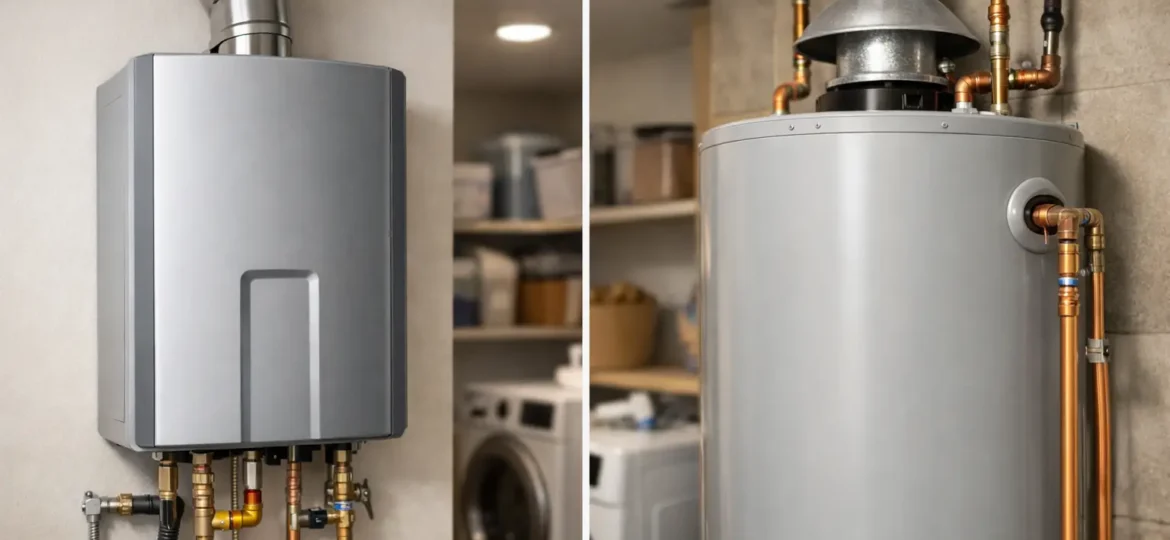
A water heater usually gets attention at the worst possible time: when the shower goes cold, water appears around the tank, or a utility bill starts climbing. When it is time to replace one, the tankless vs standard water heaters decision comes down to more than efficiency claims. Your household size, fuel supply, plumbing layout, budget, and hot-water habits all matter.
A tankless unit can be a smart long-term upgrade. A standard storage-tank heater can be the faster, less expensive answer when a replacement cannot wait. The right choice is the one that delivers dependable hot water without creating an installation problem or a surprise bill later.
Tankless vs Standard Water Heaters: The Main Difference
A standard water heater stores a set amount of heated water, commonly 40, 50, or 75 gallons. When someone opens a hot-water faucet, the unit sends stored hot water through the plumbing while cold water enters the tank to be heated. Once the tank supply is used, you wait for it to recover.
A tankless water heater heats water on demand. It senses flow when a fixture is turned on, fires its burner or heating elements, and heats water as it moves through the unit. There is no tank full of water standing by all day.
That difference affects nearly every part of ownership. Storage-tank units are usually simpler and cheaper to install. Tankless units are compact, can provide hot water for a long time, and avoid standby heat loss. But they have limits based on flow rate, incoming water temperature, and the number of fixtures running at once.
When a Standard Tank Water Heater Is the Better Call
For many homes, a standard unit remains the practical choice. If you are replacing a failed tank quickly and your existing connections are in good shape, a similar tank heater often keeps labor, materials, and downtime under control. This can be especially helpful for landlords, property managers, and homeowners facing an emergency replacement.
A storage tank also handles short periods of heavy demand well. A properly sized 50- or 75-gallon unit has a reserve ready for back-to-back showers, laundry, and dishwashing. It still has a recovery period, but it does not depend on real-time heating capacity alone.
Standard units are available in gas, electric, hybrid heat pump, and other configurations. Gas tank heaters generally recover faster than standard electric tanks. Electric units can be a straightforward option where natural gas or propane is not available, although operating costs and recovery speed should be part of the conversation.
The trade-off is lifespan and standby energy use. A tank is constantly working to maintain temperature, even when nobody is using hot water. It also has a large water-filled vessel that will eventually corrode. If a tank leaks, it can damage floors, walls, and nearby belongings quickly.
Standard tank heaters make sense when:
You need a fast replacement with a controlled upfront cost, have predictable household demand, or do not want to modify gas lines, venting, electrical service, or plumbing. They are not outdated by default. They are proven equipment that works well when sized and installed correctly.
Where Tankless Water Heaters Earn Their Keep
The biggest selling point of a tankless unit is continuous hot water. That does not mean unlimited hot water under every condition, but it does mean the system can keep heating as long as it stays within its rated capacity. For a household where showers stretch long or several people use hot water throughout the day, that can be a real improvement.
Tankless systems also take up far less room than a large storage tank. They are often wall-mounted, freeing up closet, garage, utility-room, or mechanical-room space. That is useful in smaller homes, remodels, and commercial settings where every square foot matters.
They can reduce energy waste because they do not maintain a tank of hot water around the clock. The savings vary. A family that uses a lot of hot water may see a more meaningful reduction than a household with light use. Fuel cost, system efficiency, water temperature settings, and maintenance all affect the result.
A well-maintained tankless heater can often last longer than a conventional tank. That longer service life can help justify the higher initial price, particularly for owners planning to stay in the property for years.
The capacity question homeowners should ask
Tankless equipment is rated by gallons per minute, not just by tank size. A unit must be able to raise the incoming water temperature while supplying the fixtures you want to run. In colder weather, incoming water is colder, so the heater must work harder to reach shower temperature.
For example, one shower may use around 2 gallons per minute, while a washing machine or another shower adds more demand. A smaller tankless unit may perform well for one shower but struggle if someone starts the dishwasher and another person turns on a second shower. Proper sizing is not optional. It is the difference between a good upgrade and a frustrating one.
Installation Cost Is More Than the Price of the Heater
The equipment price is only one part of the job. A standard replacement may be fairly direct when the new unit uses the same fuel source, location, venting, and water connections as the old unit. Even then, the installation needs to meet current safety requirements, including drain-pan, pressure-relief, venting, and expansion-tank considerations where applicable.
A tankless conversion can require more work. Gas-fired units often need a larger gas line because the burner has a higher input demand than a tank heater. Venting may need to be changed, especially if the existing vent is not approved for the new unit. The installer may also need to add electrical power for controls, condensate drainage for high-efficiency models, or upgraded water piping.
Electric tankless heaters have their own requirements. They can draw significant electrical power and may require multiple dedicated circuits or a service-panel upgrade. In some homes, that makes electric tankless equipment a poor fit despite its smaller purchase price.
Get an in-person evaluation before deciding based on an online price. A good estimate accounts for the actual structure, gas capacity, vent route, electrical panel, fixture demand, and local code requirements. Cheap installs often get expensive when those details are ignored.
Maintenance Matters for Both Systems
Neither type is maintenance-free. Storage tanks should be inspected for leaks, corrosion, and failing temperature-and-pressure relief components. Sediment can settle in the bottom of the tank, particularly in areas with mineral-heavy water. Flushing can help preserve performance when done correctly.
Tankless units need periodic descaling to remove mineral buildup from the heat exchanger. Hard water can shorten service life and reduce flow if maintenance is skipped. A qualified plumber may recommend a water treatment solution or a maintenance schedule based on local water conditions and how heavily the system is used.
Do not wait for a complete failure if you notice rusty water, rumbling from a tank, fluctuating shower temperatures, a pilot or ignition problem, moisture around the unit, or a sudden drop in hot-water output. Those are warning signs worth checking before they become an after-hours emergency.
Choosing the Right Water Heater for Your Property
Start with your daily demand. Count bathrooms, consider how many people live or work in the building, and think about whether showers, laundry, dishwashing, and cleaning often happen at the same time. Then consider how long you expect to own the property and what the existing utility setup can support.
Choose a standard tank when you want lower upfront cost, straightforward replacement, and reliable stored capacity. Choose tankless when you have the budget for a properly sized installation, want to save space, and value longer-term efficiency and continuous hot water within the unit’s flow limits.
For Chattanooga-area homes and businesses, the answer is rarely one-size-fits-all. Chatta-Rooter Plumbing can inspect the existing system, explain the real installation requirements, and provide flat-rate upfront pricing before work begins. A water heater should fit your property and your demand, not just the label on the box.
The best time to make this decision is before the old heater fails. A quick professional assessment now gives you room to choose the system that will keep hot water moving when your household needs it most.