

A slow kitchen sink is annoying. A toilet that bubbles when the washing machine drains is a warning. And sewage coming up through a shower or floor drain is an emergency. When you need drain cleaning Bradley County TN property owners can count on, the goal is not to force water through for one more day. The job is to find what is blocking the line, clear it completely, and make sure a bigger sewer or septic issue is not building behind it.
A drain problem rarely gets better on its own. Grease hardens, roots grow, wipes collect, and soap residue keeps narrowing the pipe. Acting early is usually faster, cleaner, and less expensive than dealing with a full backup later.
What Your Drain Is Trying to Tell You
Not every clog needs the same solution. A bathroom sink that drains slowly may have hair and soap buildup close to the stopper. A kitchen drain may be packed with grease, food scraps, and sludge farther down the line. A toilet that repeatedly clogs can point to a blockage in the branch line, a low-flow issue, or something lodged where it does not belong.
The location of the symptoms matters. If one fixture is slow, the blockage may be local to that drain. If several fixtures are slow, gurgling, or backing up at the same time, the trouble is more likely in the main sewer line or septic system. That is when guessing can cost you.
Watch for warning signs such as recurring clogs in the same fixture, water rising in a tub when the toilet flushes, foul odors near drains, wet ground around sewer lines, or a floor drain that backs up during heavy water use. Those are not normal plumbing quirks. They are signs that wastewater is not moving where it should.
Common Causes of Clogged Drains in Bradley County
Most drain blockages are built over time. The first slow drain may seem minor, but layers of buildup can reduce a pipe’s opening until normal household use triggers a backup.
In kitchens, grease is one of the biggest offenders. Warm grease looks harmless when it goes down the sink, but it cools inside the line and traps food particles. Coffee grounds, rice, pasta, eggshells, and fibrous vegetable scraps can add to the problem, even when a garbage disposal is installed.
Bathroom drains collect hair, soap scum, toothpaste residue, and grooming products. Toilets are designed for human waste and toilet paper only. Flushable wipes, paper towels, feminine products, cotton swabs, dental floss, and children’s toys do not break down like toilet paper. They can catch in bends, snag other debris, and create a hard blockage.
Older pipes bring another set of problems. Cast iron can corrode from the inside. Clay and older sewer lines can shift or crack. Tree roots naturally seek moisture and can work into damaged joints or small openings. Once roots enter a line, they catch paper and waste until the line begins to fail.
For homes on septic systems, a backup may not be a simple drain clog at all. A full septic tank, damaged baffle, blocked effluent line, failed pump, or saturated drain field can all cause slow drains and sewage backups. Clearing an indoor line without checking the septic side may only buy a little time.
Why Store-Bought Drain Cleaner Is Usually the Wrong Fix
A plunger is useful for a minor toilet or sink stoppage. Removing hair from a bathroom stopper can also solve a simple problem. Beyond that, many do-it-yourself attempts create more work without reaching the actual blockage.
Chemical drain cleaners are a common example. Strong chemicals can sit in a clogged pipe, generate heat, damage aging plumbing, and create a safety hazard for whoever opens the drain next. They may burn a narrow channel through soft buildup, but they do not remove roots, wipe clogs, heavy grease, or collapsed pipe. If the drain slows again a week later, the blockage was never properly cleared.
A homeowner-grade snake can help in the right hands, but it can also scratch fixtures, get stuck, or punch through weak pipe. The trade-off is simple: a small, visible clog may be worth a careful DIY attempt. Repeated clogs, multiple affected drains, foul odors, or any sewage backup call for professional equipment and diagnosis.
Professional Drain Cleaning Gets to the Actual Problem
A proper drain cleaning service starts with the symptoms, the affected fixtures, and the layout of the property. The technician then selects the right method for the pipe and the blockage instead of treating every drain the same way.
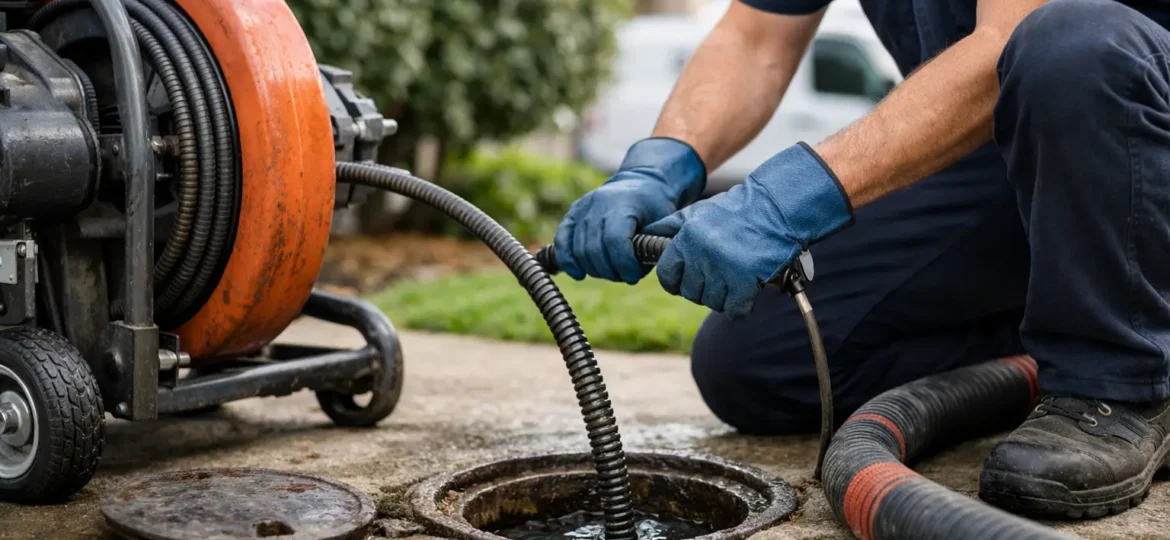
Cable machines can cut through many tough clogs and restore flow in branch lines and main lines. For grease, scale, sludge, and widespread buildup, hydro jetting can be the better choice. Hydro jetting uses controlled high-pressure water to scour the inside of a line, not just poke a hole through the obstruction. It can be extremely effective, but it is not a one-size-fits-all answer. Fragile, damaged, or badly deteriorated pipes may need camera inspection first to avoid making an existing failure worse.
A sewer camera inspection can show whether the problem is roots, a broken pipe, a belly holding waste, severe scale, or a foreign object. That matters because a drain that keeps clogging is often giving you a diagnosis: the line may need repair, not another temporary cleaning.
For septic properties, the inspection may also need to include the tank level, inlet and outlet components, pump operation, and drain field conditions. When wastewater has nowhere to go after leaving the house, cleaning a sink line will not solve the root cause.
When a Drain Issue Becomes an Emergency
Some clogs can wait for a scheduled visit. Others should be handled right away. If sewage is backing up into a shower, tub, toilet, or floor drain, stop running water in the building. Do not keep flushing or try to wash the problem away. Every gallon sent down another drain can add to the mess.
Commercial properties should take early action too. A restaurant grease blockage, a rental-property main line backup, or a restroom outage can interrupt business and create a sanitation issue quickly. Fast service matters, but so does getting a clear explanation of what failed and what it will take to correct it.
Chatta-Rooter Plumbing provides drain, sewer, and septic service for the hard jobs that need more than a quick guess. With upfront flat-rate pricing and experienced field technicians, customers can make a decision based on the condition of the system, not pressure or surprises.
How to Help Keep Drains Clear After Service
Drain cleaning works best when the habits that caused the buildup change afterward. Keep grease out of kitchen drains by letting it cool in a container and throwing it away. Use sink strainers to catch food particles and hair. Run plenty of water after using a disposal, but do not treat it like a trash can.
In bathrooms, clean stoppers regularly and keep wipes, floss, cotton products, and paper towels out of the toilet. If roots or heavy scale were found in a sewer line, ask about a maintenance plan or the condition of the pipe. Regular cleaning can help manage some lines, but a cracked or collapsed sewer will eventually require repair.
For septic systems, stay on schedule with pumping and do not ignore changes in how the drains behave. Protecting the system is cheaper than cleaning up a backup inside the home.
A drain should carry wastewater away quietly and without hesitation. If yours is gurgling, slowing down, smelling bad, or backing up, get it checked before a small restriction turns into a wet, expensive problem.