

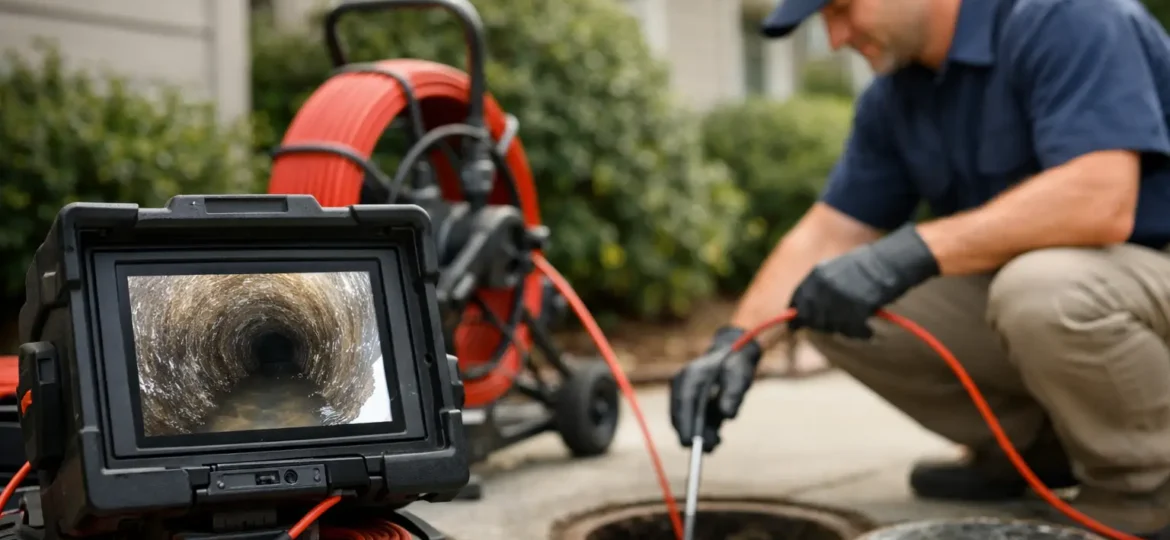
A drain backup does not always start with a simple clog. It may be roots in the sewer line, a cracked pipe, a sagging section of drain, grease buildup, or a problem near the septic tank. The benefits of camera drain inspection come down to one thing: getting a clear look at what is actually happening before anyone recommends a repair.
For homeowners, landlords, and business owners, that can mean less guesswork, less unnecessary digging, and a faster path to the right fix. A professional sends a small waterproof camera through the drain line and watches a live video feed from above ground. The camera shows the condition of the pipe, the type of blockage, and often the location of the problem.
Benefits of Camera Drain Inspection When Drains Back Up
A toilet that gurgles, a tub that drains slowly, or sewage backing up into a floor drain can all point to a main line issue. But symptoms alone do not identify the cause. Running a cable may restore flow for the moment, yet it cannot tell you whether roots are growing through a joint or whether part of the line has collapsed.
A camera inspection gives the technician evidence. Instead of treating every backup like the same clog, they can see whether the line needs drain cleaning, hydro jetting, spot repair, replacement, or further septic evaluation. That matters because the wrong repair can waste money and leave the real issue waiting to come back.
For example, a line packed with grease may respond well to thorough cleaning. A line with a broken fitting or heavy root intrusion may need a more permanent repair. The camera separates those two situations before the job gets bigger.
Faster diagnosis during urgent calls
When wastewater is on the floor or several fixtures are backing up at once, time matters. A camera inspection can reduce the trial-and-error work that slows down a diagnosis. The technician can follow the pipe, identify the obstruction, and determine whether the issue is inside the building drain, in the yard line, or closer to the septic tank or municipal connection.
That faster diagnosis is especially useful for commercial properties. A restaurant, rental property, office, or retail space may need to make a quick decision about cleanup, operations, and repairs. Clear information helps the owner act with confidence instead of paying for repeated temporary service calls.
Less Digging and Fewer Surprise Repairs
One of the biggest benefits of camera drain inspection is avoiding blind excavation. Years ago, finding a buried sewer problem often meant digging based on symptoms and best guesses. That can damage landscaping, driveways, sidewalks, and parking areas while still missing the exact failure point.
With a camera, a qualified technician can usually identify where the trouble begins and how far it is from a known access point. A locating device can help mark the camera head from the surface. This makes it easier to plan a focused repair rather than opening a long stretch of yard.
Less digging does not mean no digging. If a pipe is crushed, separated, badly bellied, or beyond its service life, excavation may still be the right answer. The difference is that the repair is based on what the line shows, not on a costly guess.
This also helps property owners compare repair options honestly. If damage is limited to one area, a spot repair may make sense. If the camera shows recurring failures throughout an old line, patching one section may only delay a larger replacement. A good inspection gives you the information needed to weigh immediate cost against the risk of future backups.
Finding Problems That Basic Drain Cleaning Cannot See
Drain cleaning is an important service, but it has limits. A cable can punch through many blockages and restore drainage. It cannot show pipe material, joint condition, cracks, low spots, or how much buildup remains on the inside wall of the pipe.
A camera can reveal several common problems that cause repeat clogs:
- Tree roots entering old pipe joints or cracks
- Grease, sludge, scale, and heavy buildup narrowing the line
- Broken, offset, or separated pipe sections
- Bellies where pipe has settled and holds standing water
- Foreign objects, construction debris, or damaged pipe connections
Knowing what is in the line helps determine whether cabling is enough or whether hydro jetting is a better cleaning option. It also helps prevent the common frustration of paying to clear a drain, only to have the same backup return a few weeks later.
Better Decisions for Septic and Sewer Lines
In Chattanooga-area homes, drain problems can involve either a private septic system or a sewer connection. The symptoms may look similar from inside the house, but the repair path can be very different. A camera inspection helps narrow down where the problem is located before the wrong system component gets blamed.
If a line between the home and septic tank is blocked or damaged, pumping the tank alone will not repair that pipe. If the septic tank is full, the outlet is restricted, or the drain field is failing, cleaning the house line may not solve the overall problem either. A complete diagnosis may include checking tank levels, pumps, filters, baffles, and drain field performance along with the drain line.
For sewer-connected properties, the inspection can show whether the building sewer has root intrusion, deterioration, or a blockage before the line reaches the public connection. Property owners need to know where their responsibility ends and what repair belongs on their side of the system. Video evidence makes that conversation much clearer.
Useful before buying, remodeling, or adding fixtures
Camera drain inspection is not only for emergencies. It can be a smart step before buying an older home, especially one with mature trees, original plumbing, or a history of slow drains. A clean-looking bathroom does not tell you much about the buried sewer line outside.
It is also worth considering before a major remodel or when adding bathrooms, laundry equipment, commercial kitchen fixtures, or other water-using equipment. More use puts more demand on an old drain system. Finding a weak or damaged line before construction starts can prevent expensive rework after walls, floors, or landscaping are finished.
Landlords can benefit as well. When tenants report repeated clogs, a camera inspection helps separate misuse from a structural pipe issue. That creates a better repair record and supports a decision to clean, repair, or replace the line.
What a Camera Inspection Cannot Tell You by Itself
Video is a powerful diagnostic tool, but it is not magic. The camera needs enough open pipe to travel through, so a severe blockage may need to be cleared first. Heavy standing water, thick sludge, or a completely collapsed pipe can limit what the technician can see beyond the obstruction.
A camera also does not replace every other type of test. It may not confirm a small leak that only appears under certain conditions, and septic system performance may require a broader inspection of the tank, pump components, and drain field. The right contractor will explain what the video confirms, what it suggests, and what additional work may be needed.
That honesty matters. A good diagnosis should not turn every drain issue into a full replacement recommendation. Sometimes the answer is straightforward cleaning. Sometimes the footage shows a repair that should be handled now. The goal is to make the decision with facts on the table.
When to Schedule a Drain Camera Inspection
Consider scheduling an inspection when you have recurring clogs, multiple slow drains, gurgling fixtures, sewage odors, or backups in a tub, shower, floor drain, or toilet. It is also a practical step after repeated root cutting, before a property purchase, or when a drain line has been damaged by settling, construction, or heavy equipment.
If sewage is backing up or your septic system is overflowing, do not keep running water and hope the problem clears. Limit water use, keep people away from contaminated areas, and call for professional service. Chatta-Rooter Plumbing can inspect the line, explain what the camera finds, and provide upfront options for the repair that fits the actual condition of your system.
The best time to find a failing drain line is before it turns into a cleanup job. A clear view inside the pipe can save a property owner from another backup, another guess, and another unnecessary expense.