

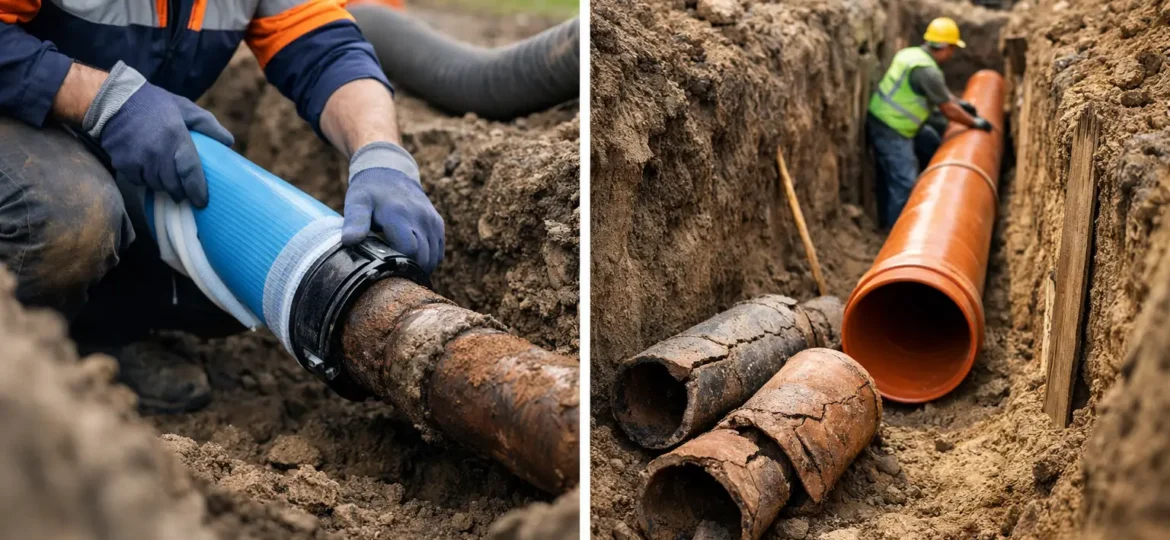
A sewer line problem rarely gives you a convenient warning. One day the drains are slow, the yard is soggy, or sewage starts backing up where it should not. When that happens, the big question is usually sewer repair vs sewer replacement – and the right answer depends on what is actually happening underground, not just what costs less today.
Homeowners and property managers usually want the same thing: fix the problem fast, pay a fair price, and avoid doing the same job twice. That is exactly why a proper inspection matters. Some sewer lines can be repaired cleanly and effectively. Others are too far gone, and patching them only buys a little time before the next failure.
Sewer repair vs sewer replacement: what is the difference?
Sewer repair means fixing a specific section or issue in the line. That could be a crack, a separated joint, a small collapse, a root intrusion point, or a blockage that damaged one part of the pipe. The goal is to keep as much of the existing sewer line as possible while correcting the actual failure.
Sewer replacement means removing and installing all or a substantial portion of the sewer line because the pipe is no longer reliable. This is usually the better route when the damage is widespread, the pipe material has reached the end of its life, or there are repeated failures in multiple sections.
That distinction sounds simple, but in the field it can get more complicated. A line might have one bad spot and still be a good candidate for repair. Another line might have one obvious break, but a camera inspection shows heavy root intrusion, belly sections, scale buildup, and old pipe walls breaking down in other areas. In that case, repairing one spot may not solve the real problem.
When sewer repair makes more sense
Repair is often the better option when the damage is isolated and the rest of the line is still in decent shape. If a camera inspection finds one crack, one offset joint, or one section invaded by roots, a targeted repair can restore function without the cost of replacing the whole run.
This is especially true on newer systems or lines made from materials that still have useful life left. If the pipe structure is sound overall, a repair can be the practical move. You spend less up front, the work area is smaller, and you are not tearing out a full line that still has years left in it.
Repair also makes sense when the issue is accessibility. Sometimes one damaged section is easy to reach and fix, while replacing the full line would mean more excavation through driveways, landscaping, parking areas, or slabs. If the system can be reliably restored with a focused repair, that can save a lot of disruption.
But repair is only a good value when it truly fixes the problem. If the line has a history of backups, repeated drain cleaning, or multiple trouble spots, a cheaper repair today can turn into a more expensive replacement later.
When sewer replacement is the smarter call
Replacement is usually the right move when the line has broad structural failure. That includes old clay pipes with repeated root intrusion, Orangeburg pipe that is deteriorating, cast iron that is badly corroded, or any line with multiple collapsed or sagging sections.
Age matters, but condition matters more. A sewer line can be old and still repairable. It can also be younger and already failing because of poor installation, shifting soil, heavy root pressure, or chronic misuse. What pushes a line into replacement territory is not just one defect. It is the pattern.
If you have had backup after backup, drain cleaning after drain cleaning, and the same sewer problem keeps coming back, replacement often saves money over time. It is a tougher decision up front because the price is higher, but it gives you a reset. You are not paying to chase one weak point after another.
For commercial properties and rental properties, replacement can also make more sense because downtime is expensive. If tenants, employees, or customers depend on that line every day, a long-term fix is often worth more than the short-term savings of patchwork repairs.
What a proper inspection should tell you
Before anyone gives a real answer on sewer repair vs sewer replacement, the line needs to be inspected. A sewer camera inspection helps show where the problem is, how severe it is, and whether it is isolated or spread across the system.
A solid inspection should answer a few key questions. Is the issue a clog, a break, or both? Is the pipe structurally sound beyond the damaged area? Are tree roots getting in through one opening or through multiple joints? Is there a belly in the line holding waste and paper? Has the pipe shifted, separated, or collapsed?
Without those answers, any recommendation is partly guesswork. And guessing underground gets expensive fast.
This is also where honesty matters. Some companies push full replacement too quickly. Others try to sell a repair when the line is clearly failing in multiple places. A trustworthy contractor should be able to show you what is going on and explain why one route makes more sense than the other.
Cost matters, but so does repeat failure
Most people start with price, and that is understandable. In many cases, sewer repair costs less than sewer replacement. But lower cost does not always mean better value.
If a repair solves the issue for years, that is money well spent. If it only buys six months before another section fails, it is not really cheaper. It just spreads the bill out while adding more stress, more digging, and more service calls.
Replacement usually costs more because it involves more labor, more material, and sometimes more restoration work afterward. But if the line is at the end of its life, replacement can be the more cost-effective decision over the long run.
The right question is not just, what is the cheapest fix today? It is, what gives me the best outcome without paying twice for the same problem?
Signs your sewer line may be beyond a simple repair
Some warning signs point toward replacement, or at least a serious conversation about it. Frequent backups in multiple drains are one. So are repeated root problems, sewage odors in the yard, wet spots over the sewer route, or sinkholes forming where the line runs.
Another red flag is a line that has already been repaired several times. Every case is different, but if the same sewer line keeps failing in new spots, that usually means the pipe system itself is wearing out.
Pipe material matters too. Older materials can become brittle, soft, scaled over, or misshapen with age. Once that starts happening across the run, spot repairs become less effective because the rest of the line is still weak.
Why fast action matters
A damaged sewer line is not something to monitor for a few months and hope for the best. Small issues can turn into backups, property damage, foul odors, soil erosion, and contamination problems. In some cases, delay also limits your options. A line that might have been repairable can become a bigger replacement job after a collapse.
That is why it pays to get the line checked early, especially if you notice recurring clogs, gurgling toilets, or slow drains affecting more than one fixture. Sewer problems tend to get worse, not cheaper.
For homeowners in the Chattanooga area, that is where a local crew with real sewer and septic experience makes a difference. Chatta-Rooter Plumbing handles the tough jobs the right way – with inspection first, straight answers, and a recommendation based on what the line actually needs.
The best choice depends on the pipe, not the sales pitch
There is no universal winner in sewer repair vs sewer replacement. A good repair on the right line can save you money and solve the issue cleanly. A full replacement on a failing line can save you from repeat backups, repeat excavation, and repeat frustration.
What matters most is getting an accurate diagnosis, weighing short-term cost against long-term reliability, and making a decision based on condition instead of guesswork. When the line under your property starts failing, the smartest move is not the fastest sales pitch. It is the fix that actually holds up when the job is done.