

A septic system rarely fails without giving you a warning. The problem is that many property owners write those warnings off as a minor clog, a rainy-week smell, or an old plumbing issue. If you are asking, what are signs of septic failure, act before wastewater reaches your floors, yard, or business.
A failing septic system can create expensive damage, unpleasant cleanup, and a real health concern. Catching the issue early may mean a repair, pumping, or drain field correction instead of a full system replacement. Here are the red flags Chattanooga-area homeowners, landlords, and commercial property owners should take seriously.
What Are Signs of Septic Failure?
1. Multiple drains are slow at the same time
One slow sink can be a local clog. A shower that drains slowly, a toilet that gurgles, and a kitchen sink that starts backing up are a different story. When several fixtures have trouble draining, wastewater may be unable to move through the septic tank or out into the drain field.
Pay close attention if the issue gets worse after laundry day, a long shower, or a busy weekend at a rental or commercial property. Those higher-water-use periods can expose a tank that is overfull or a drain field that is no longer accepting wastewater properly.
2. Toilets gurgle or water levels change
A toilet should flush cleanly and return to its normal bowl level. Gurgling sounds, bubbling water, or a bowl level that rises and falls can mean air is trapped in the plumbing because wastewater flow is restricted.
Do not keep flushing to test it. That can turn a warning sign into an overflow. If toilets are gurgling along with slow drains elsewhere in the building, schedule a septic inspection instead of treating it like a basic bathroom clog.
3. Sewage backs up into tubs, showers, or floor drains
This is one of the clearest signs of septic failure and one that needs immediate attention. When wastewater has nowhere else to go, it often comes back through the lowest drains in the home or building. That may be a shower, bathtub, basement floor drain, or lower-level toilet.
Keep people and pets away from the affected area. Raw sewage can carry bacteria and other contaminants. Stop running water, avoid using toilets, washing machines, dishwashers, and sinks, then call for emergency septic service. Cleanup is only part of the job. The reason for the backup has to be diagnosed and corrected.
4. You smell sewage indoors or around the property
A sewage odor inside the house is never normal. It can come from a dry drain trap, a damaged vent, a plumbing problem, or a septic issue. But when that smell is paired with slow drains, gurgling fixtures, or backups, your septic system should be checked right away.
Odors outside matter too. A strong rotten-egg or sewage smell near the tank, drain field, or a low spot in the yard can mean wastewater is surfacing or the soil is no longer treating it correctly. Do not cover the smell with landscaping, air fresheners, or lime. Find the source.
5. The grass over the drain field is unusually green or thick
A drain field should blend in with the rest of the lawn. Grass that suddenly grows faster, looks darker, or stays greener over one area can be feeding on excess nutrients from wastewater near the surface.
That does not automatically mean the entire system has failed. Heavy rain, irrigation patterns, and soil conditions can affect grass color. Still, unusually lush strips or patches near the drain field deserve a professional look, especially if the ground is soft or smells like sewage.
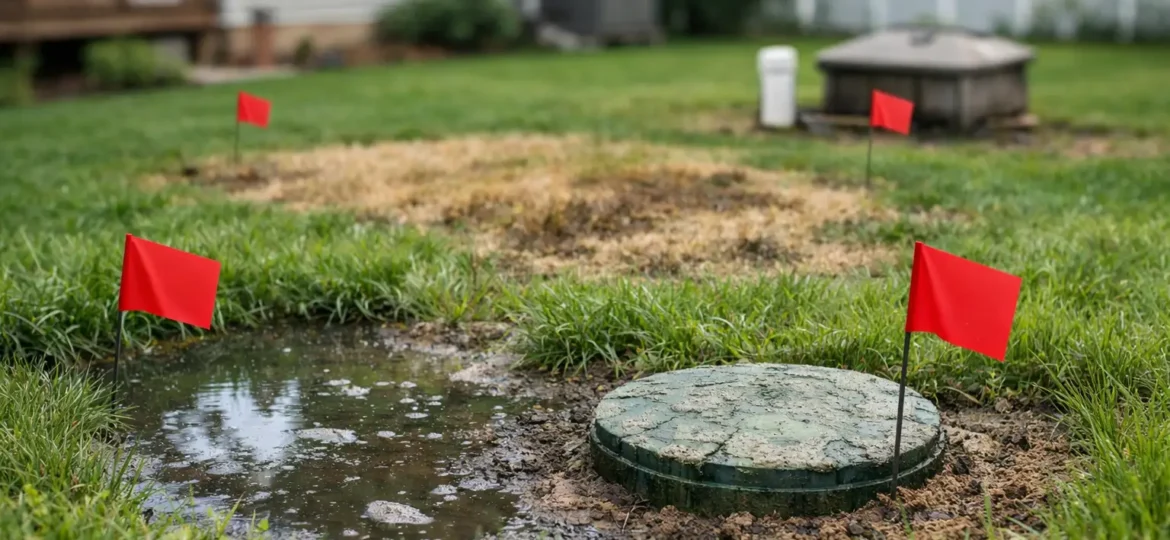
6. Wet, muddy, or spongy ground near the septic area
Standing water or soggy ground around the tank or drain field is a serious warning. A healthy septic system sends treated wastewater below the surface. If water is pooling above ground, the drain field may be saturated, damaged, compacted, clogged, or overloaded.
Do not drive over that area, park equipment there, or let livestock use it. Weight can crush pipes and compact the soil that the drain field needs to work. Keep water use low until the system is inspected.
7. Septic alarms are going off
Homes and businesses with pumps, grinder pumps, or aerobic septic systems may have an alarm panel. An alarm typically means the water level is too high, the pump is not moving wastewater, or there is an electrical issue.
Do not silence the alarm and forget it. You may be able to reduce water use briefly, but the alarm is telling you the system needs service. A failed pump can lead to a backup quickly, particularly at properties with high daily water use.
8. The system needs pumping far more often than usual
Routine pumping is normal maintenance. Needing emergency pumping every few months is not. A full tank may be part of the problem, but it may not be the whole problem.
If the tank fills again quickly, there could be excessive water entering the system, a leaking toilet, a damaged baffle, a drain field issue, or a system that is undersized for the property. Pumping gives you breathing room. A proper inspection identifies why the system is struggling.
9. Water use suddenly causes trouble
A septic system that once handled normal household use but now reacts badly to one load of laundry or a few showers is under stress. You may notice drains slowing after the washing machine discharges or toilets acting up when guests are in town.
This can happen when a drain field is saturated from rain, but it can also point to a long-term failure. In parts of Hamilton, Bradley, Marion, Walker, Catoosa, and Dade counties, soil type, slope, groundwater, and system age can all affect how a drain field performs. The right repair depends on the actual cause, not a guess.
10. You see sewage or gray water on the surface
Visible wastewater in the yard is an emergency. Gray water from sinks and showers may look less alarming than toilet sewage, but it still should not be surfacing. It can contaminate the ground, attract insects, create foul odors, and put children, pets, employees, and customers at risk.
Block access to the area and call a septic professional. Do not try to drain, bury, or spray down the problem yourself. Surface discharge is a symptom, not the repair.
Why Septic Systems Fail
Most septic failures build over time. Tanks that are not pumped on schedule allow solids to move toward the outlet and drain field. Too much water from leaking fixtures, oversized laundry loads, or constant high use can overwhelm the system. Flushing wipes, grease, hygiene products, paper towels, and harsh chemicals can also cause damage or interfere with treatment.
The drain field itself can fail because of age, poor soil conditions, root intrusion, damaged lines, vehicle traffic, or flooding. A cracked pipe or failed pump can produce similar symptoms. That is why a qualified septic diagnosis matters. The fix may be straightforward, or it may require drain field repair, line repair, pump service, or a larger system correction.
What to Do When You Notice Septic Failure Signs
First, reduce water use immediately. Stop laundry, limit flushing, skip the dishwasher, and take short showers only if you must. This reduces the chance of forcing more wastewater back into the building or onto the property.
Next, protect the septic area. Keep vehicles off the tank and drain field, and do not dig around the system. If sewage has backed up indoors, keep the area closed off until it can be cleaned and the source of the backup is addressed.
Then get a professional inspection. A septic technician can check the tank level, baffles, filters, pump operation, lines, and drain field conditions. Be cautious of anyone who recommends a major replacement without examining the system. Honest service starts with finding the real problem and explaining the repair options clearly.
Do Not Wait for a Full Backup
A septic system does hard work every day without much attention. When it starts making noise, smelling bad, draining slowly, or turning part of the yard wet and green, it is asking for service. Acting early protects your property and often gives you more affordable repair options.
If you see these warning signs, Chatta-Rooter Plumbing can provide fast septic diagnosis, pumping, repair, and emergency response. Get the issue checked before the next flush becomes the mess you did not need.