

Drain Fields: Signs of Failure and What to Do


Drain Fields: Signs of Failure and What to Do

A septic tank can be pumped and working properly while the yard above it is telling a different story. Drain fields handle the final stage of wastewater treatment, and when they stop absorbing water the problem can quickly turn into soggy ground, slow drains, sewage odors, or a backup inside the home.

For homeowners and property managers, a failing drain field is not a wait-and-see issue. The longer wastewater sits where it should not, the more likely you are to face property damage, health concerns, and a larger repair bill. The good news is that early diagnosis can sometimes save part of the system and prevent a full replacement.

What a Drain Field Does

Your septic system has two main jobs. The septic tank separates solids, grease, and scum from wastewater. The drain field, also called a leach field, disperses the clarified liquid into the soil through a network of perforated pipes, chambers, or other approved dispersal materials.

The soil does more than soak up water. It filters and treats wastewater before it reaches groundwater. That is why drain fields need the right soil conditions, enough open area, and protection from heavy traffic and excess water.

When the field is working, you usually do not think about it at all. When it is overloaded, compacted, clogged, or damaged, the system loses its ability to move wastewater away from the tank. That is when warning signs start showing up around the property.

Signs Your Drain Field May Be Failing

A single slow drain can be a plumbing clog. Several slow drains, a gurgling toilet, and a wet area near the septic system point more strongly toward a septic issue. Pay attention when the same symptoms keep returning after basic drain cleaning.

Common warning signs include:

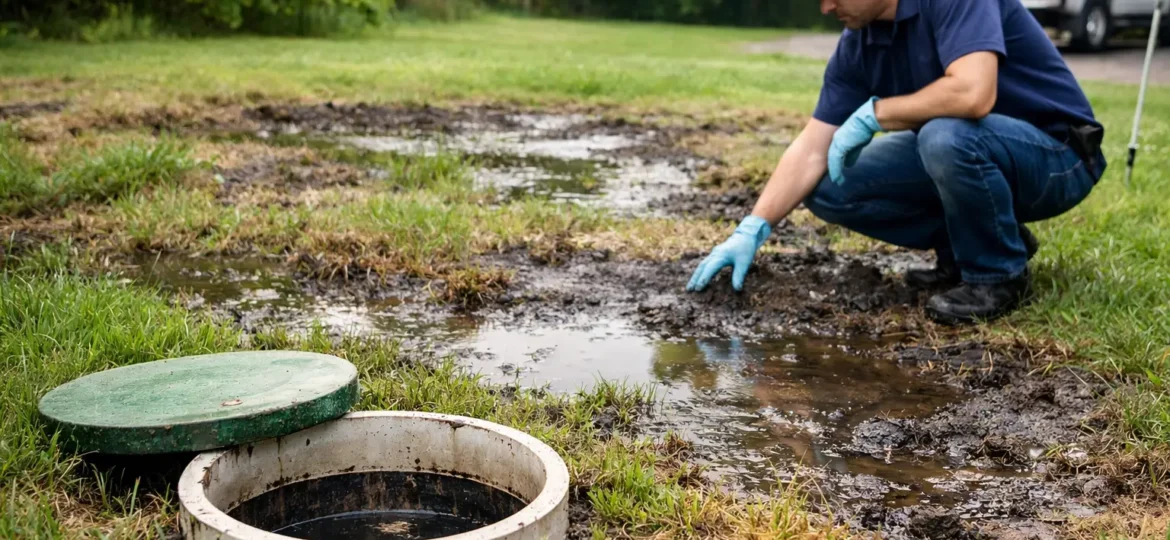
  • Wet, soft, or unusually green grass over the drain field area, especially during dry weather
  • Sewage or rotten-egg odors outside near the septic tank or field
  • Toilets that flush slowly, drains that gurgle, or wastewater backing up into tubs and showers
  • Standing water near the field, tank, or low areas of the yard
  • A septic alarm, if your system has a pump or advanced treatment component

Do not assume a wet spot means the drain field has failed beyond repair. A full septic tank, a broken distribution box, a damaged line, or a failed pump can create similar symptoms. That is why a real inspection matters. Pumping the tank may provide temporary relief, but it will not fix a saturated or damaged field.

Why Drain Fields Fail

Most drain field problems build over time. The field is designed for a certain volume of wastewater and a certain soil absorption rate. When either condition changes, the system can struggle.

Too Much Water Going Into the System

Excess water is one of the fastest ways to overload a septic system. Leaking toilets, dripping faucets, failing water softeners, and laundry-heavy days can send hundreds of extra gallons into the tank and field. A drain field cannot properly treat wastewater if it never has time to rest between flows.

Heavy rain can also affect systems with shallow groundwater, poor drainage, or surface water running toward the field. Downspouts, sump pump discharge, and driveway runoff should never be directed over a septic drain field.

Lack of Regular Septic Pumping

The tank is supposed to hold solids back so they do not reach the drain field. If the tank goes too long without pumping, sludge can rise high enough to escape into the outlet line and field. Those solids clog the soil and pipes, reducing the field’s ability to absorb wastewater.

Pumping frequency depends on tank size, household size, water use, and system condition. Many homes need service every three to five years, but there is no one schedule that fits every property. A family of five with a smaller tank will need attention sooner than a couple using a larger system.

Compacted Soil and Physical Damage

Drain fields are not parking areas, storage pads, or building sites. Cars, trucks, trailers, and heavy equipment compact the soil and can crush septic pipes or chambers below ground. Even if the pipes remain intact, compacted soil loses the air space needed to treat and absorb wastewater.

Tree roots can create another problem. Roots seek moisture and can invade pipe connections, distribution boxes, and older field lines. The right repair depends on where the roots entered and how much damage they caused.

Age, Soil Conditions, and Poor Installation

No drain field lasts forever. Older systems may have been installed to standards that have changed, or they may simply have reached the end of their service life. Clay-heavy soil, high groundwater, undersized fields, and poor original grading can shorten a field’s lifespan.

This is where a technician needs to look at the whole system, not just the wet spot. A repair that ignores the reason the field failed can waste money and leave the same issue waiting around the corner.

Can a Drain Field Be Repaired?

Sometimes, yes. Sometimes, replacement is the honest answer.

If the issue is a clogged effluent filter, broken outlet baffle, damaged pipe, failed pump, blocked distribution box, or tank that is overdue for pumping, repairs may restore proper flow without replacing the entire field. In some cases, correcting water overload and giving the field time to dry can improve performance.

But if the biomat in the soil has become heavily clogged, the field is undersized, the soil is permanently saturated, or wastewater is surfacing across a broad area, partial repairs may not hold. A new or expanded drain field may be required to bring the system back to reliable operation.

The right answer depends on the inspection, local requirements, soil conditions, and the condition of the tank and field lines. Beware of anyone who promises a permanent fix before locating the real failure point. Septic work is not guesswork. It takes proper access, testing, and a clear plan.

What to Do When You Notice Septic Trouble

First, reduce water use right away. Avoid multiple loads of laundry, long showers, dishwasher cycles, and anything else that sends a large volume of water into the system. If sewage is backing up indoors, stop using plumbing fixtures as much as possible until the issue is assessed.

Keep people and pets away from standing wastewater. Do not drive over the suspected drain field, and do not try to cover wet areas with soil or gravel. Covering the symptom can make inspection harder and does nothing to correct the failure.

Call for a septic inspection and explain what you are seeing: where the wet area is, whether drains are slow, when the tank was last pumped, and whether the problem started after heavy rain or increased water use. Those details help narrow down the cause before work begins.

For homes and businesses in the Chattanooga area, Chatta-Rooter Plumbing can inspect the septic system, pump the tank when needed, identify failed components, and give you a clear repair recommendation with upfront pricing. A fast response matters when wastewater is involved, but the work still needs to be done right.

How to Protect Your Septic Drain Field

Good habits extend the life of a septic system. Spread laundry over the week instead of running load after load in one day. Repair plumbing leaks quickly. Keep vehicles and heavy equipment off the field, and make sure roof runoff and surface water drain away from it.

Be careful about what goes down sinks and toilets. Grease, wipes, paper towels, feminine products, cat litter, harsh chemicals, and excessive food waste do not belong in a septic system. Even products marketed as flushable can create expensive problems in tanks, pumps, and field lines.

Regular pumping is still one of the best investments you can make. It gives a septic professional a chance to inspect the tank, catch worn components, and prevent solids from reaching the drain field. Waiting until sewage backs up is never the cheaper maintenance plan.

A drain field does quiet, demanding work every day. If your yard is wet, your drains are slowing down, or septic odors are showing up, treat that as a reason to act now. A timely inspection can protect your home, your property, and the system you depend on.

Drain Fields: Signs of Failure and What to Do


Drain Fields: Signs of Failure and What to Do

A septic tank can be pumped and working properly while the yard above it is telling a different story. Drain fields handle the final stage of wastewater treatment, and when they stop absorbing water the problem can quickly turn into soggy ground, slow drains, sewage odors, or a backup inside the home.

For homeowners and property managers, a failing drain field is not a wait-and-see issue. The longer wastewater sits where it should not, the more likely you are to face property damage, health concerns, and a larger repair bill. The good news is that early diagnosis can sometimes save part of the system and prevent a full replacement.

What a Drain Field Does

Your septic system has two main jobs. The septic tank separates solids, grease, and scum from wastewater. The drain field, also called a leach field, disperses the clarified liquid into the soil through a network of perforated pipes, chambers, or other approved dispersal materials.

The soil does more than soak up water. It filters and treats wastewater before it reaches groundwater. That is why drain fields need the right soil conditions, enough open area, and protection from heavy traffic and excess water.

When the field is working, you usually do not think about it at all. When it is overloaded, compacted, clogged, or damaged, the system loses its ability to move wastewater away from the tank. That is when warning signs start showing up around the property.

Signs Your Drain Field May Be Failing

A single slow drain can be a plumbing clog. Several slow drains, a gurgling toilet, and a wet area near the septic system point more strongly toward a septic issue. Pay attention when the same symptoms keep returning after basic drain cleaning.

Common warning signs include:

  • Wet, soft, or unusually green grass over the drain field area, especially during dry weather
  • Sewage or rotten-egg odors outside near the septic tank or field
  • Toilets that flush slowly, drains that gurgle, or wastewater backing up into tubs and showers
  • Standing water near the field, tank, or low areas of the yard
  • A septic alarm, if your system has a pump or advanced treatment component

Do not assume a wet spot means the drain field has failed beyond repair. A full septic tank, a broken distribution box, a damaged line, or a failed pump can create similar symptoms. That is why a real inspection matters. Pumping the tank may provide temporary relief, but it will not fix a saturated or damaged field.

Why Drain Fields Fail

Most drain field problems build over time. The field is designed for a certain volume of wastewater and a certain soil absorption rate. When either condition changes, the system can struggle.

Too Much Water Going Into the System

Excess water is one of the fastest ways to overload a septic system. Leaking toilets, dripping faucets, failing water softeners, and laundry-heavy days can send hundreds of extra gallons into the tank and field. A drain field cannot properly treat wastewater if it never has time to rest between flows.

Heavy rain can also affect systems with shallow groundwater, poor drainage, or surface water running toward the field. Downspouts, sump pump discharge, and driveway runoff should never be directed over a septic drain field.

Lack of Regular Septic Pumping

The tank is supposed to hold solids back so they do not reach the drain field. If the tank goes too long without pumping, sludge can rise high enough to escape into the outlet line and field. Those solids clog the soil and pipes, reducing the field’s ability to absorb wastewater.

Pumping frequency depends on tank size, household size, water use, and system condition. Many homes need service every three to five years, but there is no one schedule that fits every property. A family of five with a smaller tank will need attention sooner than a couple using a larger system.

Compacted Soil and Physical Damage

Drain fields are not parking areas, storage pads, or building sites. Cars, trucks, trailers, and heavy equipment compact the soil and can crush septic pipes or chambers below ground. Even if the pipes remain intact, compacted soil loses the air space needed to treat and absorb wastewater.

Tree roots can create another problem. Roots seek moisture and can invade pipe connections, distribution boxes, and older field lines. The right repair depends on where the roots entered and how much damage they caused.

Age, Soil Conditions, and Poor Installation

No drain field lasts forever. Older systems may have been installed to standards that have changed, or they may simply have reached the end of their service life. Clay-heavy soil, high groundwater, undersized fields, and poor original grading can shorten a field’s lifespan.

This is where a technician needs to look at the whole system, not just the wet spot. A repair that ignores the reason the field failed can waste money and leave the same issue waiting around the corner.

Can a Drain Field Be Repaired?

Sometimes, yes. Sometimes, replacement is the honest answer.

If the issue is a clogged effluent filter, broken outlet baffle, damaged pipe, failed pump, blocked distribution box, or tank that is overdue for pumping, repairs may restore proper flow without replacing the entire field. In some cases, correcting water overload and giving the field time to dry can improve performance.

But if the biomat in the soil has become heavily clogged, the field is undersized, the soil is permanently saturated, or wastewater is surfacing across a broad area, partial repairs may not hold. A new or expanded drain field may be required to bring the system back to reliable operation.

The right answer depends on the inspection, local requirements, soil conditions, and the condition of the tank and field lines. Beware of anyone who promises a permanent fix before locating the real failure point. Septic work is not guesswork. It takes proper access, testing, and a clear plan.

What to Do When You Notice Septic Trouble

First, reduce water use right away. Avoid multiple loads of laundry, long showers, dishwasher cycles, and anything else that sends a large volume of water into the system. If sewage is backing up indoors, stop using plumbing fixtures as much as possible until the issue is assessed.

Keep people and pets away from standing wastewater. Do not drive over the suspected drain field, and do not try to cover wet areas with soil or gravel. Covering the symptom can make inspection harder and does nothing to correct the failure.

Call for a septic inspection and explain what you are seeing: where the wet area is, whether drains are slow, when the tank was last pumped, and whether the problem started after heavy rain or increased water use. Those details help narrow down the cause before work begins.

For homes and businesses in the Chattanooga area, Chatta-Rooter Plumbing can inspect the septic system, pump the tank when needed, identify failed components, and give you a clear repair recommendation with upfront pricing. A fast response matters when wastewater is involved, but the work still needs to be done right.

How to Protect Your Septic Drain Field

Good habits extend the life of a septic system. Spread laundry over the week instead of running load after load in one day. Repair plumbing leaks quickly. Keep vehicles and heavy equipment off the field, and make sure roof runoff and surface water drain away from it.

Be careful about what goes down sinks and toilets. Grease, wipes, paper towels, feminine products, cat litter, harsh chemicals, and excessive food waste do not belong in a septic system. Even products marketed as flushable can create expensive problems in tanks, pumps, and field lines.

Regular pumping is still one of the best investments you can make. It gives a septic professional a chance to inspect the tank, catch worn components, and prevent solids from reaching the drain field. Waiting until sewage backs up is never the cheaper maintenance plan.

A drain field does quiet, demanding work every day. If your yard is wet, your drains are slowing down, or septic odors are showing up, treat that as a reason to act now. A timely inspection can protect your home, your property, and the system you depend on.