

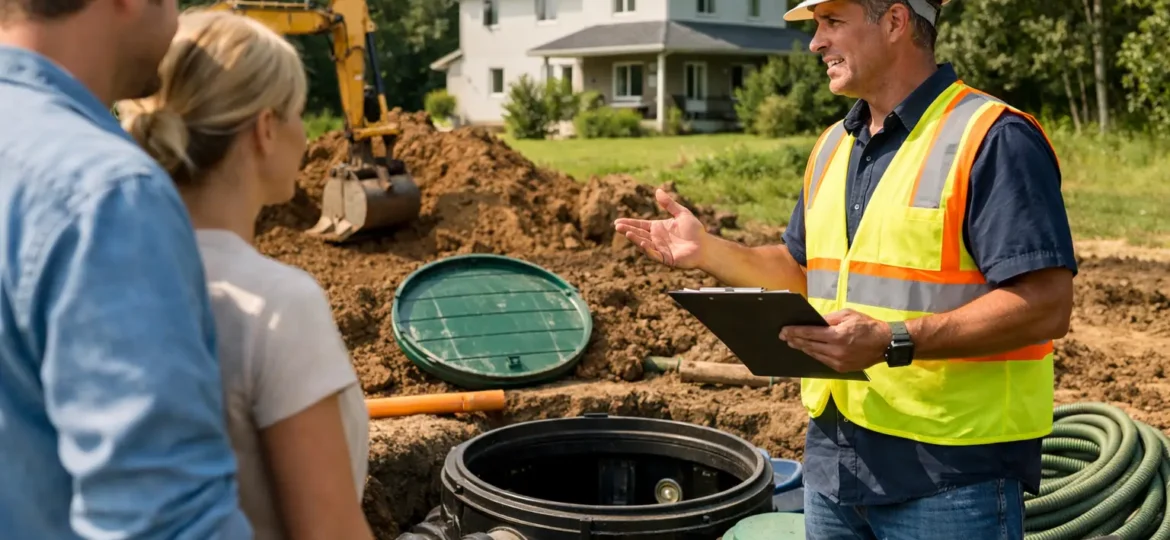
A septic problem has a way of making itself known at the worst possible time: a toilet that will not flush, sewage rising in a tub, wet ground near the tank, or an odor that will not go away. When that happens, licensed septic contractors are not just a convenience. They are the people who can identify what failed, protect your property from further damage, and make repairs that meet local requirements.
The cheapest name on a search page is not always the lowest-cost choice. A bad diagnosis, a damaged tank lid, an improperly installed pump, or a repair that does not address the drain field can turn one service call into a long, expensive mess. Here is what homeowners, landlords, and property managers should look for before putting anyone to work on a septic system.
Why Licensing Matters on Septic Work
Septic systems are more than buried tanks. They are wastewater treatment systems with working parts underground, including inlet and outlet lines, baffles, filters, pumps on some systems, distribution components, and a drain field. Each part affects the next one.
Licensed contractors are expected to work within the rules that apply to their trade and service area. Requirements can vary by location and by the scope of work, especially for installations, major repairs, and work involving permits or inspections. The point is not paperwork for paperwork’s sake. Proper licensing helps show that the contractor is operating as a legitimate business and understands the responsibility that comes with handling sewage and wastewater.
It also gives you a clearer path if something goes wrong. A contractor who has a real business presence, appropriate credentials, insurance, and an established reputation has more to lose by cutting corners. That matters when the work is below ground and the consequences may not show up until weeks or months later.
What Licensed Septic Contractors Should Do First
A dependable contractor does not walk up, hear “backup,” and immediately declare that you need a new drain field. Septic symptoms can overlap. A full tank, clogged effluent filter, blocked sewer line, failed sewage ejector pump, crushed pipe, damaged baffle, or saturated drain field may all cause slow drains or sewage backup.
The first job is diagnosis. That usually means asking when the problem began, whether every fixture is affected, when the tank was last pumped, whether there has been heavy rain, and whether the property has recently had more occupants or water use than normal. On-site, the contractor may inspect the tank, check liquid levels, assess filters and baffles, evaluate pumps, and look for line or drain field concerns.
A real diagnosis protects you from paying for work you do not need. Pumping a tank may be the right immediate move, but it will not repair a broken outlet baffle or revive a failed drain field. On the other hand, a wet area in the yard does not automatically mean total system replacement. The answer depends on the condition of the system, the cause of the failure, and what local regulations allow.
Pumping Is Maintenance, Not a Cure-All
Regular septic pumping removes accumulated solids before they move where they do not belong. For many homes, pumping on a routine schedule is one of the best ways to prevent avoidable trouble. The right interval depends on tank size, household size, water use, garbage disposal habits, and the type of system.
But pumping is maintenance. If wastewater starts backing up again shortly after pumping, something else may be wrong. Ask the contractor to explain what they found inside the tank and what should happen next. Clear answers beat vague warnings every time.
Questions to Ask Before You Hire
You do not need to be a septic expert to hire one. Ask direct questions and pay attention to whether the answers are direct too. Before work begins, ask whether the company is properly licensed for the work involved, whether it carries insurance, and whether permits or inspections may be required.
Ask what the contractor believes is causing the problem and how they plan to confirm it. If a repair is recommended, ask whether it is a temporary fix, a long-term repair, or part of a larger system issue. A good contractor will explain the difference without talking over your head.
Pricing needs to be just as clear. You should know what is included in the service call, pumping, repair, equipment, excavation, disposal, and any inspection-related work before approving the job. Septic repairs sometimes uncover hidden damage, so no honest company can promise that every underground job will have zero variables. Still, you should receive upfront information about known costs and be told before additional work is performed.
For rental homes and commercial properties, also ask about scheduling, access requirements, and documentation. A landlord may need service records for maintenance planning. A restaurant, office, campground, or other commercial operation may need to minimize downtime and keep sanitation issues from affecting customers or employees.
Red Flags That Should Make You Pause
Some septic emergencies require fast action, but urgency should not force you into a blind decision. Be cautious if a contractor refuses to discuss credentials, avoids written pricing, will not explain the diagnosis, or pressures you to approve a major replacement without inspecting the system.
Another warning sign is an offer that sounds too simple for a complicated issue. “We will just pump it” may be enough when the tank is due for service and the system is otherwise working correctly. It is not a serious answer when there is recurring backup, standing wastewater, sewage odors, or evidence of a damaged line.
Watch out for contractors who treat the drain field as a dumping ground for every problem. No additive, chemical, or quick treatment can repair every failed septic component. In some cases, the system needs a targeted repair. In others, the drain field may truly be at the end of its service life. The contractor should be able to tell you why.
The Right Contractor for an Emergency
When sewage is backing up inside, the priorities change fast. Stop running water if possible. Do not keep flushing toilets to test the problem. Keep people and pets away from contaminated areas, and do not try to open a septic tank yourself. Tank lids can be heavy, unstable, and dangerous, while septic gases are a serious hazard.
Call a contractor equipped to respond, diagnose, pump, and repair – not just someone who can perform one part of the job. A company that handles septic pumping but cannot address a damaged line, failed pump, or sewer issue may leave you searching for a second contractor while the problem gets worse.
For Chattanooga-area property owners, Chatta-Rooter Plumbing provides 24-hour septic pumping and repair support for the hard calls that cannot wait. Fast service matters, but the goal is still to identify the actual failure and give you a straightforward path forward.
How to Help Your Septic System Last Longer
Hiring the right contractor is only part of protecting your system. Daily habits have a real impact. Septic systems are designed for wastewater and normal toilet paper, not wipes, grease, paper towels, feminine products, cat litter, or chemicals that do not belong in the drain.
Use water wisely, especially if your home has a smaller tank or a history of drain field trouble. Spread out laundry loads when possible instead of sending several large loads through in one day. Fix leaking toilets and faucets. A running toilet can send hundreds of extra gallons into the system before anyone notices.
Keep vehicles, heavy equipment, and construction materials off the tank and drain field area. Compacted soil and crushed pipes create problems that routine pumping cannot solve. Know where your tank and drain field are located, and keep service records so you can tell a contractor what has been done and when.
Choose Proof Over Promises
The right septic contractor will not make a bad situation feel painless, but they should make it understandable. They will show up prepared, inspect before recommending major work, explain the options, and price the job honestly. That is what separates a real service professional from someone looking to make a quick sale.
If your drains are slowing down, your yard is wet near the system, or sewage is coming back into the house, do not wait for the problem to become a cleanup job. Get a qualified contractor involved early, ask the right questions, and give your septic system the attention it needs before the damage spreads.