

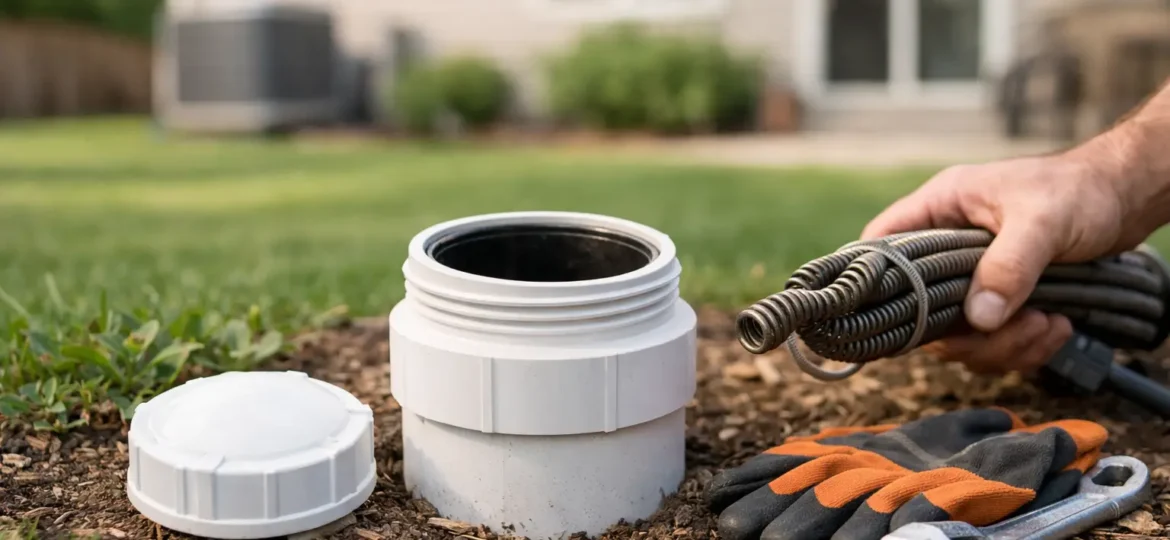
A sewer backup does not wait for a convenient time. When toilets gurgle, tubs fill with dirty water, or a floor drain starts backing up, fast access to the sewer cleanout can save time, limit damage, and help a plumber get straight to the problem. This guide to sewer cleanout access explains what the cleanout does, where to look, and when opening it is not a safe DIY move.
What a Sewer Cleanout Does
A sewer cleanout is a capped access point connected to your home’s main sewer line. It gives a plumber a direct route into the pipe for drain cleaning, camera inspection, hydro jetting, or locating a blockage. Without a usable cleanout, clearing a main-line clog may require working through a roof vent, removing a toilet, or making other access arrangements.
Most cleanouts have a round PVC or cast-iron cap. The cap may be threaded, secured with a square nut, or fitted into a short pipe riser. It is not a drain you use every day. It is a service opening, and it should stay capped tightly to keep out rainwater, debris, pests, and sewer gas.
For homes on septic systems, the cleanout is usually on the building sewer line between the home and the septic tank. It is still valuable, but it does not replace septic tank access lids. A main-line backup can come from a clogged pipe, a full septic tank, a failed drain field, or a combination of issues. The right access point helps identify which problem you actually have.
Where to Find Your Sewer Cleanout Access
Every property is different, especially around Chattanooga, where older homes, additions, crawl spaces, steep lots, and septic systems can change the layout. Start outside, close to the house. Many cleanouts sit within a few feet of the foundation, often on the side or rear of the home where the bathroom and kitchen plumbing exits.
Look for a white or black plastic cap near ground level. It may be exposed above the soil, set inside a small green utility box, hidden under mulch, or located in a flower bed. In some yards, grass and soil slowly cover the cap until nobody remembers it is there.
Older homes may have a cast-iron cleanout with a metal plug instead of a plastic cap. You may also find an access point in a basement, garage, utility room, crawl space, or near a floor drain. Commercial buildings can have cleanouts in mechanical rooms, parking areas, sidewalks, or exterior service corridors.
If you cannot find it, check closing documents, septic installation records, prior plumbing invoices, or building plans. A sewer camera inspection can also help locate the line and identify the best access point. Do not start digging blindly near underground utilities, water lines, electrical wiring, or septic components.
Do Not Confuse the Cleanout With Other Covers
A septic tank lid is larger and normally sits farther from the house. A water meter box is generally near the street or property boundary. Irrigation valve boxes are often smaller, rectangular, and grouped near landscaped areas. A drain field distribution box may also be buried, but it is part of the septic system and should not be opened for a routine sewer clog.
The sewer cleanout is usually a smaller pipe opening, commonly 3 or 4 inches wide. If you are unsure what you found, leave it alone until a professional can identify it.
When Sewer Cleanout Access Becomes Urgent
A single slow sink can be a local drain clog. Multiple fixtures acting up at once points to the main line. If the lowest drain in the home backs up when you flush a toilet or run water, treat it as a sewer-line issue until proven otherwise.
Common warning signs include toilets that bubble, sewage coming up in a tub or shower, water around a basement floor drain, repeated clogs in different rooms, and foul odors outdoors near the sewer route. Commercial properties may notice slow restroom drains, overflow at floor drains, or backups during heavy use.
Stop running water when these signs appear. Do not keep flushing, run the dishwasher, start laundry, or use more drains to “push it through.” That can send wastewater onto floors, into wall cavities, or across a business area where cleanup becomes more expensive and hazardous.
Can You Open a Sewer Cleanout Yourself?
Sometimes, but it depends on what is happening in the line. If everything is draining normally and you are only trying to locate or uncover the cleanout, it is usually fine to clear light soil and vegetation around it. Keep the cap visible, avoid damaging the pipe, and replace any missing cap with the correct fitting.
Opening a cleanout during a backup is another matter. The line may be full of sewage under pressure. Once the cap loosens, wastewater can spill out quickly. That is not a mess you want beside your foundation, inside a garage, or near a finished basement.
If you decide to inspect an exterior cleanout with no active backup, wear gloves and eye protection. Loosen the cap slowly while standing to the side, never directly in front of it. Stop immediately if you see water at the opening, hear pressure release, or smell strong sewer gas. Tighten it back if possible and call for service.
Never use an open flame near a cleanout. Do not pour harsh chemicals into the line, and do not force a damaged cap with excessive leverage. Chemical drain cleaners can damage pipes, create dangerous conditions for technicians, and rarely solve a main sewer blockage caused by roots, wipes, grease, collapsed pipe, or septic trouble.
Keep the Cleanout Easy to Reach
A cleanout that is buried under rock, landscaping, decking, or stored materials adds time to an emergency call. You do not need to make it ugly, but it should remain accessible.
Keep a small clear area around the cap and mark the location in your home maintenance notes. If it is in a landscaped bed, use a removable cover that does not seal the pipe permanently. If the cap is below grade, ask a plumber whether adding a proper riser would make future service faster and safer.
Do not pave over the cleanout, build a permanent structure above it, or let tree roots take over the area. Roots are one of the most common causes of recurring sewer clogs, particularly in older sewer lines. Easy access makes it possible to inspect the line before a minor issue turns into a full backup.
What a Plumber Can Do Through the Cleanout
A working cleanout gives a qualified technician the best starting point for diagnosing the whole main line. A drain camera can show whether the blockage is grease, wipes, roots, broken pipe, bellies in the line, or a problem near the septic tank. That matters because the right repair is not always “run a snake and hope.”
Cable machines can cut through many clogs and root masses. Hydro jetting can clear heavy buildup from suitable pipe materials, but it is not the right choice for every aging or damaged line. If the camera shows cracked pipe, separated joints, or collapse, cleaning alone may only provide short-term relief.
For septic properties, a technician may determine that the building sewer is clear but the tank is overdue for pumping or the system is not accepting wastewater properly. That is why accurate diagnosis beats guessing. A cleanout is an access point, not a complete answer by itself.
Call for Help Before the Damage Spreads
Sewage backup is a health concern, not just a plumbing inconvenience. Keep children and pets away from affected areas, avoid direct contact with wastewater, and do not attempt to clean contaminated carpet, drywall, or insulation without the right equipment and guidance.
If your main line is backing up, your cleanout is overflowing, or you cannot locate the access point, get a professional on site. Chatta-Rooter Plumbing handles sewer and septic problems across the Chattanooga area with upfront pricing and emergency service when the job cannot wait.
A visible, accessible sewer cleanout gives your property a better chance of a fast fix. Find it before you need it, keep it clear, and let a trained technician take over when the line is under pressure.