

A septic system usually gives you plenty of warning before it fails – slow drains, odors near the tank, wet spots in the yard, or toilets that start acting different. The problem is that many homeowners reach for a bottle of additives when what they really need is maintenance, a repair, or a septic pumping. The best septic tank treatment methods are not gimmicks. They are practical habits that protect the bacteria in the tank, keep solids out of the drain field, and catch trouble before sewage backs up into the house.
Best Septic Tank Treatment Methods Start With Pumping
The most effective treatment for a working septic system is regular pumping and inspection. Every septic tank collects solids. The heavier waste settles to the bottom as sludge, while grease and lighter material float on top as scum. The liquid wastewater in the middle flows out toward the drain field.
When sludge and scum get too thick, they can move into the outlet pipe and drain field. That is where a routine maintenance issue becomes a costly repair. A septic tank does not empty itself, and additives do not remove accumulated solids.
Most residential tanks need pumping about every three to five years, but that schedule is not one-size-fits-all. A large household, frequent guests, garbage disposal use, an undersized tank, or a commercial property can require more frequent service. The right interval depends on tank size, water use, and what is going down the drains.
A professional pumping appointment should include more than removing waste. The technician should inspect the tank condition, inlet and outlet baffles, filter if equipped, liquid level, and visible signs of trouble. If there is a cracked baffle, a clogged effluent filter, or roots working into the lines, catching it early can save the drain field.
Protect the Bacteria Your Tank Already Has
A septic tank relies on naturally occurring bacteria to break down waste. Healthy bacteria help process wastewater, but they cannot turn a neglected tank into a clean one. They also cannot survive a steady stream of harsh chemicals.
Use normal amounts of household cleaners, but avoid treating every drain like a chemical dump. Large doses of bleach, antibacterial products, drain opener, disinfectants, paint thinner, solvents, pesticides, and automotive fluids can damage the biological balance in the tank. Never pour those products into a sink, toilet, floor drain, or outside near the septic system.
If a drain is clogged, skip the repeated bottles of chemical cleaner. They can harm the septic system, damage pipes, and create a hazard for anyone who has to work on the line. Mechanical drain cleaning or hydro jetting is often the safer answer when there is a real blockage.
Are Septic Additives Worth It?
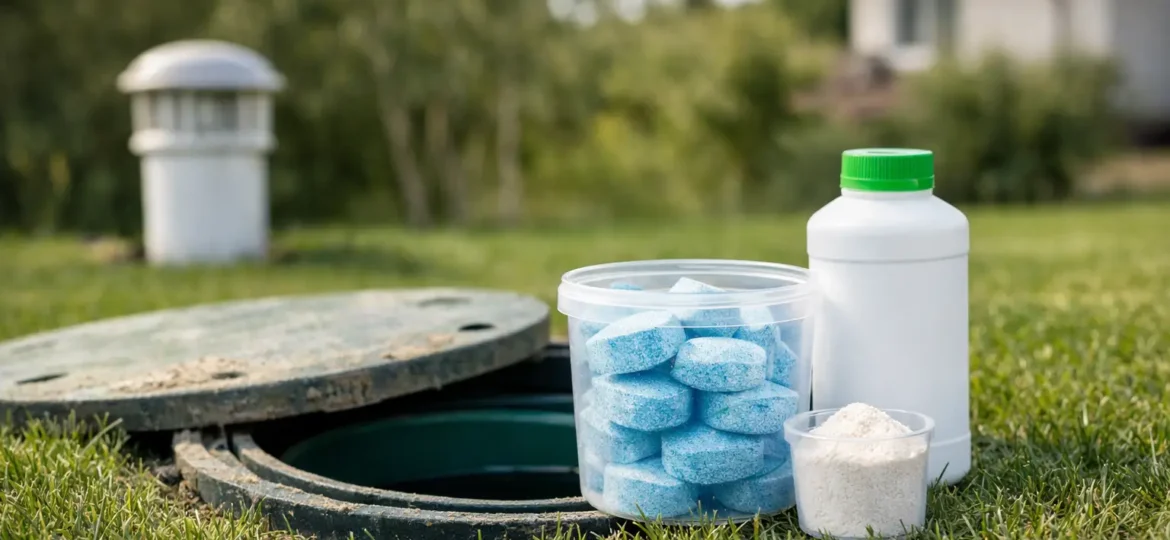
Most septic additives are not necessary for a properly maintained residential system. Your tank receives the bacteria it needs from normal household waste. Some products may be harmless when used as directed, but they should never be treated as a replacement for pumping, inspection, or repair.
Be especially cautious with products that promise to dissolve sludge, eliminate pumping forever, or restore a failed drain field overnight. Those claims can lead property owners to delay the work that actually needs to be done. In some cases, aggressive additives can stir solids up and push them farther into the system.
If your tank is overdue for service, the best treatment is not a stronger chemical. It is getting the tank pumped and inspected by someone who can tell you what condition the system is really in.
Keep Drain Field Killers Out of the System
The drain field is where your system finishes treating wastewater. It needs open soil, oxygen, and room to absorb filtered liquid. Once it becomes compacted, overloaded, or clogged with solids, repairs can get expensive fast.
Water conservation is one of the simplest ways to protect it. Fix running toilets and dripping faucets. Spread laundry across the week instead of washing several loads back-to-back. Do not run the dishwasher, washing machine, and long showers all at the same time if your system is already showing signs of strain.
What enters the toilet and sink matters just as much. Septic systems are built for human waste and toilet paper. They are not built for wipes labeled flushable, paper towels, feminine hygiene products, diapers, dental floss, cat litter, cooking grease, coffee grounds, or medication. Those materials either create clogs in the plumbing or add solids that fill the tank faster.
Grease deserves special attention. It may go down the drain warm and liquid, but it cools, hardens, and collects in pipes and tanks. Scrape pans into the trash before washing them. Restaurants and commercial kitchens need proper grease management because a septic system cannot handle heavy grease loads for long.
Protect the Area Above the Drain Field
Do not park vehicles, store heavy equipment, build a shed, or place a swimming pool over a drain field. Weight can compact the soil or crush underground components. Keep trees and large shrubs away from septic lines whenever possible, since roots will find moisture and work their way into weak joints or damaged pipes.
Direct roof runoff, sump pump discharge, and surface water away from the septic tank and drain field. Too much outside water can saturate the soil and leave the system with nowhere to send wastewater. In Chattanooga-area properties with slopes, heavy rain, or challenging soil conditions, drainage around the septic area deserves real attention.
Know When Treatment Is Not Enough
Maintenance protects a septic system. It does not fix broken parts, collapsed lines, saturated drain fields, or a tank that is backing up. If you notice sewage odors, gurgling toilets, drains slowing down across the house, standing water near the tank or drain field, or sewage coming up in tubs and showers, stop adding products and get the system checked.
A backup can come from several places: a full tank, a clogged effluent filter, a blocked sewer line, a failed pump, damaged baffles, root intrusion, or drain field trouble. The symptoms can look similar, which is why guessing wastes time and money. A proper inspection identifies where the failure is happening before the wrong repair gets recommended.
For properties with grinder pumps, sewage ejector pumps, or lift stations, regular service is even more important. Those systems have mechanical components that can fail without warning. If the alarm sounds, wastewater is rising, or a pump is not operating, treat it as urgent. Continued water use can turn a manageable repair into a sewage cleanup job.
A Practical Septic Maintenance Routine
Keep a record of pumping dates, repairs, inspections, and the location of your tank and drain field. That record helps you plan service before an emergency and gives a technician useful information when a problem develops.
Between service visits, watch for changes. A septic system should work quietly in the background. If drains suddenly change, odors appear, or the yard becomes soft near the system, do not wait for a complete backup. Early action is usually less disruptive and less expensive.
For homeowners, landlords, and commercial property operators, the goal is simple: pump the tank on schedule, use water wisely, keep destructive materials out, and call for help when the system starts sending warnings. If you need straight answers about a septic concern in the Chattanooga area, Chatta-Rooter Plumbing can inspect the system, explain what is happening, and handle the work without wasting your time.