

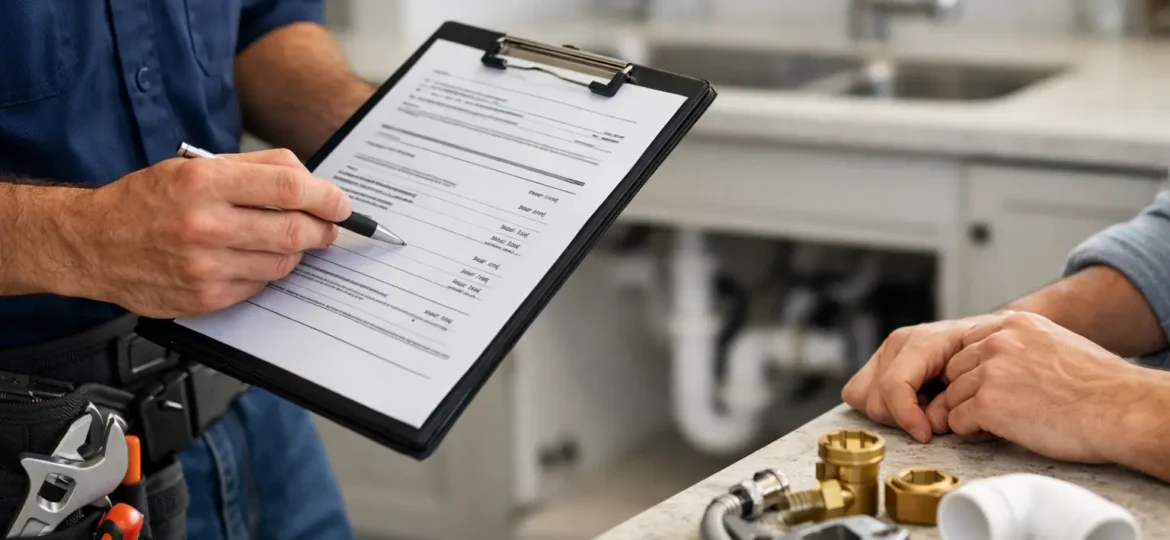
A backed-up sewer line or overflowing septic tank is stressful enough without wondering what the repair will cost when the truck pulls away. A flat rate plumbing estimate gives you a clear price for a defined repair before work begins, so you can make a decision without watching the clock or guessing at labor charges.
For homeowners, landlords, and business owners, upfront pricing is about more than a number. It is about knowing what problem is being fixed, what work is included, and what could change if the technician finds a separate issue. A good estimate protects both sides of the job.
What flat-rate pricing actually means
Flat-rate pricing means the contractor quotes a set price for a specific scope of work. That price is based on the expected labor, materials, equipment, travel, overhead, and technical skill required to complete that repair. It is not simply an hourly rate multiplied by a guess.
For example, a technician may quote one flat price to clear a clogged main sewer line through an accessible cleanout. If the line clears as expected, the customer pays the quoted price whether the work takes 45 minutes or two hours. The customer is paying for a completed service, not for the speed or pace of the person doing it.
This matters on difficult plumbing and septic work. Drain blockages, sewage ejector pump problems, grinder pump failures, and septic backups can be unpredictable. A properly written flat-rate price gives the customer a firm starting point and keeps the contractor focused on solving the stated problem.
What a flat rate plumbing estimate should include
An estimate should be specific enough that you understand what you are approving. A vague line that says “plumbing repair” does not tell you much. A useful quote identifies the service, the system involved, and the expected result.
For a drain cleaning job, that may mean clearing an interior branch drain, a main sewer line, or a septic outlet line. Those are different services with different equipment requirements. For a water heater repair, it should identify the part or repair being proposed. For septic pumping, it should state whether the quoted work includes pumping the tank, locating lids, opening access points, or handling an unusually difficult access situation.
The estimate should also make clear whether parts, standard labor, and cleanup are included. If a contractor is using a sewer camera, hydro jetter, pump truck, excavation equipment, or specialized diagnostic tools, ask whether that service is included in the price or quoted separately.
A solid estimate usually spells out these details in plain language:
- The problem identified during the inspection
- The repair or service being performed
- The total approved price for that defined work
- Materials or equipment included in the price
- Any conditions that could require additional approval
- Warranty terms, if a warranty applies
You do not need a page of technical jargon. You need enough detail to know what is being fixed and what you will owe if the job proceeds as described.
The diagnosis comes first
Flat-rate pricing only works when the technician has enough information to diagnose the problem. That is why a reputable plumbing company may need to inspect the system in person before giving a firm quote.
A toilet that will not flush could be a simple fixture issue, a clogged branch line, a blocked main sewer, a full septic tank, or a damaged drain field. Quoting the same repair price over the phone for all of those situations would not be honest. The right first step is to identify where the failure is happening.
This is especially true with septic systems. A backup may point to a tank that needs pumping, but it can also indicate a damaged baffle, clogged effluent filter, failed pump, broken pipe, or drain field issue. The estimate should match the actual condition found, not a quick assumption.
When can the price change?
A flat rate does not mean every possible problem on the property is automatically included. It means the approved repair has a fixed price. If the scope changes because of a hidden condition or a separate failure, the contractor should stop, explain the finding, and get approval before adding work.
Suppose a main line cleaning is quoted through an accessible cleanout. Once the line is cleared, a camera inspection reveals a collapsed pipe under a driveway. Clearing the blockage and replacing the failed pipe are two different jobs. The original drain cleaning price should remain what was quoted, while the pipe repair should be presented as a separate estimate.
The same principle applies when access is different than expected. A septic tank lid buried under concrete, an inaccessible crawl space, a line that requires excavation, or a severely damaged pipe can change the labor and equipment needed. Those conditions should be discussed before additional charges are added.
Be cautious if a company advertises a low flat price but cannot explain what it covers. A low entry price can be legitimate for a basic service call, but it should not become a surprise bill filled with unexplained add-ons. Clear pricing means you know the total for the approved work before the work is done.
Why flat-rate estimates can be better than hourly billing
Hourly billing has a place in some types of work, particularly long-term construction, open-ended troubleshooting, or jobs where the full scope cannot reasonably be determined until demolition begins. But for many repair calls, a flat rate is easier for customers to understand and budget for.
With hourly billing, the final number depends on how long the job takes. That can leave customers worried that an unexpected delay, a slow worker, or a complicated dispatch schedule will increase the bill. Flat-rate service removes that clock from the conversation once the scope is approved.
It also gives the technician room to do the job correctly. If a stubborn sewer blockage takes extra effort to clear, the focus stays on restoring flow safely rather than watching labor minutes pile up. The trade-off is that a flat-rate quote may appear higher than one hour of labor on paper because it accounts for the full job, not just time spent at the pipe.
The better question is not whether a price is hourly or flat rate. Ask whether the scope, price, and possible exceptions are clear.
Questions to ask before approving plumbing work
Before you authorize a repair, ask the technician what caused the problem and what the quoted service will accomplish. If the answer is clear, you are in a much better position to decide whether the repair makes sense.
Ask whether the price includes parts, labor, and standard cleanup. Ask if there are visible signs of a larger issue, such as root intrusion, pipe damage, repeated sewer backups, or septic system failure. If the technician recommends a camera inspection, pumping, hydro jetting, or repair beyond the original call, ask why it is needed and whether it is optional or necessary to restore service.
You should also ask what happens if the repair does not solve the issue. Some problems have more than one cause, particularly in older homes and commercial properties with heavy drain use. A professional should explain the next diagnostic step instead of making promises that the inspection does not support.
A clear estimate matters most when the problem is urgent
Emergency plumbing and septic calls rarely happen at a convenient time. When sewage is backing up into a home, a grinder pump alarm is sounding, or a restaurant drain line is down, you need a contractor who can respond quickly without turning the price into another emergency.
Chatta-Rooter Plumbing provides free in-person estimates and upfront flat-rate pricing so customers can understand the repair before authorizing it. That approach is particularly valuable for wastewater problems, where proper diagnosis can prevent a temporary fix from becoming a repeat backup.
When you receive a flat-rate quote, take a moment to read what it covers, ask about anything that is unclear, and approve only the work you understand. A good plumbing company will respect that question, explain the options straight, and get to work when you are ready.